Players · AI-derived
Agility Digit Repair Costs Stay Opaque Amid Fremont Expansion
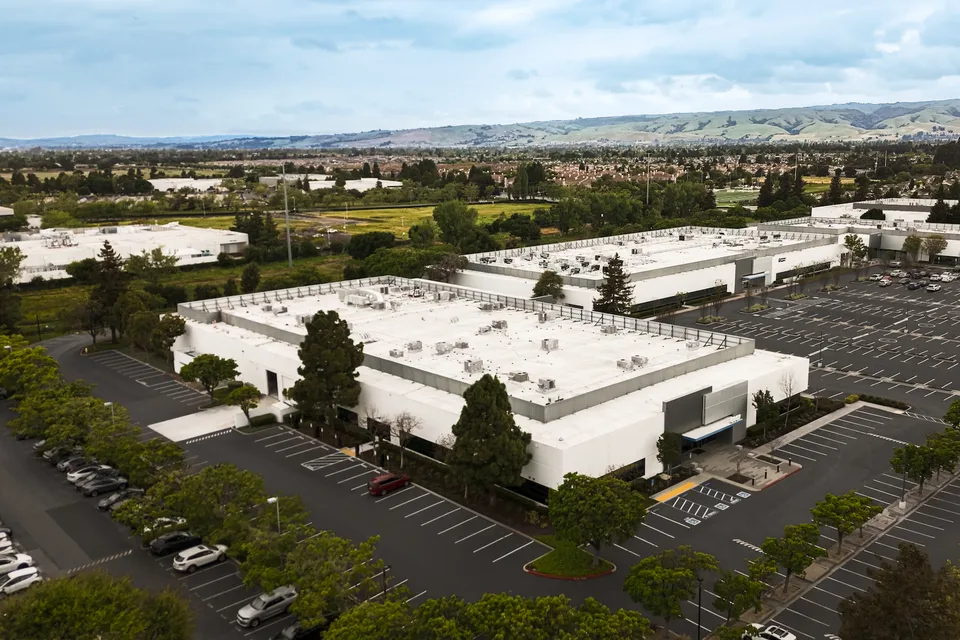
Agility Robotics opened a 60,000-square-foot Fremont facility in July 2026 to train Digit humanoids and expand deployments. The company continues to offer Digit only through RaaS contracts that bundle maintenance without publishing repair costs or MTBF figures.
ZeroGantry analysis
Agility's Fremont move accelerates AI iteration for Digit but leaves fleet operators without MTBF or parts pricing data needed for precise TCO modeling. At the modeled $8,500/month RaaS rate, a 1,000-robot order implies $8.5M monthly recurring revenue potential once scaled, yet unquantified repair frequency could erode margins faster than competitors with published reliability specs. Watch for v5 launch metrics on actuator life; ignore until concrete service economics appear.
Fremont Facility Boosts Digit AI Training
Agility Robotics opened its new 60,000-square-foot facility in Fremont, California, on July 16, 2026, to accelerate physical AI development for the Digit humanoid. The site serves as a software and capabilities hub where teams train and test AI models so Digit can handle more tasks in customer sites. It complements the existing RoboFab manufacturing plant in Salem, Oregon, and will support hiring nearly 200 professionals in AI/ML engineering and field operations.
CEO Peggy Johnson highlighted the location's proximity to Silicon Valley talent pools, noting that the move allows faster iteration on capabilities that directly improve safety and productivity for enterprise users. The facility targets environments similar to real deployments in warehouses and factories. This expansion arrives as Agility prepares for a public listing via merger with Churchill Capital Corp XI.
Active deployments already include GXO Logistics, Toyota Motor Manufacturing Canada, Schaeffler, and Mercado Libre. The company reports more than $300 million in multi-year bookings for Digit v5, subject to milestones, alongside a pipeline of over 30 potential customers. The Fremont hub aims to scale these efforts by improving AI-driven skill acquisition.
RaaS Model Keeps TCO Details Private
Agility sells Digit exclusively through Robots-as-a-Service contracts that bundle the robot hardware, Agility Arc cloud software, workcells, fleet management, and maintenance. No public rate card exists for per-unit repair costs, actuator replacements, or individual service line items. An illustrative model in the June 2026 SPAC investor deck shows roughly $8,500 per month per robot, equating to about $100,000 annually.
This pricing is framed as a discount to a fully burdened human labor rate of approximately $30.50 per hour. Historical direct-purchase pricing from 2020 sat around $250,000, but current offerings avoid list prices entirely. Operators searching for transparent total cost of ownership find only aggregated fleet metrics such as 100,000+ totes moved at GXO's Spanx facility and 65,000+ cumulative deployment hours across nine customer sites as of May 2026.
Service partners like Ricoh USA handle field maintenance, yet no MTBF data or actuator pricing appears in public materials. The June 2026 investor deck and company releases emphasize uptime through autonomous self-charging and safety hardware such as CAT1 stops and Safety PLCs, without quantifying mean time between failures or expected component lifespans.
Comparison to Competitor Pricing Transparency
Tesla has discussed potential Optimus pricing in the tens of thousands for volume production but has not released RaaS details or repair economics either. Figure AI and Boston Dynamics similarly withhold granular maintenance costs for their platforms. Unitree offers more direct hardware sales options with published specs, though long-term service data remains limited.
Agility's approach aligns with its narrow focus on logistics tote handling, where proven hours at named sites provide operational confidence. However, buyers evaluating fleet economics across multiple vendors encounter the same opacity on repair frequency and parts pricing. Digit v5, targeted for late 2026 with 50 lb payload and cooperative safety features, continues this bundled model.
Technical Breakdown of Digit Platform
Architecture Digit builds on the Cassie research platform from Oregon State University. The current generation uses a bipedal design optimized for tote transfer between conveyors, AMRs, and racking. Agility Arc provides cloud-based fleet orchestration, while integrations include MiR and Zebra AMR platforms. The system emphasizes certified safety compliance for enterprise environments.
Actuators and Sensors Public specifications list 35 lb payload capacity, 4-hour battery life with autonomous docking, and interchangeable end effectors. Safety hardware includes on-robot E-stops, wireless teach pendants, and FSoE protocols. Sensor details cite cameras and LiDAR from earlier launches, though exact current suites remain behind gated documentation. No actuator MTBF or specific component reliability numbers are released.
Limitations The RaaS-only model limits direct ownership options outside select agreements like Schaeffler's. Payload remains at 35 lb for shipping units, with the 50 lb target reserved for unshipped v5 hardware. Battery runtime requires scheduled recharging cycles. Public data prioritizes cumulative tote counts and hours over per-robot reliability metrics.
Unresolved Questions Operators continue to seek published repair cost schedules, actuator replacement pricing, and fleet-wide MTBF figures to model long-term economics accurately. The Fremont expansion focuses on AI capability growth rather than new transparency on service economics. Future v5 deployments may address some operational limits through improved safety systems.
Policy Context and Scaling Outlook Agility CEO Peggy Johnson has outlined six policy pillars to support U.S. humanoid scaling, including regulatory frameworks for safety and deployment. The Fremont facility positions the company to iterate quickly on AI features that meet enterprise demands for repetitive task automation. With deployments already generating measurable hours at multiple sites, the focus remains on expanding proven use cases while maintaining the integrated RaaS offering.
Sources
- https://www.agilityrobotics.com/content/agility-opens-new-fremont-facility-to-accelerate-physical-ai-development
- https://techcrunch.com/2026/07/17/agility-robotics-plants-its-flag-in-teslas-backyard/
- https://blog.robozaps.com/b/agility-robotics-digit-review
- https://roboticsandautomationnews.com/2026/07/17/agility-robotics-opens-new-fremont-facility-to-accelerate-physical-ai-development/103426/
Who services this hardware
Topics
Manufacturers
Related articles
- Tuya Doova and OlloBot OlloNi SS1 Debut Elder Care Robots at IFA 2026 — Tuya Smart launched the wheeled Doova companion robot at IFA 2026 for seniors living alone, featuring fall response, LLM conversation, and smart-home control. O
- 1X NEO Beta Trial Program Starts Real-Home Household Testing — 1X Technologies has launched a limited NEO Beta Household Trial Programme. Select households worldwide will test the humanoid robot in their homes for three mon
- ICE Forecasts $1-2M Boston Dynamics Spot Robot Buy for Public Safety — U.S. Immigration and Customs Enforcement plans a sole-source purchase of Boston Dynamics Spot quadrupeds worth $1-2 million. The robots would handle remote insp
- Amazon Proteus Fleet Expansion Hits New North American Sites — Amazon has expanded its Proteus autonomous mobile robot fleet to additional fulfillment centers across North America. The robots now handle heavy and bulky item