Players · AI-derived
Amazon Proteus Fleet Expansion Hits New North American Sites
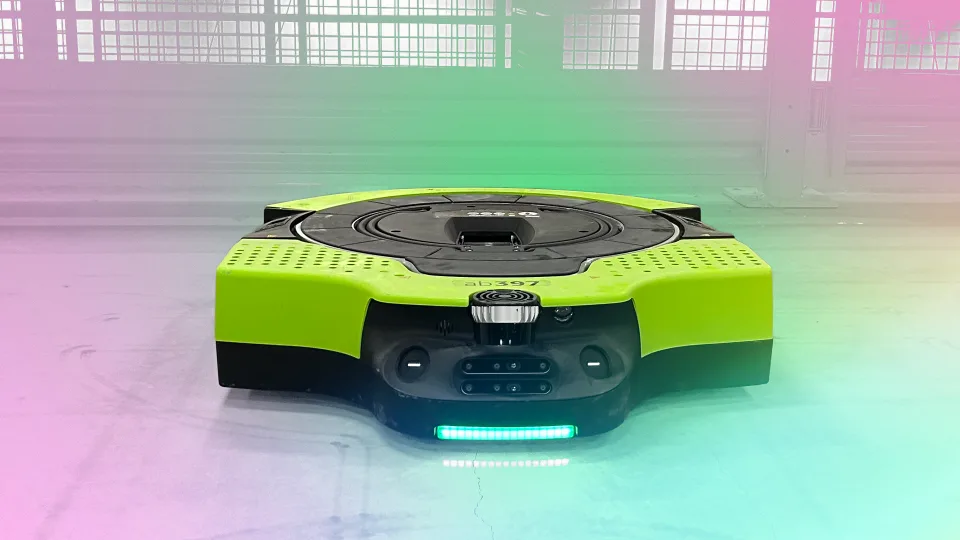
Amazon has expanded its Proteus autonomous mobile robot fleet to additional fulfillment centers across North America. The robots now handle heavy and bulky items up to 300 pounds, targeting the heaviest 20 percent of SKUs to cut manual handling and boost efficiency.
ZeroGantry analysis
The North American expansion adds meaningful scale to an already operational fleet of roughly 4,000 Proteus units across 25 sites; at typical AMR utilization rates this could remove several million manual cart-pushes per week once fully ramped. Fleet economics favor sites with high heavy-SKU density where injury reduction and throughput gains compound fastest—expect measurable safety metric improvements within 6-9 months. Watch for integration friction with legacy WMS versions at older facilities; ignore only if capital allocation shifts heavily toward humanoids instead of proven AMRs.
Proteus AMR Background and Current Scale
Amazon Robotics introduced Proteus as its first fully autonomous mobile robot in 2022 at a Nashville facility. The low-profile platform navigates shared warehouse spaces alongside workers using onboard sensors for obstacle detection and safe avoidance. Current deployments stand at 25 U.S. fulfillment centers with slightly more than 4,000 units in operation. These robots primarily service outbound dock areas where they transport carts weighing close to 400 kilograms. Amazon reports more than 750,000 mobile robots of all types across its global network, providing extensive real-world data for iterative improvements.
The original Proteus design focuses on repetitive heavy transport that previously required repeated manual pushing and long-distance walking by associates. This capability directly addresses ergonomic risks in high-volume fulfillment operations. Integration occurs alongside systems such as Cardinal robotic arms that load packages into carts before Proteus moves them toward loading docks. Fleet coordination relies on Amazon's in-house orchestration software that optimizes routes across multiple robots simultaneously.
Details of the North American Expansion
On September 9, 2026, Amazon confirmed through corporate channels that Proteus units are now active at multiple additional fulfillment centers in North America. The rollout prioritizes sites handling the heaviest 20 percent of SKUs, including bulky items that exceed typical conveyor or tote capacities. Each robot maintains a payload rating of up to 300 pounds in the latest operational descriptions, allowing it to manage oversized packages without dedicated heavy-lift equipment. Expansion builds directly on the existing 25-site footprint and increases total fleet count without requiring new facility construction.
The move aligns with Amazon's broader warehouse automation investments that have already surpassed one million total robots deployed worldwide. New sites receive the same safety-certified navigation stack that allows operation in mixed human-robot zones. Early indications suggest improved throughput on outbound docks where manual cart movement previously created bottlenecks during peak periods. No specific per-site unit counts have been released, yet the pattern mirrors prior phased rollouts that began with pilot docks before scaling across entire facilities.
Heavy-Item Handling Capabilities and Operational Metrics
Proteus targets items that represent significant manual-handling challenges, including large appliances, furniture components, and bulk seasonal goods. The 300-pound payload threshold covers the upper end of what associates previously pushed on wheeled carts over distances of several hundred meters. Sensors enable dynamic path planning that avoids both static obstacles and moving personnel, a requirement for dock areas with constant forklift and human traffic. Amazon has certified the platform through external safety vendors, confirming compliance for collaborative environments.
Fleet economics improve when robots assume the most physically demanding transport tasks. Associates shift toward inventory management, quality inspection, and exception handling that require human judgment. Historical data from the initial 25 sites shows reduced ergonomic incidents tied to heavy pushing, though exact percentage reductions remain internal. The expansion to new facilities extends these benefits to a larger portion of the North American network, potentially standardizing heavy-SKU workflows across dozens of additional buildings by the end of 2026.
Integration with Existing Inventory and Robotics Systems
Proteus connects directly to Amazon's warehouse management software for task assignment and real-time status updates. Carts loaded by Cardinal units receive automated routing instructions that account for dock-door availability and truck schedules. The platform operates without fixed infrastructure such as magnetic tape or beacons, relying instead on computer vision and lidar-style sensing for localization. This flexibility supports rapid redeployment when facility layouts change seasonally.
Broader orchestration includes coordination with other Amazon Robotics systems such as Sparrow arms for individual item handling and Titan platforms for pallet-scale moves. Data from Proteus operations feeds into fleet-level analytics that refine route efficiency over time. The company has referenced internal AI models trained on millions of robot-hours that optimize traffic flow and reduce idle time across mixed fleets.
Labor, Safety, and Economic Implications
Amazon frames the expansion as support for employees rather than replacement, with new roles emerging in robot maintenance, fleet supervision, and process optimization. The September 2026 update emphasizes reduced injury risk from heavy manual handling, a persistent concern in fulfillment centers processing millions of packages daily. Labor allocation shifts away from repetitive transport toward higher-value activities that leverage human dexterity and decision-making.
Cost implications include upfront capital for additional units offset by throughput gains and lower workers' compensation exposure. Industry observers note that Amazon's scale allows rapid amortization of robotics investments, though exact payback periods vary by site volume. The focus on the heaviest 20 percent of SKUs suggests targeted ROI where manual handling costs are highest. Counter-arguments highlight potential skill gaps among associates transitioning to oversight roles, requiring ongoing training programs already underway at existing Proteus sites.
Outlook for Proteus and Broader Amazon Robotics Roadmap
The North American expansion occurs alongside development of a next-generation Proteus variant announced in June 2026. That version adds natural-language tasking and extends operation beyond dock zones to full-facility movement. European deployme
Sources
- https://robotwale.com/news/amazon-proteus-fleet-scaled
- https://www.aboutamazon.com/news/operations/amazon-proteus-robot-europe-investment-employee-support
- https://www.cnet.com/tech/amid-amazons-robot-surge-proteus-charts-a-new-path-forward/
- https://www.blackscarab.ai/insights/amazon-proteus-autonomous-mobile-warehouse-robot-guide
Topics
Related articles
- Tuya Doova and OlloBot OlloNi SS1 Debut Elder Care Robots at IFA 2026 — Tuya Smart launched the wheeled Doova companion robot at IFA 2026 for seniors living alone, featuring fall response, LLM conversation, and smart-home control. O
- 1X NEO Beta Trial Program Starts Real-Home Household Testing — 1X Technologies has launched a limited NEO Beta Household Trial Programme. Select households worldwide will test the humanoid robot in their homes for three mon
- ICE Forecasts $1-2M Boston Dynamics Spot Robot Buy for Public Safety — U.S. Immigration and Customs Enforcement plans a sole-source purchase of Boston Dynamics Spot quadrupeds worth $1-2 million. The robots would handle remote insp
- Tesla Optimus Supply Chain Orders for 5,000 Units Signal Fremont Ramp — Chinese supply chain reports indicate Tesla placed bulk component orders covering roughly 5,000 Optimus humanoids in early September 2026. The procurement follo