Players · AI-derived
1X NEO Beta Trial Program Starts Real-Home Household Testing
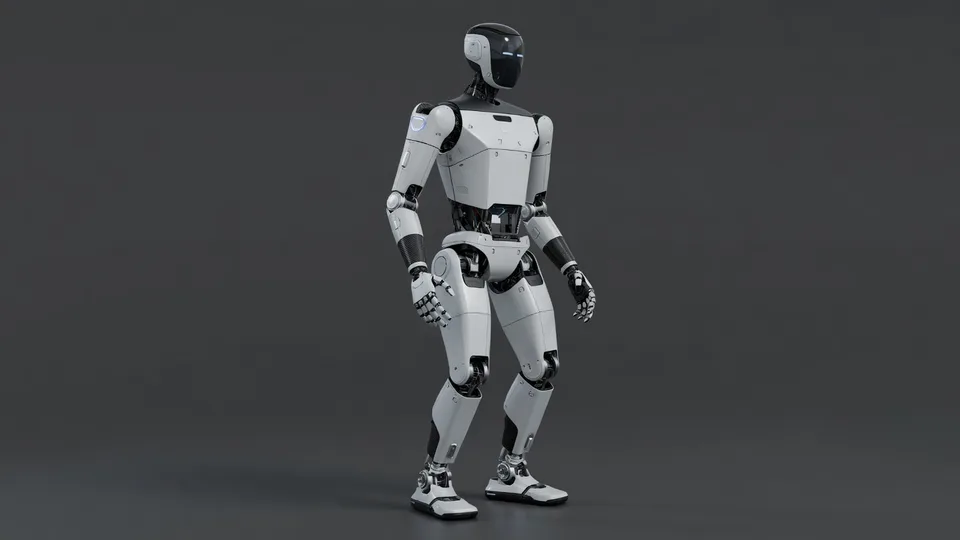
1X Technologies has launched a limited NEO Beta Household Trial Programme. Select households worldwide will test the humanoid robot in their homes for three months, providing data on safety and daily use before wider deployment.
ZeroGantry analysis
The beta trial represents a calculated risk for 1X: placing ~30 kg soft-bodied units into uncontrolled homes at $20k price points will generate high-value training data but exposes the company to early reliability failures that could slow pre-order conversions. With factory capacity claims of 10k units/year yet zero verified customer deployments to date, the three-month programme serves as both validation gate and marketing signal. Watch for task-completion metrics and intervention rates; ignore only if 2027 volume targets remain internal.
1X NEO Beta Trial Moves Humanoids into Real Homes
Oslo-based 1X Technologies announced the NEO Beta Household Trial Programme on September 14, 2026, inviting a small number of carefully selected households across multiple countries to host the NEO humanoid for a structured three-month evaluation. The programme supplies participants with a complete robot unit plus dedicated technical support, with the explicit goal of collecting operational data on safety protocols, reliability under variable home conditions, performance of everyday chores, and natural user interaction patterns. This represents a deliberate shift from prior controlled factory and internal testing environments toward unstructured domestic validation.
The trial directly addresses the gap between laboratory demonstrations and consumer-grade deployment. Earlier prototypes, including the NEO Beta unveiled in August 2024 and subsequent Gamma iterations, had primarily operated in company facilities or limited pilot settings. By placing units inside ordinary residences, 1X aims to surface edge cases that scripted environments cannot replicate, such as cluttered floors, varied lighting, pet interactions, and multi-room navigation. Feedback loops will feed iterative software updates, with post-trial analysis shaping final production specifications.
Participants are expected to log detailed performance notes and report incidents in real time. The company has emphasized emergency response systems and safety interlocks as core evaluation criteria. While the exact number of households remains undisclosed, the programme is described as limited and selective, prioritizing early adopters who can tolerate an evolving system. This approach mirrors strategies seen in other emerging consumer robotics categories where real-world telemetry accelerates learning.
Hardware Tailored for Domestic Environments
The NEO platform stands approximately 168 cm tall and weighs around 30 kg, making it lighter and more maneuverable than many industrial-focused humanoids. Its tendon-driven actuation system and soft external coverings are engineered for low-inertia movement and reduced risk during close human contact. Published noise levels sit at 22 dB, quieter than most household appliances, which supports continuous operation without disrupting daily life.
Hand design received a notable July 2026 update, delivering 25 degrees of freedom per hand along with force sensing and tactile feedback. These hands target IP68 protection for durability while handling fragile or irregular household objects. Onboard compute relies on NVIDIA Jetson Thor-class hardware, supporting local perception and control. Battery runtime is listed at up to four hours with self-charging capability, though actual duty cycles will depend on task complexity and any required interventions.
The overall architecture prioritizes residential safety over maximum payload or speed. Published carrying capacity reaches approximately 25 kg, with arm payloads around 8 kg. These figures position NEO for tasks such as moving laundry baskets or groceries rather than heavy industrial lifting. The soft-body construction and covered joints further differentiate it from exposed metal-frame competitors.
Autonomy Status and Remote Support Model
Current Early Access units ship with foundational autonomy for basic household tasks, including door opening, item fetching, light tidying, and simple kitchen-adjacent actions. More complex or novel chores may require scheduled remote human assistance through an Expert Mode system. This hybrid approach allows 1X to gather training data from real homes while delivering immediate utility to participants.
Independent reviews note that autonomy remains immature for fully open-ended weekly chore lists. Published internal evaluations from early 2026 showed progress in zero-shot generalization, yet broad reliability across diverse homes has not yet been independently verified at scale. The trial programme is explicitly designed to close this gap by exposing the system to authentic variability.
Privacy considerations surface prominently with onboard cameras, microphones, and the option for remote operation. 1X has indicated that users will control when Expert sessions occur, but households must weigh the presence of persistent sensing against the benefits of assisted task completion.
Pricing, Availability, and Production Context
Early Access ownership is priced at US$20,000 with a US$200 refundable deposit. A subscription option at US$499 per month is also offered, though with later delivery priority. US deliveries are slated to begin in 2026, with international expansion targeted for 2027. The company's Hayward facility, spanning 58,000 square feet, has begun scaling production with capacity goals reaching 10,000 units annually initially and over 100,000 by late 2027.
These manufacturing targets remain aspirational until customer delivery volumes are confirmed. The beta trial serves as a critical validation step before committing to larger-scale shipments. Analysts project initial commercial pricing could exceed $50,000 in certain markets, placing early units in a premium segment.
Competitive Landscape and Market Implications
The 1X approach contrasts with factory-oriented deployments by competitors such as Tesla Optimus and Figure 02, which have focused on automotive and logistics environments. While those platforms emphasize high-volume production and industrial payloads, NEO's design choices—light weight, soft interfaces, and home-specific AI—target unstructured living spaces. Unitree models offer lower price points but different safety and autonomy profiles suited to research or light industrial use.
Success in the household trial could accelerate regulatory discussions around domestic robotics, including liability frameworks and data handling standards. For markets like India, where the sector remains nascent, the programme provides a benchmark for what r
Sources
Who services this hardware
Topics
Manufacturers
Related articles
- Tuya Doova and OlloBot OlloNi SS1 Debut Elder Care Robots at IFA 2026 — Tuya Smart launched the wheeled Doova companion robot at IFA 2026 for seniors living alone, featuring fall response, LLM conversation, and smart-home control. O
- ICE Forecasts $1-2M Boston Dynamics Spot Robot Buy for Public Safety — U.S. Immigration and Customs Enforcement plans a sole-source purchase of Boston Dynamics Spot quadrupeds worth $1-2 million. The robots would handle remote insp
- Amazon Proteus Fleet Expansion Hits New North American Sites — Amazon has expanded its Proteus autonomous mobile robot fleet to additional fulfillment centers across North America. The robots now handle heavy and bulky item
- Tesla Optimus Supply Chain Orders for 5,000 Units Signal Fremont Ramp — Chinese supply chain reports indicate Tesla placed bulk component orders covering roughly 5,000 Optimus humanoids in early September 2026. The procurement follo