Players · AI-derived
Tesla Optimus Supply Chain Orders for 5,000 Units Signal Fremont Ramp
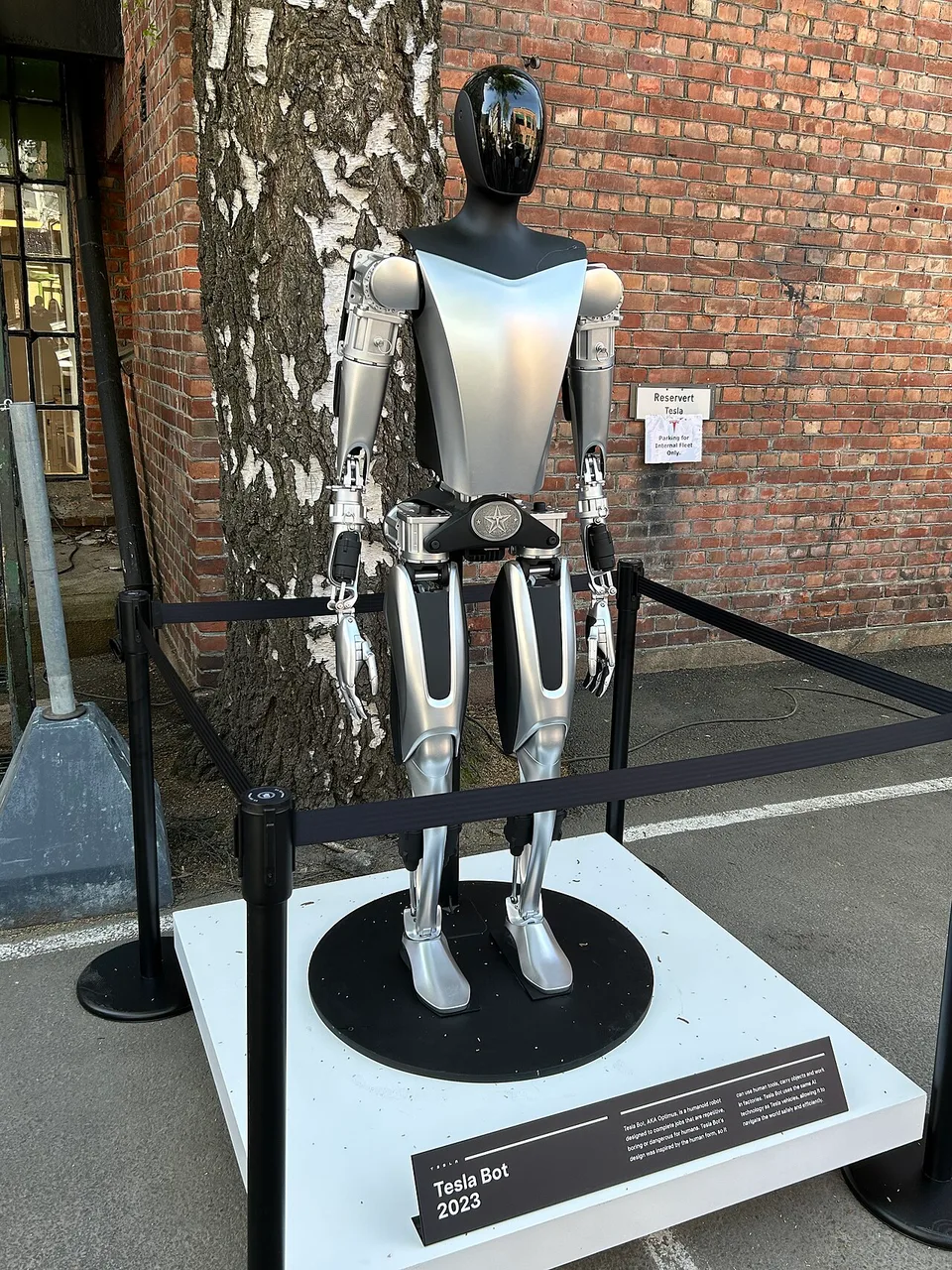
Chinese supply chain reports indicate Tesla placed bulk component orders covering roughly 5,000 Optimus humanoids in early September 2026. The procurement follows summer commissioning of the Fremont production line and aligns with internal targets of 10,000–20,000 units by year-end.
ZeroGantry analysis
The 5,000-unit order implies roughly $100 million in actuator and magnet commitments at target pricing, testing whether Chinese T-chain suppliers can sustain 2,500 units/week by December without quality escapes. Fleet MTBF data will determine whether early internal deployments generate positive ROI or simply training data. Watch weekly output disclosures; ignore public sales timelines until 2027 yields stabilize.
Tesla Optimus Component Procurement Signals Shift to Scale
Chinese financial outlets reported on September 7, 2026, that Tesla issued its first large-scale component orders for approximately 5,000 Optimus units through core “T-chain” suppliers. The timing follows reported equipment debugging on the Fremont line that began in July and concluded preliminary trials by mid-August. Jiemian News cited channel checks indicating that yield improvements during the summer setup cleared the path for commercial-grade parts procurement. Tesla has not publicly confirmed the figures, yet the move marks a transition from prototype batches to repeatable manufacturing.
The orders target actuators, lead screws, and related hardware essential for the robot’s 40-plus servo joints. Each Optimus unit requires roughly 3.5 kg of NdFeB magnets across its drive system, a detail that intersects with ongoing rare-earth supply constraints from China. Analysts quoted in the Humanoids Daily coverage project that if the current 5,000-unit batch assembles without major re-tooling, weekly run rates could exceed 2,500 units by December. That pace would support the internal goal of 10,000–20,000 units deployed by year-end if yields stabilize.
Fremont Line Conversion and Early Production Challenges
Tesla decommissioned the final Model S and Model X vehicles from the Fremont line in early May 2026. The subsequent four-month conversion installed modular sub-assembly stations designed for the robot’s actuator-dense architecture. Elon Musk described the initial ramp as “agonizingly slow” during the Q2 2026 earnings discussion, citing roughly 10,000 unique parts and the absence of a pre-existing supply chain. The line now occupies space previously used for low-volume sedan production, with capacity ultimately targeted at one million units annually.
Early units from the Fremont line are feeding an internal “Optimus Academy” program focused on data collection rather than immediate productive tasks. Musk has repeatedly noted that the production S-curve will feature a long, flat initial segment before steepening. Supply-chain partners in China have reportedly allocated up to 70 percent of their capacity to the program, with some constructing new facilities to meet Tesla’s September target of 1,000 units per week scaling to 2,000–2,500 units per week by December.
Cost and Serviceability Implications of the 5,000-Unit Order
Bulk procurement at this volume begins to amortize non-recurring engineering costs across a meaningful fleet. At Musk’s stated long-term target of roughly $20,000 per unit, the 5,000-unit order represents a $100 million hardware commitment before assembly labor or integration. Serviceability questions remain open: the robot’s 40-plus actuators and custom lead-screw assemblies will require standardized spare-part logistics and field-repair protocols that do not yet exist at scale. Early fleet economics will hinge on mean time between failures for the harmonic drives and joint modules sourced from the T-chain.
Counter-arguments to rapid scaling include persistent rare-earth magnet export controls and the sheer number of novel components. One 2025 export restriction on medium and heavy rare earths raised European NdFeB prices up to six times Chinese levels. Tesla’s internal timeline has slipped multiple times; prior targets for 5,000 units in 2025 yielded only a few hundred according to contemporaneous reporting. The current 5,000-unit order therefore represents both progress and a test of whether the supply base can sustain the projected weekly cadence.
Competitive Context and Second-Order Effects
Tesla’s move coincides with XPeng’s reported start of mass production for its IRON humanoid in China and Figure AI’s planned deployments at BMW facilities. Unitree and Agility Robotics continue to ship lower-cost platforms at smaller volumes. The Fremont order volume, if realized, would dwarf current public deployments from any single competitor. Fleet economics favor Tesla if actuator yields reach automotive-grade reliability; otherwise, warranty and maintenance costs could erode the projected $20,000 unit economics.
Downstream implications include accelerated demand for harmonic reducers, high-torque motors, and vision-system lenses from Taiwanese and South Korean suppliers already qualifying parts. Samsung and TSMC expansions in Texas and Arizona are indirectly supporting the compute and sensor stack. The 5,000-unit procurement therefore functions as a leading indicator for the broader humanoid supply chain rather than an isolated Tesla event.
Technical Outlook for the Current Fremont Build
The Gen 3 Optimus architecture relies on Tesla-designed actuators and a custom end-to-end neural network for control. Sensor suite includes multiple cameras and force-torque feedback at each joint. Limitations observed in earlier prototypes—precision grasping below millimeter tolerances and sustained high-torque operation—remain unresolved at scale. Unanswered questions center on thermal management during continuous factory shifts and the durability of the lead-screw assemblies under variable loads.
If the September component batch clears incoming quality gates, assembly throughput could accelerate quickly given the modular line design. However, Musk’s caution that the ramp will move only as fast as the slowest part underscores the risk of single-point bottlenecks in the 10,000-part bill of materials. Observers will watch weekly output metrics and any public disclosure of internal deployment numbers for confirmation that the 5,000-unit order has translated into physical robots on the floor.
Sources
Who services this hardware
Topics
Manufacturers
Related articles
- Tuya Doova and OlloBot OlloNi SS1 Debut Elder Care Robots at IFA 2026 — Tuya Smart launched the wheeled Doova companion robot at IFA 2026 for seniors living alone, featuring fall response, LLM conversation, and smart-home control. O
- 1X NEO Beta Trial Program Starts Real-Home Household Testing — 1X Technologies has launched a limited NEO Beta Household Trial Programme. Select households worldwide will test the humanoid robot in their homes for three mon
- ICE Forecasts $1-2M Boston Dynamics Spot Robot Buy for Public Safety — U.S. Immigration and Customs Enforcement plans a sole-source purchase of Boston Dynamics Spot quadrupeds worth $1-2 million. The robots would handle remote insp
- Amazon Proteus Fleet Expansion Hits New North American Sites — Amazon has expanded its Proteus autonomous mobile robot fleet to additional fulfillment centers across North America. The robots now handle heavy and bulky item