Tesla Optimus Gen 2 Review (3★)
Tesla, Inc. · Humanoid
Editorial
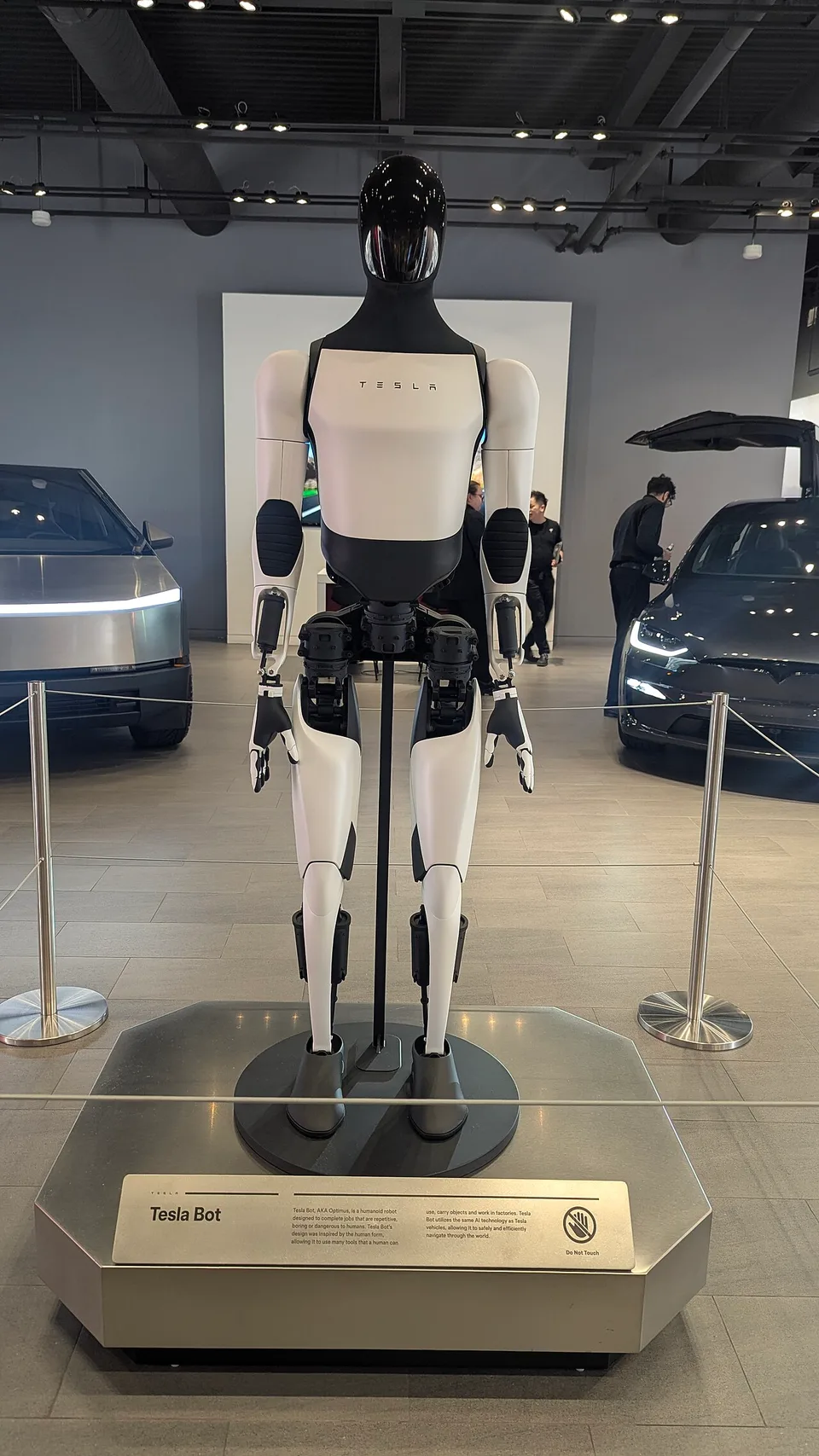
Optimus Gen 2 demonstrates credible hardware progress in a 57 kg package capable of real factory tasks, yet its value remains tethered to Tesla's internal data loops rather than proven autonomous reliability. The 8 km/h gait and tactile hands outperform many early competitors on paper, but sub-100 unit deployments and persistent teleoperation in demos expose a yawning gap between marketing timelines and delivered capability. Closed-source control and missed production ramps echo Tesla's autonomy history—ambitious but chronically delayed. At current economics, Gen 2 functions more as an expensive data-collection mule than a scalable labor replacement. Until autonomy metrics and external pilots materialize, it earns cautious skepticism rather than investor enthusiasm.
What this assessment is based on
Published manufacturer specifications, deployment reports, and operator accounts. ZeroGantry does not claim hands-on testing of this unit unless stated. Scores are editorial judgments from those public sources — see the methodology for how labels are assigned.
Published 2026-07-08
Pros
- 57 kg total mass with 10 kg reduction versus Gen 1 enables agile locomotion at 8 km/h sustained walking speed
- 22-DoF tactile hands support 20 kg payload capacity during factory pick-and-place operations
- 28 body DoF plus Tesla AI4 compute deliver 0.2-second balance recovery on uneven factory floors
- Internal deployments at Fremont and Austin Gigafactories executing battery cell sorting and quality inspection since mid-2024
Cons
- Battery endurance limited to approximately 4.5 hours under mixed factory loads with 2.3 kWh pack
- Fewer than 100 units deployed as of March 2026 across all Tesla sites, with zero external commercial sales
- Majority of public demonstrations rely on teleoperation rather than full end-to-end autonomy
- Closed software stack and current BOM estimates of $50-60k preclude the $20-30k volume target until at least 2027
Tesla Optimus Gen 2 specifications
| Availability | Prototype — Internal Tesla builds; no external sales channel announced. (as of 2026-09-05) |
|---|---|
| Degrees of freedom | 34 |
| Weight | 56 kg |
| Battery life | 4.5 h |
| Payload | 20 kg |
| Max speed | 1.3 m/s |
| Actuators | Custom Tesla Actuators (Structural) |
| Primary sensor | 8x Autopilot Camera Array |
| Function | Warehouse logistics |
| Released | 2023 |
| Maturity | Advanced |
| Status | Active |
| Indicative price | $20,000 (target) |
Tesla Optimus Gen 2 service and repair
ZeroGantry tracks robot repair and service providers across the United States by state, brand, and robot type.
- Robot repair directory — providers by state, brand, and robot type
Other robot reviews
- HUBO-2 Plus review — Rainbow Robotics
- XPeng IRON (Gen 2) review — XPeng
- Reachy review — Pollen Robotics
- Astribot S1 review — Astribot (Stardust Intelligence)
- 1X NEO review — 1X Technologies
- NAO review — Aldebaran / SoftBank Robotics