Players · AI-derived
Tesla Optimus Production Lines Installed at Fremont After Q2 2026 Earnings Miss
Tesla reported Q2 2026 results on July 22 with revenue growth but an earnings miss that triggered a sharp stock drop. The company confirmed it has decommissioned Model S and X lines at Fremont to install first-generation Optimus production lines, with initial robot builds expected later this year.
ZeroGantry analysis
Tesla's rapid 46-day teardown of legacy lines at Fremont demonstrates manufacturing agility that could compress Optimus learning cycles compared to greenfield peers, but the exclusive focus on training-data units through 2026 means positive fleet economics remain years away. Capex tripling to $25B+ with negative FCF signals a high-stakes bet where any 2027 deployment slippage would pressure valuation multiples far more than current vehicle margins. Ship: monitor Q3/Q4 production photos and unit counts closely; ignore hype until verifiable output exceeds low hundreds.
Tesla Q2 2026 Earnings Miss Triggers Stock Reaction and Optimus Scrutiny
Tesla released its Q2 2026 financial results on July 22, reporting total revenue of $28.236 billion, a 26% year-over-year increase driven by automotive and services growth. Despite the top-line expansion, the company posted GAAP operating income of just $398 million and negative free cash flow of $1.092 billion after capital expenditures surged to $5.789 billion. Shares fell approximately 14% in the immediate aftermath as investors reacted to the earnings shortfall and questions around the pace of robotaxi and Optimus commercialization.
The earnings call featured CEO Elon Musk reiterating that Optimus represents Tesla's most significant long-term opportunity. Musk stated Optimus could become the company's biggest product ever and potentially generate up to $10 trillion in cumulative sales, while acknowledging the engineering complexity involved in scaling humanoid production. This messaging came against a backdrop of zero disclosed Optimus units produced to date and timelines that continue to shift.
Fremont Factory Conversion Underway for First-Generation Optimus Lines
Tesla's Q2 shareholder update explicitly confirmed the decommissioning of Model S and Model X manufacturing lines at the Fremont, California factory. The space is now being repurposed for first-generation Optimus assembly lines, with installation actively progressing and initial production anticipated later in 2026. The update notes that early robot builds will feed the Optimus Academy primarily for training data collection and iterative functionality improvements rather than commercial deployment.
The conversion follows a rapid teardown completed in roughly 46 days earlier in the year, clearing legacy automotive tooling to make room for robotics infrastructure. Tesla has targeted eventual annual capacity of one million Optimus units at the converted Fremont facility. This pivot marks a deliberate reallocation of one of the company's most experienced manufacturing sites away from low-volume legacy vehicles toward high-volume humanoid robotics.
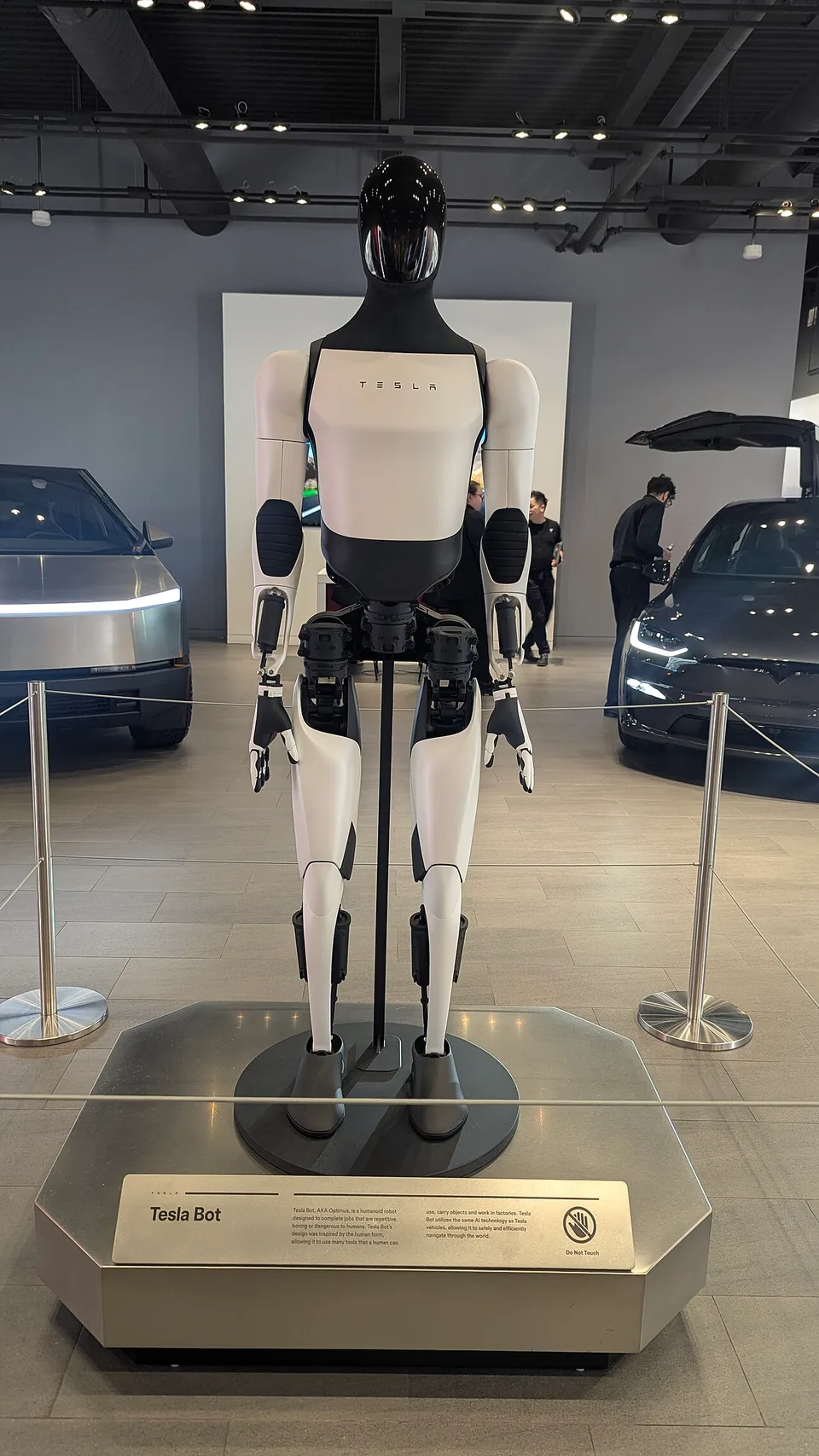
Photographs included in the Q2 deck show the emerging Optimus production environment at Fremont, providing the first official investor-facing visuals of the new lines. These images depict a facility transitioning from automotive heritage to robotics-focused tooling, though formal high-volume output has not yet begun as of the July 22 filing.
Musk's Optimus Timeline Comments and Production Realities
During the earnings discussion, Musk emphasized that significant work remains to achieve scalable production of the humanoid platform. He described the challenge as highly complex, consistent with prior statements that initial output will be slow and difficult to forecast precisely due to the 10,000 unique parts involved in each unit. The Q2 update aligns with earlier Q1 guidance pointing to a late-2026 start at Fremont, now framed as "soon" with builds dedicated to internal learning.
No specific unit production targets or ramp schedules appear in the latest disclosure. Previous commentary had referenced potential 2026 output in the tens of thousands, but the company has consistently avoided committing to firm numbers amid the shift to new manufacturing processes. This cautious approach reflects the reality that the first-generation lines serve primarily as a data-gathering and process-validation step before broader deployment.
Parallel development continues at Gigafactory Texas, where site work is advancing toward a much larger second-generation facility ultimately aimed at ten million units annually. The contrast between Fremont's near-term pilot role and Texas's long-term scale ambitions highlights Tesla's multi-site strategy for robotics manufacturing.
Capital Allocation and Fleet Economics Implications
Tesla's 2026 capital expenditure trajectory has accelerated sharply, with the company directing the majority of its $25 billion-plus spend toward Optimus infrastructure, AI compute, and related facilities. This level of investment exceeds prior years and signals prioritization of the robotics program over near-term automotive margins. The negative free cash flow in Q2 underscores the cash burn associated with these bets.
From a fleet economics perspective, the initial Optimus units produced at Fremont will generate training data rather than revenue, extending the period before any positive return on the robotics investment materializes. Analysts tracking humanoid deployments note that Tesla's approach of using early production exclusively for internal improvement mirrors patterns seen in other advanced manufacturing transitions, where learning cycles precede commercial viability.
The stock reaction following the earnings release illustrates market sensitivity to any perceived delays in Optimus timelines. Investors appear to be weighing the long-term narrative against near-term execution risks, particularly as the company balances vehicle business performance with heavy robotics outlays.
Competitive Context Among Humanoid Developers
Tesla's Fremont conversion positions it uniquely among humanoid developers by leveraging an existing high-volume automotive factory rather than building greenfield facilities from scratch. This contrasts with approaches at companies such as Figure AI or Boston Dynamics, which rely on different manufacturing partnerships and timelines. Tesla's stated cost target near $20,000 per unit at scale remains a key differentiator if achieved, though current first-generation hardware is not yet at that cost point.
The decision to end Model S and X production entirely at Fremont frees dedicated floor space and skilled labor for robotics, a move not replicated by peers still focused primarily on research prototypes. However, the absence of any public Optimus production count as of late July keeps Tesla aligned with the broader industry reality that no company has yet demonstrated sus
Sources
- https://assets-ir.tesla.com/tesla-contents/IR/TSLA-Q2-2026-Update.pdf
- https://www.sec.gov/Archives/edgar/data/1318605/000162828026049213/exhibit991.htm
- https://finance.yahoo.com/technology/ai/articles/elon-musk-says-optimus-could-be-233500054.html
- https://gizmodo.com/tesla-stock-price-falls-elon-musk-optimus-2000789840
Who services this hardware
Topics
Manufacturers
Related articles
- Tuya Doova and OlloBot OlloNi SS1 Debut Elder Care Robots at IFA 2026 — Tuya Smart launched the wheeled Doova companion robot at IFA 2026 for seniors living alone, featuring fall response, LLM conversation, and smart-home control. O
- 1X NEO Beta Trial Program Starts Real-Home Household Testing — 1X Technologies has launched a limited NEO Beta Household Trial Programme. Select households worldwide will test the humanoid robot in their homes for three mon
- ICE Forecasts $1-2M Boston Dynamics Spot Robot Buy for Public Safety — U.S. Immigration and Customs Enforcement plans a sole-source purchase of Boston Dynamics Spot quadrupeds worth $1-2 million. The robots would handle remote insp
- Amazon Proteus Fleet Expansion Hits New North American Sites — Amazon has expanded its Proteus autonomous mobile robot fleet to additional fulfillment centers across North America. The robots now handle heavy and bulky item