Editorial · AI-derived
Tesla Optimus Maintenance Costs: $1,500-$4,000 Reality Check
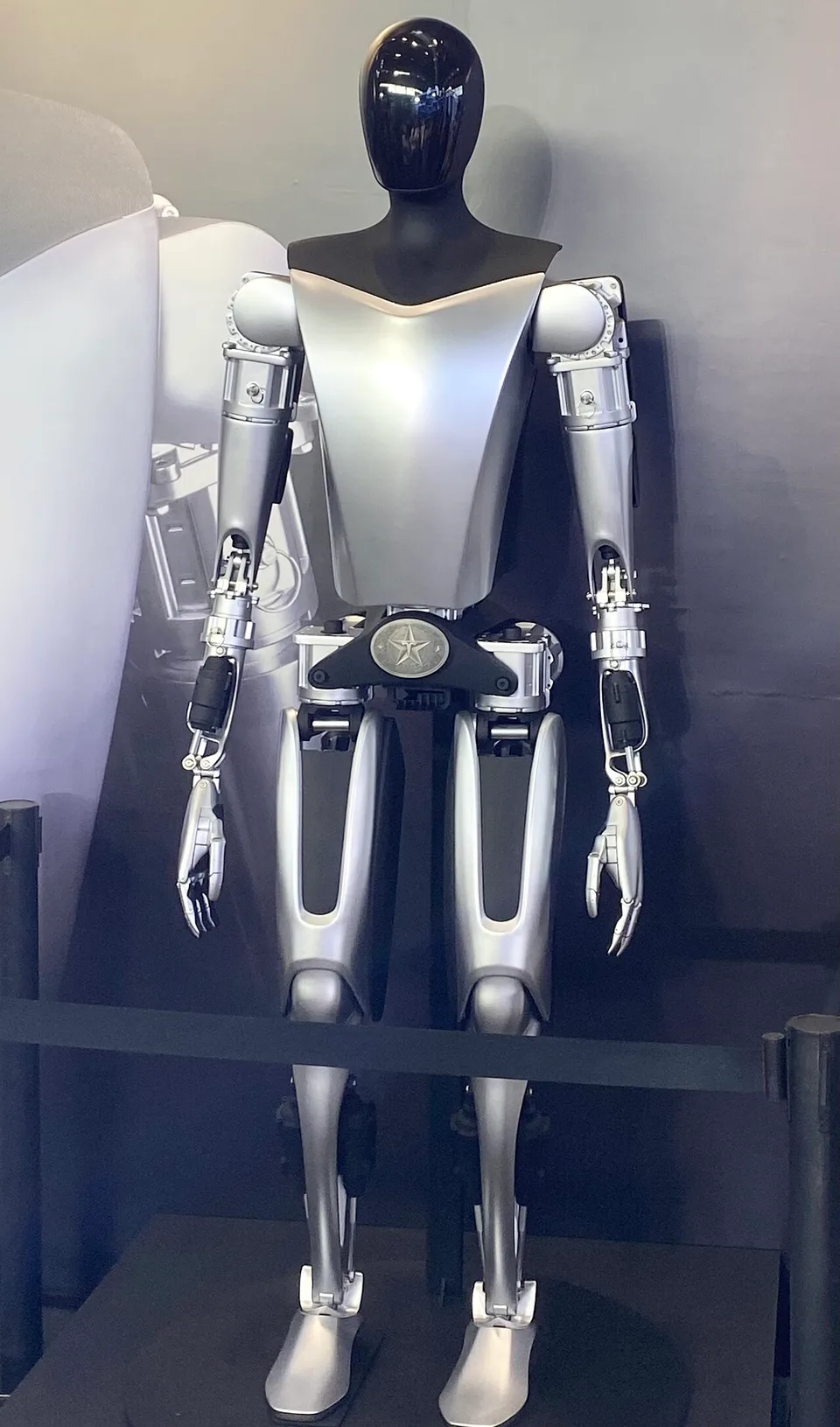
Analyses of the 2026 Tesla Optimus platform put annual consumer maintenance at $1,500-$4,000 and enterprise use at $5,000-$15,000. These figures cover routine servicing and updates but exclude major component replacements, showing the true ongoing costs for buyers.
ZeroGantry analysis
At 6-16% of a $20k-$30k unit price, Optimus maintenance aligns with industrial norms yet adds consumer friction through absent service infrastructure. Fleet TCO could reach $8k-$12k yearly once battery and actuator cycles are included, narrowing the labor arbitrage versus human workers to 60-70% savings at best. Ship only after Tesla publishes warranty and parts pricing; otherwise lease or wait for competitors with clearer support ecosystems.
EDITORIAL / OPINION
The Numbers Behind Optimus Ownership
Operator guides and total cost of ownership breakdowns released in early 2026 place routine annual maintenance for consumer-grade Tesla Optimus units between $1,500 and $4,000. Enterprise deployments in high-duty cycles climb to $5,000-$15,000. These ranges cover scheduled inspections, software updates, actuator lubrication, and sensor calibration while explicitly excluding battery swaps or full actuator replacements. The estimates draw directly from industrial robot benchmarks where annual upkeep typically lands at 6-16 percent of initial hardware cost. For a platform still targeting a $20,000-$30,000 sticker price at scale, that percentage translates into hundreds of dollars every month even before unexpected failures appear.
Tesla has not yet published an official service manual or pricing for Optimus support contracts. The figures circulating today come from third-party modeling that extrapolates from the company's vehicle service network and comparable humanoid deployments. Daily operational checks, weekly joint inspections, and quarterly firmware pushes form the baseline cadence. Operators report that most tasks can be performed by existing facility technicians once they complete short certification modules, keeping labor costs modest for light residential use.
Service Plans Still Missing from the Equation
Buyers searching for an Optimus repair service plan will find only placeholder language on Tesla's site. No nationwide technician network or mobile repair fleet has been announced for the humanoid line. In contrast, Tesla's automotive business maintains over 1,000 service centers and a robust mobile fleet that handles 70 percent of warranty work at the owner's location. Scaling that model to millions of household robots introduces new logistics questions around parts inventory, diagnostic tools, and liability for autonomous movement.
Enterprise customers may negotiate bundled support through Tesla's existing factory automation channels, but consumer buyers face uncertainty. Early adopters could end up paying premium rates for on-site visits or shipping units back to Texas for major work. The absence of transparent service pricing leaves a gap that third-party providers are already circling, with some blogs listing preventive contracts at $500-$2,000 per month for fleets.
How These Costs Compare to Industrial Benchmarks
The 6-16 percent annual maintenance rule of thumb holds across articulated arms and mobile platforms from Universal Robots, KUKA, and Boston Dynamics. Spot quadrupeds typically require $3,000-$8,000 yearly in commercial settings once utilization exceeds 2,000 hours. Humanoid platforms add complexity through bipedal balance systems and dexterous hands, pushing sensor and actuator wear higher. Optimus estimates sit comfortably inside that band for consumer duty cycles under 1,000 hours per year.
Major exclusions matter. Battery degradation in high-cycle use could add $2,000-$5,000 every three to five years, while actuator modules may run $1,500 apiece when they fail outside warranty. These line items mirror electric vehicle ownership patterns where owners budget separately for 12-volt and high-voltage battery replacements. Without published replacement intervals or pricing, total cost of ownership models remain incomplete.
Labor Market and Geopolitical Angles
Realistic maintenance costs directly affect the labor displacement narrative Tesla promotes. At $1,500-$4,000 per year, a household Optimus still undercuts full-time domestic help in most developed markets, yet the delta narrows once insurance, downtime, and software subscriptions enter the equation. In supply-chain terms, actuator and sensor components rely on the same rare-earth and precision-motor supply chains already strained by automotive electrification. Any disruption in those flows would immediately inflate service costs and extend lead times for repairs.
Geopolitically, reliance on a single U.S. manufacturer for both hardware and over-the-air updates creates concentration risk. European and Asian regulators have already signaled interest in mandating local data residency and third-party diagnostic access for advanced robots. Those rules could force Tesla to open portions of its service ecosystem or partner with regional providers, further complicating cost projections.
Technical Breakdown
Architecture Optimus Gen 2 uses Tesla's end-to-end neural net architecture running on custom inference hardware. The system fuses vision, proprioception, and force feedback into a single policy network rather than modular controllers common in legacy industrial arms. This design reduces per-task engineering but concentrates failure modes in the learned model, requiring frequent over-the-air updates that themselves become maintenance events.
Actuators and Sensors Custom rotary actuators integrate torque sensing and thermal management at the joint level. Hands contain 22 degrees of freedom with tendon-like routing that increases part count and calibration points. Sensor suite includes multiple cameras, inertial measurement units, and joint encoders; each requires periodic alignment checks to maintain balance and manipulation accuracy. Routine servicing focuses on these calibration routines and lubrication of high-cycle bearings.
Limitations Current models still exhibit drift in long-duration walking tasks and require supervised resets after certain falls or collisions. Software updates can introduce regressions that temporarily reduce capability until the next patch cycle. Parts availability remains unproven at consumer volumes, and no public data exists on mean time between failures for the 2026 production batch.
Unresolved Questions Tesla has not disclosed battery chemistry specifics or expected cycle life under mixed residential loads. Warranty length, transferability, and coverage for software-induced damage are also absent from public materia
Sources
Who services this hardware
Topics
Manufacturers
Related articles
- Robotics Week in Review: Sep 25–Oct 2, 2026 — Humanoid robots advanced toward real warehouse and factory roles while software platforms and record industrial deployments underscored automation's acceleratin
- Physical Intelligence San Francisco Lease Signals 2026 Physical AI Scaling — Physical Intelligence subleased 80,000 square feet at 850 Brannan Street in San Francisco from Airbnb in September 2026. The robotics AI firm is expanding its B
- IFR Data: 5 Million Robots Signal Labor Shift, Not Humanoid Revolution — The International Federation of Robotics' World Robotics 2026 report shows global factory robot stock reached 5 million units in 2025, with China installing 59
- Robotics Week in Review: Sep 18–Sep 25, 2026 — This week showcased explosive humanoid deployments in entertainment, services, and homes alongside major AI training leaps. AGIBOT hit 300 robots at Chimelong w