Service · AI-derived
Tesla Optimus Maintenance Cost 2026: Actuator Replacement & TCO
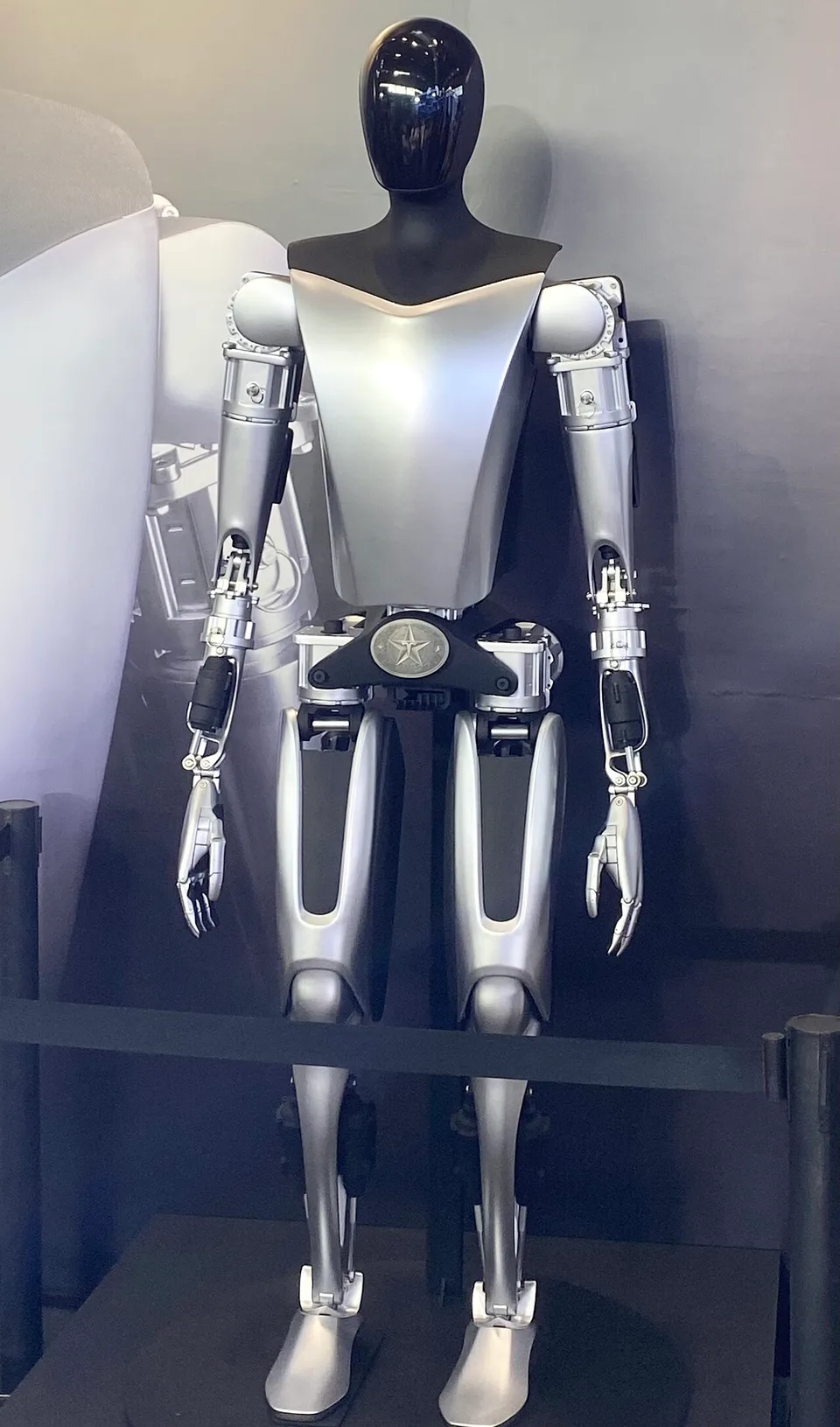
Independent 2026 analyses project annual Tesla Optimus maintenance at $1,500-$4,000 for light use and $5,000-$15,000 for factory cycles. The largest expenses stem from 28+ actuators costing $1,350-$2,700 each and a 2.3 kWh battery replaced every 2-4 years.
ZeroGantry analysis
At $25k target pricing, even the high-end $15k annual enterprise maintenance keeps five-year TCO under $100k—still 6-8x cheaper than equivalent human labor over the same period when 24/7 utilization is factored. The open variable remains actuator MTBF; if early fleets hit only 2,000-5,000 hours between major swaps instead of the 10k+ industrial norm, effective hourly cost could double and erase much of the projected advantage. Watch 2027 field data from the first external customers.
Tesla Optimus Service Economics in 2026
Tesla Optimus maintenance costs remain a central question for operators evaluating fleet economics as production ramps in late 2026. Independent analyses place annual upkeep between $1,500 and $4,000 for light consumer or pilot use and $5,000 to $15,000 for intensive factory deployments. These figures exclude major component replacements and assume OTA updates handle 60-70% of issues without hardware intervention.
The robot's 28 body actuators plus additional hand units drive the highest variable costs. Morgan Stanley estimates place each harmonic drive or planetary roller-screw actuator at $1,350 to $2,700. With 28 primary body actuators and up to 50 in Gen 3 hands, a single full replacement cycle could exceed $100,000 at current component pricing before scale reductions take effect. Tesla's vertical integration of motors and gearboxes aims to cut these costs dramatically at volume, but early fleets will face higher per-unit expenses.
Battery replacement cycles add another predictable line item. The 2.3 kWh NMC pack, shared chemistry with Tesla vehicles, shows expected life of 2-4 years depending on duty cycle. Replacement costs range from $1,000 to $5,000 per pack according to Standard Bots and cross-referenced industry benchmarks. At two cycles per day in a 250-day factory year, the pack approaches 500 cycles annually, aligning with Tesla cell ratings of 500-1,000+ cycles before capacity drops below 85%.
Actuator Replacement Realities and Intervals
Actuators represent the dominant maintenance variable because of their quantity and mechanical wear. Tesla uses a mix of harmonic-drive rotary units for high-torque joints such as hips and shoulders and roller-screw linear actuators for explosive force applications like knee extension. Industrial harmonic drives typically rate for 10,000-30,000 hours; at 2,000 operating hours per year that projects a 5-15 year theoretical life under moderate load. Factory telemetry will monitor cycle counts and torque drift to schedule proactive swaps before failure.
Early Gen 3 hand tendon systems introduce additional variables. Fifty actuators per hand pair, relocated to the forearms, rely on tensioned cables that stretch over thousands of grasp cycles. Calibration drift in fingertip tactile sensors or grip force appears as an early indicator, with sensor replacements estimated at $200-$800 per hand. No public MTBF data exists yet for the integrated assembly, leaving operators to rely on predictive analytics from the Tesla fleet dashboard.
Preventive service intervals follow a tiered model. Daily operator checks cover battery state-of-charge and basic self-test results. Weekly reviews include actuator torque trends and camera lens cleaning. Monthly procedures encompass full range-of-motion sweeps and IMU recalibration. Semi-annual or annual visits by authorized technicians address lubrication, safety system verification per ISO 10218:2026, and component lifecycle audits. Labor for a full preventive service runs $500-$2,000 depending on location and scope.
Battery Life, Charging, and Energy Costs
The 2.3 kWh torso-integrated pack supports roughly five to eight hours of useful work or up to 22 hours standby, according to architecture disclosures. Commercial electricity at $0.14 per kWh yields about $0.32 per full charge. Annual energy expense stays under $120 even for near-continuous operation when amortized across shifts. Thermal management and BMS functions mirror automotive designs, reducing new failure modes but requiring periodic capacity testing during scheduled service.
Degradation signals include reduced runtime for identical tasks and rising internal resistance during charge curves. Replacement timing aligns with capacity falling below 85% of nominal 2.3 kWh. Operators can extend life through conservative duty cycles and temperature-controlled environments, though intensive 24/7 factory use accelerates wear toward the shorter end of the 2-4 year window.
Total Cost of Ownership Framework
Purchase price targets of $20,000-$30,000 at scale form only the starting point. Adding 5-15% annual maintenance yields $1,000-$4,500 in recurring costs at target pricing. Over five years, a $25,000 robot plus maintenance and energy could total $30,000-$55,000 before downtime or integration expenses. This compares favorably against human labor equivalents of $95,000-$156,000 per year fully loaded, yet remains sensitive to actual actuator longevity and utilization rates.
OTA software subscriptions at $100-$300 per month bundle neural network updates and remote diagnostics, folding many traditional service visits into the recurring fee. Unplanned hardware interventions remain the largest uncertainty. Limited public reliability data means early adopters will generate the first fleet-level MTBF statistics that later operators can use for more precise forecasting.
Service Providers and Warranty Outlook
Tesla has not yet announced formal external service networks for Optimus. Early deployments inside Fremont and Giga Texas facilities rely on internal teams and vehicle-derived processes. Authorized technician training will likely expand from existing Tesla service centers as external sales begin in late 2026. Warranty structures remain undisclosed but are expected to mirror vehicle programs with coverage for actuators and battery during initial ownership periods.
Third-party specialists in industrial robotics and EV battery service may enter the market for out-of-warranty work, particularly for actuator rebuilds or sensor calibration. Predictive maintenance via telemetry offers the strongest lever for controlling costs, allowing swaps during planned downtime rather than reactive repairs.
Common Failure Modes and Mitigation
High-cycle joints, fingertip sensors, and tendon tension in hands constitute the primary wear points. Camera lenses in dusty or oily environments require frequent cleaning. Battery capacity fade a
Watch
Sources
Who services this hardware
Topics
Manufacturers
Related articles
- Fanuc Robot Repair Costs, Maintenance, and Ohio Service Options 2026 — Fanuc industrial robots typically require $2,000–$8,000 in annual preventive maintenance per unit. Ohio operators weigh authorized providers like FANUC America
- OpenAI Humanoid Robot: Sam Altman Confirms In-House Hardware Plans — OpenAI CEO Sam Altman confirmed on September 2, 2026 that the company will build humanoid robots through its internal robotics division. The project begins with
- Figure AI Index Dataset: 16M Videos Scale Helix Training — Figure AI launched its Index app on August 25, 2026, after collecting 16 million real-world human videos from 264,000 downloads in 108 countries.
- Unitree G1+ Adds 2-DOF Neck and 110% Torque Boost at $15K — Unitree launched the G1+ humanoid on September 14, 2026, with a movable neck, stronger and cooler motors, and new sensors. The base model lists at about $15,000