Players · AI-derived
Tesla Optimus Fremont Line Encounters Battery and Integration Snags
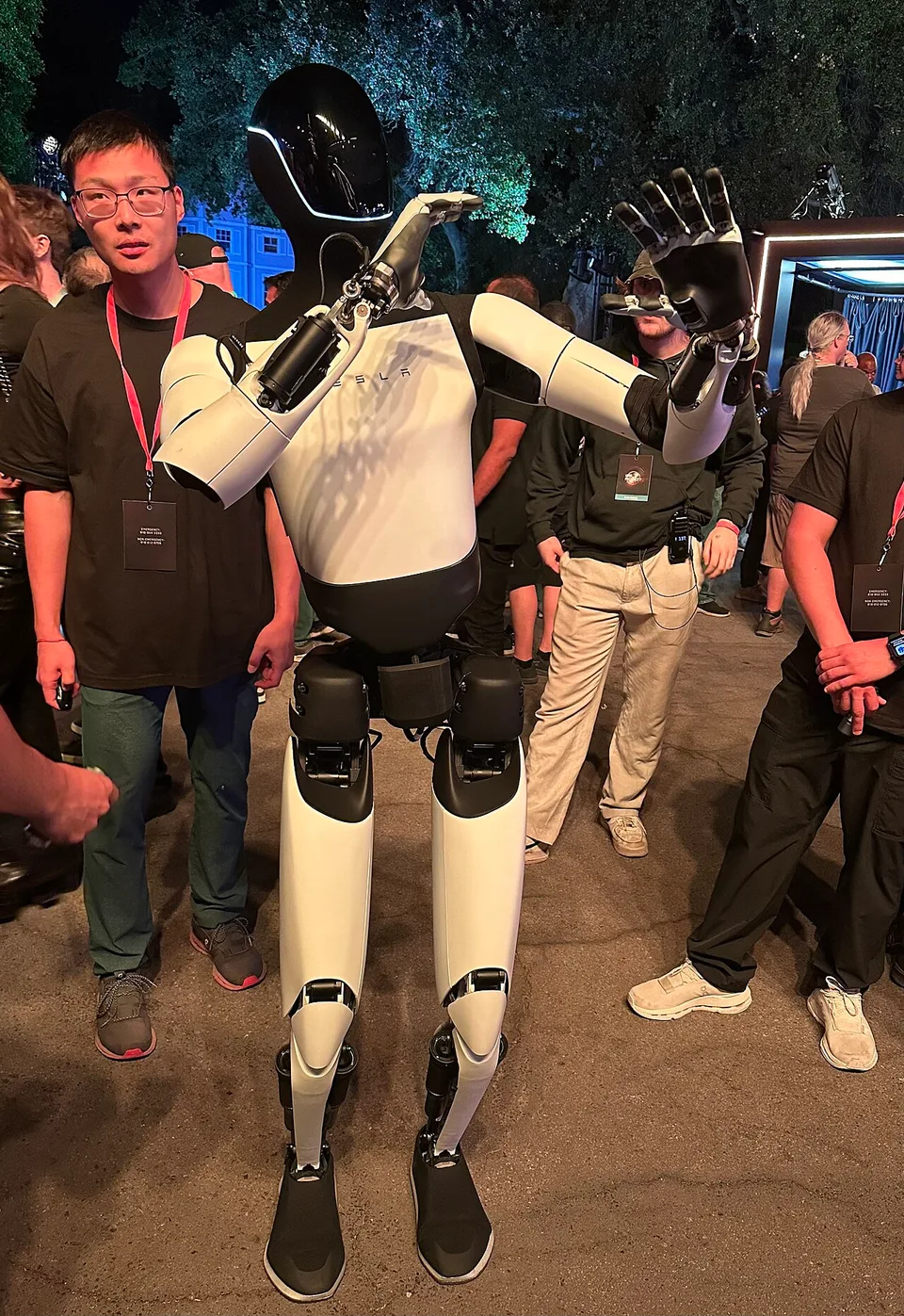
Tesla activated its converted Model S/X assembly line at the Fremont factory for Optimus production in late July or August 2026. Early low-volume output for internal testing faces reported halts tied to battery life limits, hardware-software integration problems, and dexterous hand payload constraints.
ZeroGantry analysis
Fremont’s 46-day line conversion demonstrates execution velocity but the 10,000-part bill of materials and zero prior supply chain create a steeper learning curve than prior Tesla programs. Battery runtime shortfalls and hand payload limits will directly constrain internal fleet utilization rates and MTBF targets once units leave the Optimus Academy. Watch for Q3 unit counts; if yields stay below 50 percent per station the Texas 10-million-unit plant timeline slips materially. Ship early validation units only after joint motor efficiency improves 20 percent.
Fremont Line Conversion Marks Shift from Vehicles to Humanoids
Tesla decommissioned its Model S and Model X assembly operations at the Fremont factory in early May 2026 after 14 years of production. The company then spent roughly four months stripping the line and installing modular sub-assembly stations for Optimus humanoid robots. By July 1 2026 Elon Musk posted images of the team walking the new setup, aligning with prior guidance for initial output in late July or August. The modular approach replaces traditional linear automotive flow with dedicated stations for actuators batteries and electronics, targeting an eventual annual capacity of one million units at this site alone.
Supply chain observers note that the entire Optimus bill of materials consists of roughly 10,000 unique parts with no pre-existing vendor base. Tesla must therefore qualify new suppliers or bring critical processes in-house for motors gearboxes and precision sensors. This vertical integration effort mirrors earlier challenges with 4680 battery cells yet scales to an order of magnitude more components. Early production therefore proceeds at a deliberately slow pace while yield data accumulates.
Battery Life and Energy Density Emerge as Primary Constraints
Recent supply-chain intelligence from TrendForce indicates that limited battery runtime has already prompted consideration of production pauses. Optimus relies on high-energy-density packs that must support multi-hour shifts of continuous motion planning and manipulation tasks. Current cell chemistries and thermal management strategies fall short of the duty cycle required for factory deployment at scale. AI-driven energy optimization offers incremental gains but cannot overcome fundamental hardware inefficiencies in joint motors and transmission systems.
Payload limitations in the dexterous hands compound the energy problem. Miniature actuators must deliver both precision and force while remaining within strict weight budgets. Reports highlight integration friction between mechanical hardware software control loops and simulated human behavior models. These bottlenecks extend development timelines beyond initial projections because each subsystem must be co-optimized rather than sourced as mature modules.
Hardware-Software Integration Delays Ramp Timeline
Musk has publicly described Optimus scaling as the hardest manufacturing challenge Tesla has undertaken. Every element of the robot is new and the absence of an established supply chain forces parallel development of components processes and quality systems. Hardware-software integration issues surface most acutely during high-speed pick-and-place and connector seating operations where latency between perception and actuation produces errors. Internal test units therefore feed data back into training loops at the Optimus Academy rather than entering productive factory roles immediately.
Analysts tracking the program note that Gen 3 design freeze occurred only recently with supply chain lock-in claimed by mid-2026. Fremont output in the second half of 2026 is earmarked exclusively for data collection and iterative refinement. External commercial availability remains targeted no earlier than the second half of 2027. The four-month line conversion from vehicle to robot production demonstrates execution speed but does not guarantee rapid volume growth when core technical margins remain tight.
Supply Chain and Cost Implications for Fleet Economics
Rare-earth magnet export controls imposed by China in April 2025 continue to affect servo motor pricing and availability. European magnet costs reached up to six times Chinese levels after those restrictions tightening margins on actuator sub-assemblies. Tesla’s long-term plan calls for a second dedicated line at Giga Texas with 10-million-unit annual capacity but Fremont must first prove repeatable processes at low volume. Capital expenditure guidance exceeding $20 billion in 2026 supports both sites yet investors will scrutinize actual unit counts in upcoming quarterly updates.
MTBF metrics for early Optimus units remain undisclosed. Fleet economics hinge on achieving high uptime and low maintenance intervals once robots move beyond controlled training environments. Payload shortfalls and battery swaps could increase operational overhead compared with fixed automation or human labor in repetitive tasks. Production economics will therefore depend on rapid iteration of joint transmissions and energy systems before meaningful internal deployment numbers materialize.
Competitive Context and Manufacturing Precedents
Other humanoid programs including Figure 02 and Unitree H1 have announced parallel production targets yet face similar actuator and integration hurdles. Tesla’s vertically integrated approach at Fremont contrasts with contract manufacturing strategies pursued by some rivals. The company’s experience ramping Cybertruck and 4680 cells provides relevant precedent for managing novel component sets at scale. Whether that experience translates to humanoid volumes will become clearer once Fremont output data appears in earnings materials.
Outlook for 2026-2027 Production Ramp
Initial Fremont builds prioritize training data over commercial shipments. Musk has warned that the early portion of the production S-curve will remain flat and long. Observers expect Q3 2026 shareholder updates to provide the first quantitative visibility into actual unit output and yield rates. Until battery endurance and hand payload reach target thresholds the line will function primarily as an engineering validation platform rather than a high-volume factory.
Sources
- https://www.emsnow.com/tesla-reportedly-halts-optimus-production-technical-bottlenecks-signal-a-turning-point-for-the-humanoid-robot-industry-says-trendforce/
- https://driveteslacanada.ca/news/tesla-optimus-production-line-fremont-progress/
- https://www.fool.com/investing/2026/08/27/optimus-just-entered-production-at-fremont-heres-w/
- https://elonosphere.com/Articles/2455/optimus-reaches-the-line-what-tesla-s-first-robot-factory-still-has-to-prove
Who services this hardware
Topics
Manufacturers
Related articles
- Tuya Doova and OlloBot OlloNi SS1 Debut Elder Care Robots at IFA 2026 — Tuya Smart launched the wheeled Doova companion robot at IFA 2026 for seniors living alone, featuring fall response, LLM conversation, and smart-home control. O
- 1X NEO Beta Trial Program Starts Real-Home Household Testing — 1X Technologies has launched a limited NEO Beta Household Trial Programme. Select households worldwide will test the humanoid robot in their homes for three mon
- ICE Forecasts $1-2M Boston Dynamics Spot Robot Buy for Public Safety — U.S. Immigration and Customs Enforcement plans a sole-source purchase of Boston Dynamics Spot quadrupeds worth $1-2 million. The robots would handle remote insp
- Amazon Proteus Fleet Expansion Hits New North American Sites — Amazon has expanded its Proteus autonomous mobile robot fleet to additional fulfillment centers across North America. The robots now handle heavy and bulky item