Players · AI-derived
Tesla Lands Vast Majority of 1M Optimus Line at Fremont
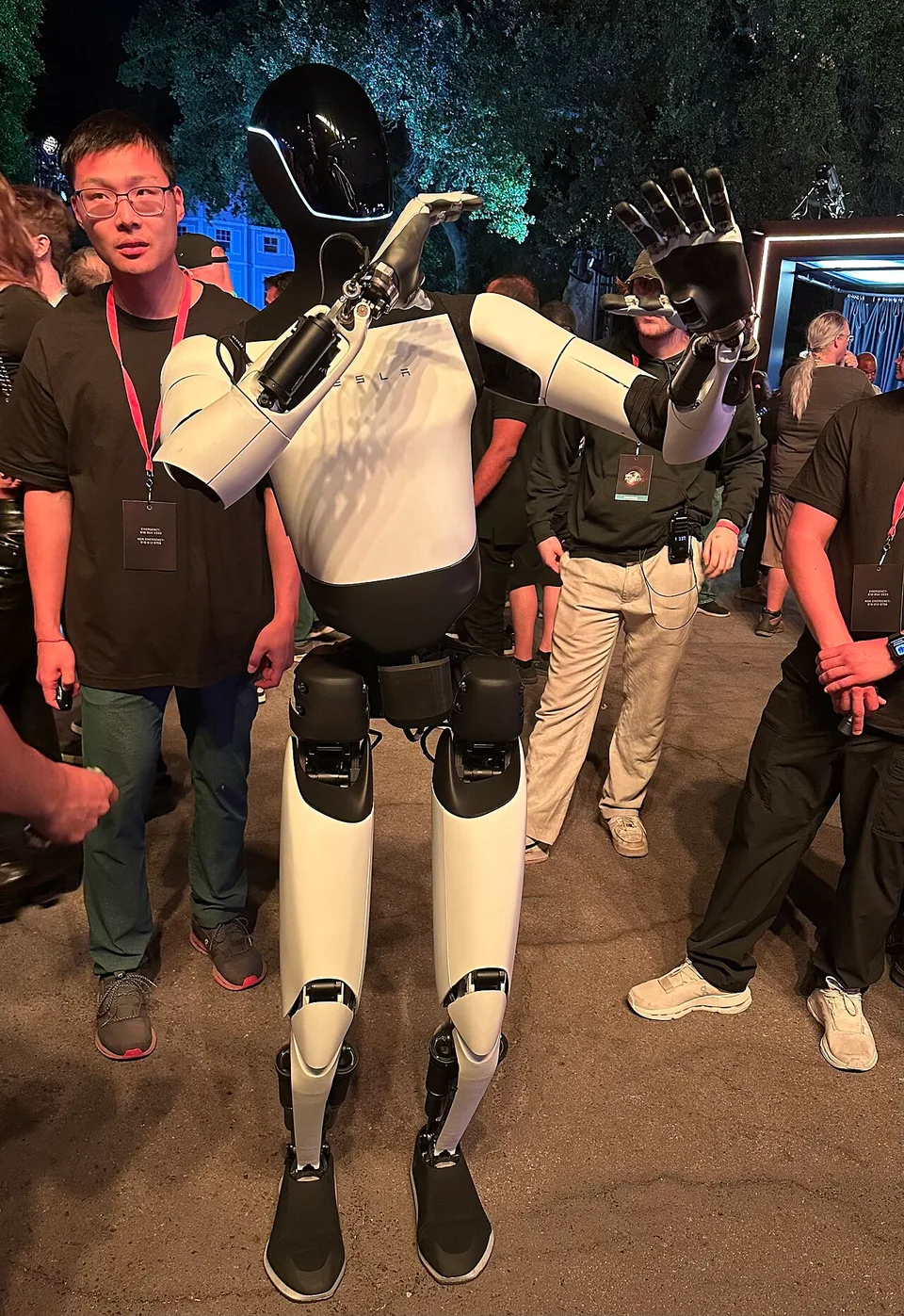
Tesla has installed most equipment for a 1 million unit per year Optimus production line at its Fremont factory. Production-quality robots are now coming off the line for internal use, with external deliveries targeted for late 2027.
ZeroGantry analysis
Fremont's early-ramp status with the vast majority of 1M-capacity equipment already landed suggests Tesla is prioritizing installed base over disclosed weekly output, a classic automotive-style capacity play that could front-load depreciation before volume materializes. The 20,000-unit weekly target equates to roughly, but the shallow S-curve and hand-assembly bottlenecks imply service fleets will remain small through 2027, limiting near-term revenue while internal training fleets consume the first several thousand units. Watch for Q4 capacity-table updates; ignore any claim of immediate million-unit output until Tesla publishes an actual installed-capacity number rather than design intent.
Fremont Line Replaces Model S/X Production
Tesla cleared the former Model S and Model X assembly floor at its Fremont, California factory by May 9, 2026, completing the decommissioning in 46 days. The space now houses the first high-volume Optimus production line. In its Q3 2026 shareholder update released October 21, the company stated that Optimus production began on these high-volume lines and that the bots coming off the line are the first production-quality units manufactured. [Tesla Optimus Production Lines Installed at Fremont After Q2 2026 Earnings Miss](/articles/tesla-optimus-production-lines-installed-at-fremont-after-q2-2026-earnings-miss) details the earlier preparation steps.
Elon Musk told investors on the earnings call that Tesla has landed the vast majority of equipment needed for a line designed for roughly one million robots per year. He described the current stage as early production and noted that reaching an annualized rate of 20,000 units per week would take at least a year, possibly longer, because the ramp follows a shallow S-curve for a radically new product. The same call confirmed plans to integrate AI5 chips by April and reiterated Musk's view of Optimus as Tesla's best product ever.
Production Quality and Internal Use First
The initial robots from the Fremont line are being used inside Tesla for training and further development rather than immediate external sales. Tesla's Q3 letter explicitly states that the current manufacturing process has proven suitable for a commercial product even as hardware and process iterations continue. This marks a shift from hand-built prototypes to repeatable output on repurposed automotive tooling. [Tesla Optimus Production Starts at Fremont with 2027 Delivery Target](/articles/tesla-optimus-production-starts-at-fremont-with-2027-delivery-target) covers the timeline implications for first customer shipments.
Hands remain the most challenging subsystem, with ongoing engineering focus on durability, dexterity, and cost. Musk noted that roughly 10,000 things must go right for reliable volume output. The supply chain is already aligning, with Tuopu, Joyson, and Sanhua certified as mass-production partners for components in September.
Capacity Context and Texas Expansion
Fremont's line is listed in Tesla's capacity table as Early Ramp with no numeric figure disclosed, while a second Optimus facility at Giga Texas remains in the Construction phase. Musk has described the Texas plant's long-term target as ten million units annually. The Fremont design capacity of one million units per year replaces the output that once came from more than 610,000 Model S and X vehicles built on the same floor over 14 years. [Tesla Optimus Fremont Line Encounters Battery and Integration Snags](/articles/tesla-optimus-fremont-line-encounters-battery-and-integration-snags) examines specific technical hurdles encountered during the conversion.
Current weekly output has not been disclosed. Earlier reporting indicated several hundred units per week by August, with internal goals exceeding 1,000 per week by year-end. Musk emphasized that the early portion of the ramp will be slow and bumpy. External deliveries to other companies for dangerous, repetitive, or 24/7 tasks are still targeted around the end of 2027, conditional on achieving required reliability, safety, and open-ended task performance.
Fleet Economics and Service Implications
At a target price range of $20,000– per unit, the one-million-unit annual capacity at Fremont would represent a manufacturing scale far beyond any prior humanoid program. Musk's 2025 performance award includes a milestone of one million bots delivered, tying executive compensation directly to volume. Serviceability and maintenance costs will determine whether leased fleets can achieve positive unit economics at scale. [Tesla Optimus Hits Hundreds Weekly at Fremont as Hand Assembly Bottleneck](/articles/tesla-optimus-hits-hundreds-weekly-at-fremont-as-hand-assembly-bottleneck) analyzes early output constraints around dexterous components.
Tesla is also building an internal Optimus Academy requiring 10,000–20,000 robots for self-play training data generation before wider deployment. This internal fleet approach mirrors the company's data-collection strategy for vehicles and could accelerate AI improvements while deferring external revenue.
Supply Chain and Component Orders
Tesla certified three major suppliers for Optimus components in September, signaling that the bill of materials is stabilizing. Earlier supply-chain orders for had already been placed to support the ramp. [Tesla Optimus Supply Chain Orders for Signal Fremont Ramp](/articles/tesla-optimus-supply-chain-orders-for-5-000-units-signal-fremont-ramp) tracks those procurement milestones and their implications for component pricing and availability.
The shift from automotive to humanoid manufacturing requires entirely new supply chains, as Musk noted that nothing from the existing vehicle supply base directly transfers to Optimus. Battery integration, actuator sourcing, and rare-earth magnet restrictions add further complexity to the ramp timeline.
Competitive Positioning
While other humanoid programs continue prototype testing, Tesla's move to production-quality output on a converted high-volume line demonstrates a different approach to scaling. The Fremont installation gives Tesla a near-term capacity advantage, though actual weekly rates remain undisclosed and the full 20,000-unit weekly target sits at least a year away. Continued iteration on AI, reliability, and service life will determine whether the line can sustain the economics required for widespread adoption.
Sources
Who services this hardware
Topics
Manufacturers
Related articles
- Tesla Optimus Fremont Line Encounters Battery and Integration Snags — Tesla activated its converted Model S/X assembly line at the Fremont factory for Optimus production in late July or August 2026. Early low-volume output for int
- Tesla Optimus Production Lines Installed at Fremont After Q2 2026 Earnings Miss — Tesla reported Q2 2026 results on July 22 with revenue growth but an earnings miss that triggered a sharp stock drop. The company confirmed it has decommissione
- Tesla Optimus Production Starts at Fremont with 2027 Delivery Target — Tesla began early production of Optimus humanoid robots on a high-volume line at its Fremont factory during Q3 2026. External deliveries are targeted for late 2
- Tesla Optimus Hits Hundreds Weekly at Fremont as Hand Assembly Bottleneck — Tesla scaled Optimus V3 output at Fremont from dozens per week in Q2 to several hundred in August 2026 by converting former Model S/X lines. Most units stay in