Players · AI-derived
Tesla Optimus Hits Hundreds Weekly at Fremont as Hand Assembly Bottleneck
Tesla scaled Optimus V3 output at Fremont from dozens per week in Q2 to several hundred in August 2026 by converting former Model S/X lines. Most units stay in internal testing while hand precision, durability, and AI generalization limit broader use.
ZeroGantry analysis
The tenfold ramp to several hundred units weekly at Fremont demonstrates Tesla can convert automotive lines quickly, but hand assembly consuming over 100 manual operations per unit signals that MTBF for dexterous components will dominate early fleet costs. Internal-only deployment means no near-term revenue offset against production spend, so investors should watch the 1,000-unit automated line target as the first credible signal of commercial viability rather than volume headlines alone. Ship the data-collection focus; watch the hand reliability fixes; ignore broader deployment claims until generalization metrics improve.
Tesla Optimus Production Ramp at Fremont
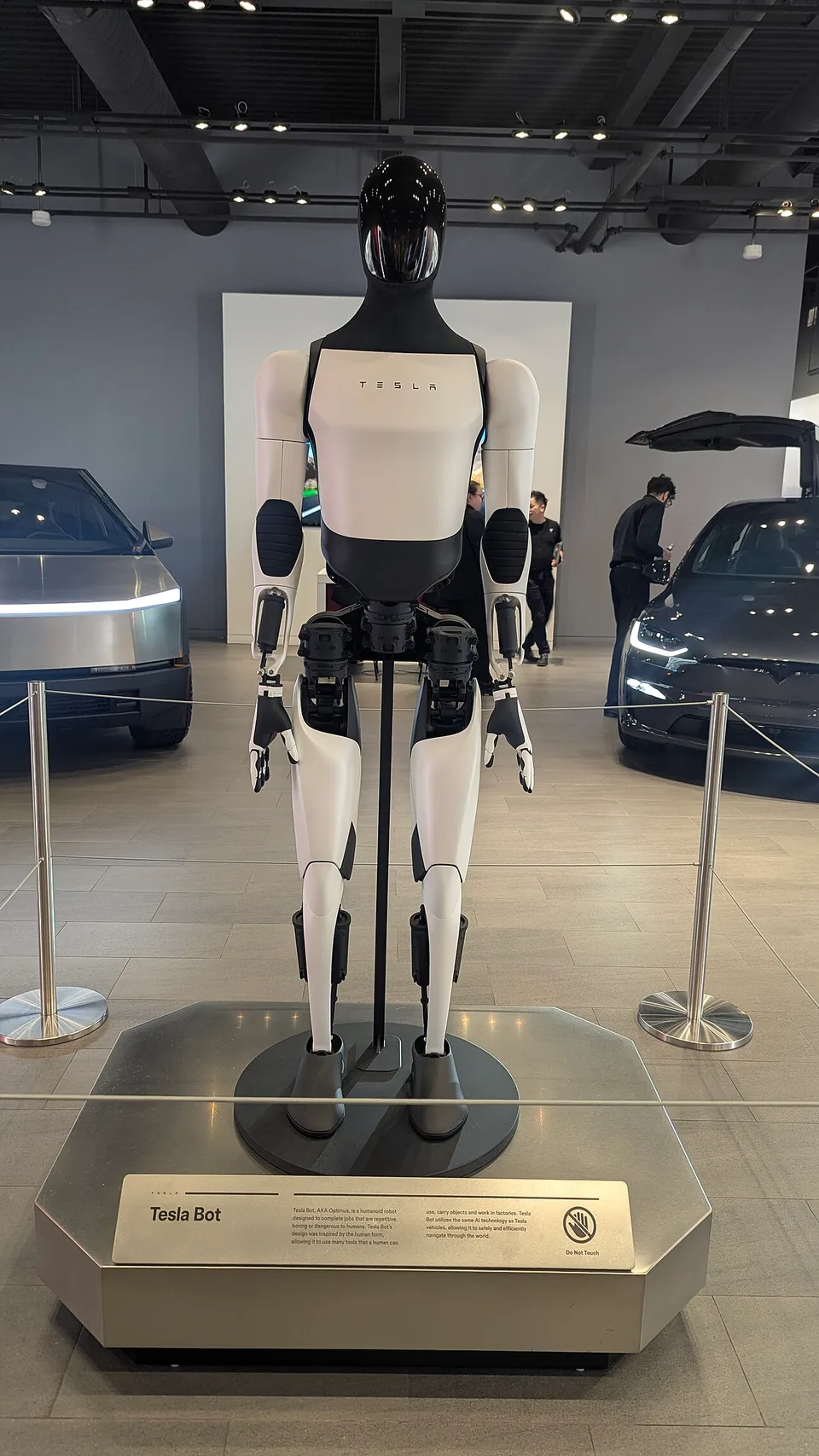
Tesla increased weekly Optimus V3 output at its Fremont, California factory from a few dozen units during small-batch testing in the second quarter of 2026 to several hundred units per week by August. This roughly tenfold increase came after the company ended Model S and Model X production in early May 2026 and repurposed that assembly space for humanoid robots. Workers and engineers previously assigned to those vehicle lines, along with dozens from Model Y operations, shifted to the Optimus program. The ramp reflects Tesla's push to build dedicated capacity ahead of higher-volume targets, though current output remains far below long-term ambitions.
The production figures originate from reporting in The Information, summarized across multiple outlets including Electrek on September 25, 2026. Managers have set an internal goal of more than 1,000 units per week by the end of 2026 through a continuous automated line that does not yet exist. An eventual target of approximately 20,000 units weekly sits much further out. These numbers position Tesla among the more aggressive players in humanoid manufacturing scale-up, yet they also highlight the gap between prototype volumes and reliable commercial output.
Hand Assembly Emerges as Primary Constraint
Each Optimus hand and forearm contains more than 100 screws and small components that workers still assemble manually. Fixtures at hand, joint, and electronics stations struggle to align parts held to tighter tolerances than automotive components, leading to frequent rework on units exiting the line. Tesla has acknowledged reliability problems with some touch sensors and plans a replaceable "sensing glove" for 2027 rather than redesigning the entire hand for durability. Supply-chain partners that performed well in low-volume prototypes have difficulty maintaining consistent quality as volumes rise, creating another layer of friction.
These mechanical challenges directly affect fleet economics. Hand failures require either full hand replacement or sensor swaps, raising per-unit maintenance costs before any robot reaches productive deployment. The current V3 units built at Fremont also fall short of the stricter durability standards planned for customer versions, meaning early production serves mainly as a learning platform. Analysts tracking the program note that hand dexterity remains one of the hardest problems in humanoid robotics, and Tesla's approach of accepting replaceable modules represents a pragmatic but incremental fix.
Internal Testing Dominates Current Deployments
Most Optimus units produced so far remain inside Tesla facilities for testing, training, and data collection rather than performing unsupervised work. Robots assigned to factory tasks operate only in tightly controlled, supervised zones and follow task-specific programming instead of demonstrating broad generalization. This limited scope echoes earlier statements from Elon Musk, who in January 2025 projected roughly 10,000 units built in 2025 with several thousand performing useful work by year-end; by early 2026 he acknowledged zero units were doing useful work at that time.
The data-collection focus makes sense for an AI-driven platform. Each robot generates vision and tactile data that feeds training pipelines, yet the machines still behave unpredictably outside narrowly trained scenarios. Tesla plans to lease rather than sell early units to external companies, which further delays revenue recognition until generalization improves. The gap between hardware volume and operational capability underscores why production ramp metrics alone do not translate directly into commercial traction.
Supply Chain and AI Generalization Hurdles
Beyond hands, suppliers face challenges scaling precision components for actuators and sensors while holding tolerances at higher volumes. Tesla has described building the Optimus supply chain almost from scratch, a process that introduces variability in part quality and delivery timing. AI generalization lags hardware output, with robots requiring days of task-specific training and remaining confined to predictable environments. These combined constraints explain why the current ramp supports internal development more than external sales or deployments.
Competitors such as Figure AI, Boston Dynamics, and Unitree continue parallel development paths, but Tesla's vertical integration of manufacturing and AI training gives it a distinct data advantage if generalization hurdles are cleared. The Fremont line conversion demonstrates Tesla's willingness to cannibalize legacy vehicle capacity for robotics, a move that carries both opportunity and risk for overall factory utilization.
Path to 1,000 Units Weekly and Beyond
Reaching the year-end target of more than 1,000 units per week requires transitioning from the current semi-manual process to a fully continuous automated line. That shift hinges on resolving fixture alignment issues and stabilizing supplier output for the hundreds of unique parts in each robot. Long-term goals near 20,000 units weekly would demand additional factory space, likely at Giga Texas, and further iteration on the commercial-grade Optimus variant.
Fleet economics will depend heavily on mean time between failures for hands and actuators once units leave controlled environments. Early internal data collection should accelerate AI improvements, but the timeline for reliable generalization remains uncertain. Tesla's approach of iterating in public through production updates keeps investor and supply-chain attention high even as technical bottlenecks persist.
Competitive Context in Humanoid Scaling
Tesla's reported August 2026 output places it ahead of most rivals in weekly volume, though direct comparisons remain difficult without standardized metrics. XPeng recently activated an automated line for its IRON humanoid in Guangzhou with commercial sales targeted for 2027. Other prog
Sources
- https://electrek.co/2026/09/25/tesla-optimus-production-ramp-hands-ai-generalization-problems/
- https://www.digitaltoday.co.kr/en/view/107991/tesla-optimus-output-up-10-fold-but-hand-assembly-emerges-as-bottleneck
- https://teslant.com/en/rumors/tesla-optimus-hundreds-per-week-generalization-2026-09
- https://humanoid.guide/tesla-ramps-optimus-production-despite-hand-and-ai-limits/
Who services this hardware
Topics
Manufacturers
Related articles
- Agility Digit 5 Humanoid Raises Payload to 50 lb for Warehouse Scale — Agility Robotics launched the Digit 5 humanoid on September 15, 2026. The new model lifts 50 pounds repeatedly, adds cooperative safety features for barrier-fre
- Feather Robotics Launches $30K Wheeled Humanoid for Developers — Feather Robotics unveiled its $29,990 omnidirectional wheeled humanoid on September 24, 2026, alongside a $7.6 million pre-seed round led by Gradient.
- Boston Dynamics Atlas Trains at Hyundai Metaplant RMAC Center — Boston Dynamics opened the RMAC training center inside Hyundai Motor Group Metaplant America near Savannah, Georgia, on September 21, 2026. Atlas humanoids are
- Tesla Optimus Gen 3 Design Renders Leak in Android App Update — Tesla's Android app version 4.61.0 contains official renders of Optimus Gen 3 showing enclosed joints and matte black shin fairings. The leak offers the first d