Players · AI-derived
Musk: Optimus Hardest Product Tesla Has Ever Scaled
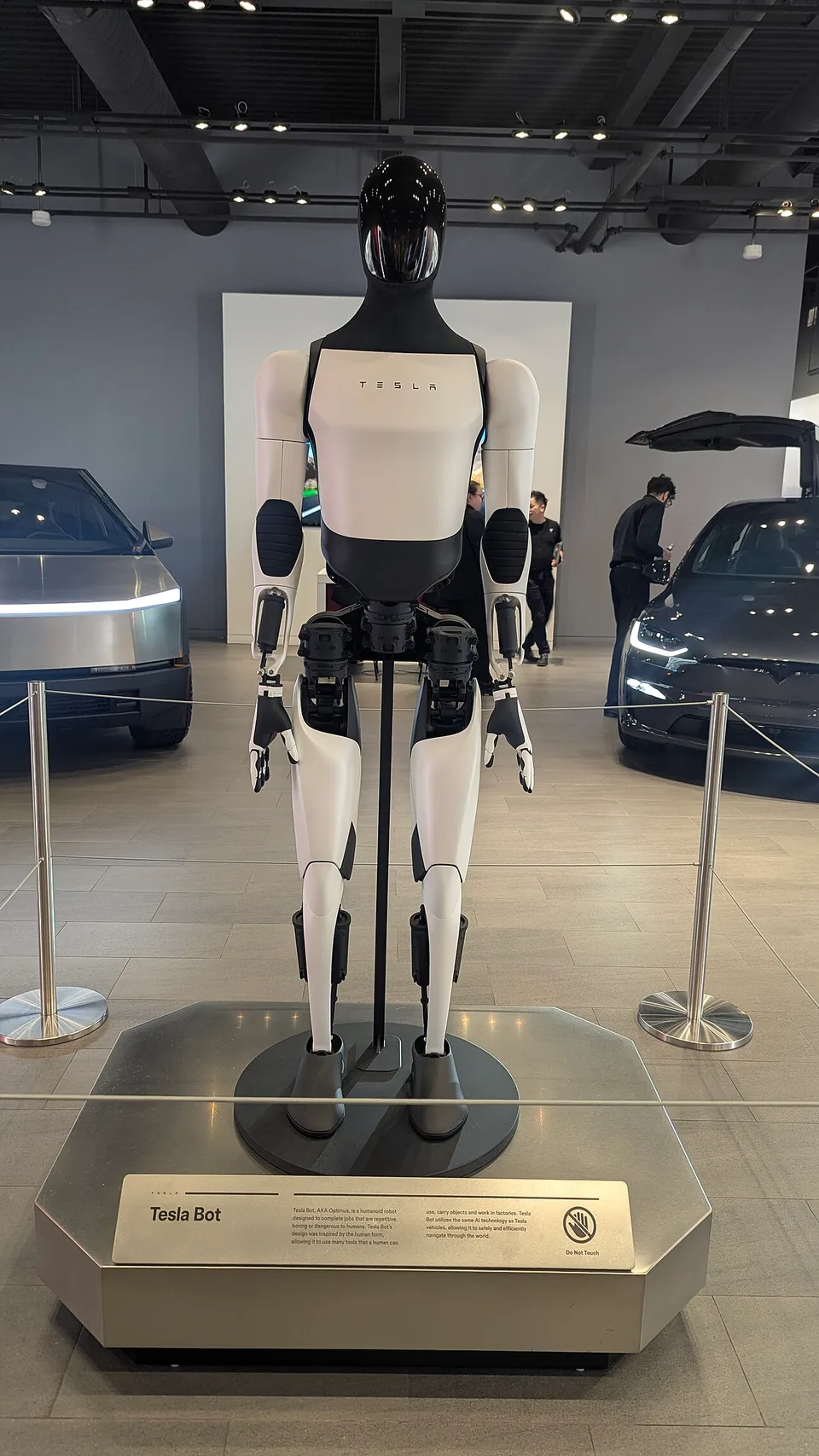
During Tesla's Q2 2026 earnings call on July 22, Elon Musk stated that Optimus will be the hardest product the company has ever scaled for manufacturing. Tesla is building nearly every component in-house because no supply chain exists for the required human-level dexterity and new parts.
ZeroGantry analysis
Tesla's decision to vertically integrate nearly all Optimus subsystems could inflate early per-unit costs by 25% or more versus peers using established suppliers, but secures margin control once volumes exceed several thousand units annually. The flat ramp warning and removal of mass-production phrasing indicate realistic pacing rather than delay; monitor Q3 2026 Fremont output numbers closely. Ship early internal units for data, watch external deployment timelines, ignore broad 2027 volume claims until proven.
Musk Highlights Optimus Design and Supply Chain Barriers
During the July 22, 2026 Tesla Q2 earnings call, Elon Musk detailed the core engineering and manufacturing obstacles facing the Optimus humanoid robot program. He emphasized that the robot demands human-level dexterity across its hands and forearms, a capability with no established supplier base or off-the-shelf components. This forces Tesla to develop AI chips, memory modules, logic processors, and specialized packaging entirely in-house or through tightly controlled partners.
Musk described the situation explicitly: every element on the robot is new, unlike vehicles that draw from mature supply ecosystems for items like wheels and body panels. Suppliers such as Samsung, TSMC, and Micron are beginning to invest, yet allocations remain constrained, with memory prices described as "pretty insane." The absence of ready suppliers for actuators, flexible circuits, and metal-injection parts means Tesla must vertically integrate to avoid bottlenecks during any future ramp.
Manufacturing Scale Challenges and Production Timeline
Tesla decommissioned the Model S and Model X lines at the Fremont, California factory to install the first Optimus production line, with initial manufacturing runs targeted for Q3 2026. Early units will feed an internal "Optimus Academy" for data collection and training rather than external sales. Site work continues at Gigafactory Texas for dedicated facilities.
Musk tempered expectations by noting the initial production ramp will be "quite flat and long" and "agonizingly slow." Tesla removed prior mass-production language from its shareholder presentation, signaling a deliberate shift from optimistic timelines. Reliability concerns compound the issue; a 154-pound (70 kg) robot failure could create safety and recovery problems in real-world settings.
Technical Requirements Driving In-House Development
Optimus targets end-to-end neural network control, taking visual input and producing actions without explicit programming, mirroring Tesla's FSD approach. Achieving dexterity comparable to or exceeding the human hand requires over 10,000 components per unit, including custom motors, gearboxes, and high-wear actuators designed for continuous industrial or residential duty cycles.
The company is expanding AI compute infrastructure, with Cortex clusters now exceeding 200 MW combined capacity to support both vehicle autonomy and robot training. Digital Optimus simulation precedes physical builds to accelerate learning. No current humanoid achieves generalized task performance without programming, positioning Optimus as a potential first if supply and reliability hurdles are cleared.
Competitive Context Among Humanoid Programs
Tesla's approach contrasts with peers pursuing more incremental supply strategies. While Figure AI and others leverage existing industrial partners for certain subsystems, Tesla's full vertical integration aims to secure long-term cost and performance control. Early internal deployments at Fremont will generate the data flywheel needed for reinforcement learning, but external volume targets for 2027 remain unspecified.
Production constraints extend beyond mechanics to electronics and batteries, areas where Tesla already reports shortages affecting vehicle output. The Optimus program shares these resource demands, increasing competition for fab capacity and cell production.
Fleet Economics and Early Deployment Implications
Initial Optimus units entering service internally will prioritize training data over revenue generation. This mirrors early FSD data collection but at higher capital intensity due to the robot's mechanical complexity. Fleet economics hinge on achieving high utilization rates in factory or warehouse settings before any broader rollout.
Musk reiterated his view that Optimus represents Tesla's biggest product opportunity, yet one of its greatest combined engineering and AI challenges. The Q3 2026 production start will provide the first measurable output data to assess whether the flat ramp trajectory can accelerate.
Outlook for Scaling and External Milestones
Construction of dedicated Optimus capacity at Gigafactory Texas continues alongside Fremont line installation. Success depends on simultaneous resolution of chip packaging, actuator durability, and supplier qualification. Investors and analysts will watch Q3 unit counts and any disclosed reliability metrics as leading indicators.
The tempered language in the earnings materials suggests Tesla is aligning expectations with the reality of building an entirely new manufacturing ecosystem from the ground up.
Sources
- https://www.inc.com/georgia-fearn/elon-musk-says-this-will-be-teslas-biggest-product-ever-if-it-can-solve-the-supply-chain-issue/91378137
- https://www.notateslaapp.com/news/4481/summary-of-teslas-2026-q2-earnings-call-cybercab-fsd-ai4-and-more
- https://www.karmactive.com/tesla-q2-2026-earnings-record-revenue-eps-miss-optimus-cybercab/
Who services this hardware
Topics
Manufacturers
Related articles
- Tuya Doova and OlloBot OlloNi SS1 Debut Elder Care Robots at IFA 2026 — Tuya Smart launched the wheeled Doova companion robot at IFA 2026 for seniors living alone, featuring fall response, LLM conversation, and smart-home control. O
- 1X NEO Beta Trial Program Starts Real-Home Household Testing — 1X Technologies has launched a limited NEO Beta Household Trial Programme. Select households worldwide will test the humanoid robot in their homes for three mon
- ICE Forecasts $1-2M Boston Dynamics Spot Robot Buy for Public Safety — U.S. Immigration and Customs Enforcement plans a sole-source purchase of Boston Dynamics Spot quadrupeds worth $1-2 million. The robots would handle remote insp
- Amazon Proteus Fleet Expansion Hits New North American Sites — Amazon has expanded its Proteus autonomous mobile robot fleet to additional fulfillment centers across North America. The robots now handle heavy and bulky item