PARO Review (4★)
AIST / PARO Robots · Specialty
Editorial
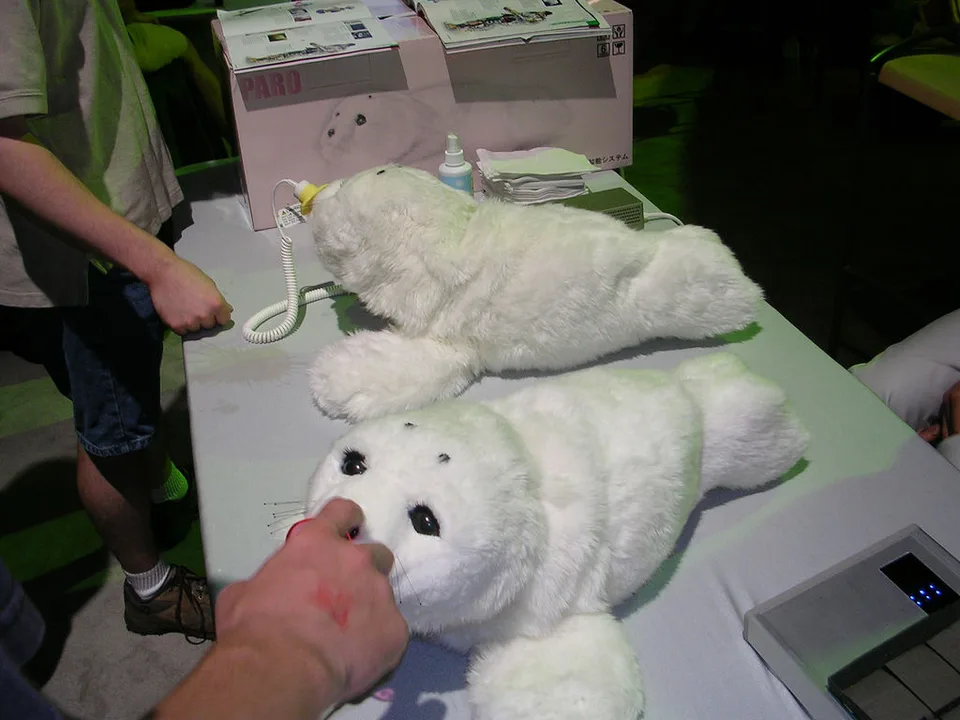
PARO remains the clinical benchmark for non-pharmacological dementia intervention, its sensor-driven responsiveness and FDA pedigree delivering measurable reductions in agitation and caregiver burden that few competitors match. Yet the 5-hour runtime and absence of mobility cap its utility to short, supervised sessions rather than autonomous ward coverage. At $6k-plus per unit the economics favor high-volume facilities with existing reimbursement pathways, not broad adoption. Technical stasis since the 8th generation leaves it vulnerable to newer platforms offering longer endurance or multi-patient coordination. Overall it earns its niche but highlights how regulatory strength can outpace mechanical evolution in therapeutic robotics.
What this assessment is based on
Published manufacturer specifications, deployment reports, and operator accounts. ZeroGantry does not claim hands-on testing of this unit unless stated. Scores are editorial judgments from those public sources — see the methodology for how labels are assigned.
Published 2026-08-17
Pros
- FDA Class II medical device clearance since 2009 enabling institutional reimbursement and hygiene-compliant deployment without live animals
- Five sensor modalities (tactile array with 12+ points, light, audio, temperature, posture) supporting adaptive learning and seal-like vocal responses
- Approximately 5-hour battery runtime per full charge for sustained interaction sessions in care facilities
- Documented deployment across 30+ countries with 40+ peer-reviewed studies showing up to 60% reduction in patient agitation
Cons
- Battery limited to roughly 5 hours necessitating mid-shift recharges and interrupting continuous therapeutic use
- Only 7 motors providing minimal head/leg articulation with no locomotion, confining it to stationary bedside or lap placement
- Unit price of $6,000–$8,000 restricts fleet scaling in budget-constrained dementia care settings
- Antibacterial fur requires specialized sanitization protocols increasing operational overhead in infection-controlled environments
PARO specifications
| Availability | Shipping — Cleared therapeutic device sold into care settings. (as of 2026-09-05) |
|---|---|
| Degrees of freedom | 0 |
| Weight | 2.5 kg |
| Battery life | 6 h |
| Payload | N/A (therapeutic) |
| Max speed | N/A (stationary) |
| Actuators | None (therapeutic robot) |
| Primary sensor | Tactile Sensors + Microphones + Posture |
| Function | Companionship |
| Released | 2004 |
| Maturity | Production |
| Status | Active |
| Indicative price | ~$6,000 |
PARO service and repair
ZeroGantry tracks robot repair and service providers across the United States by state, brand, and robot type.
- Robot repair directory — providers by state, brand, and robot type
Other robot reviews
- Sony aibo (ERS-1000) review — Sony
- Hyodol review — Hyodol Co.
- temi review — temi Inc.
- XPeng IRON (Gen 2) review — XPeng
- Reachy review — Pollen Robotics
- Astribot S1 review — Astribot (Stardust Intelligence)