AGIBOT Expedition A3 Review (3★)
Agibot · Humanoid
Editorial
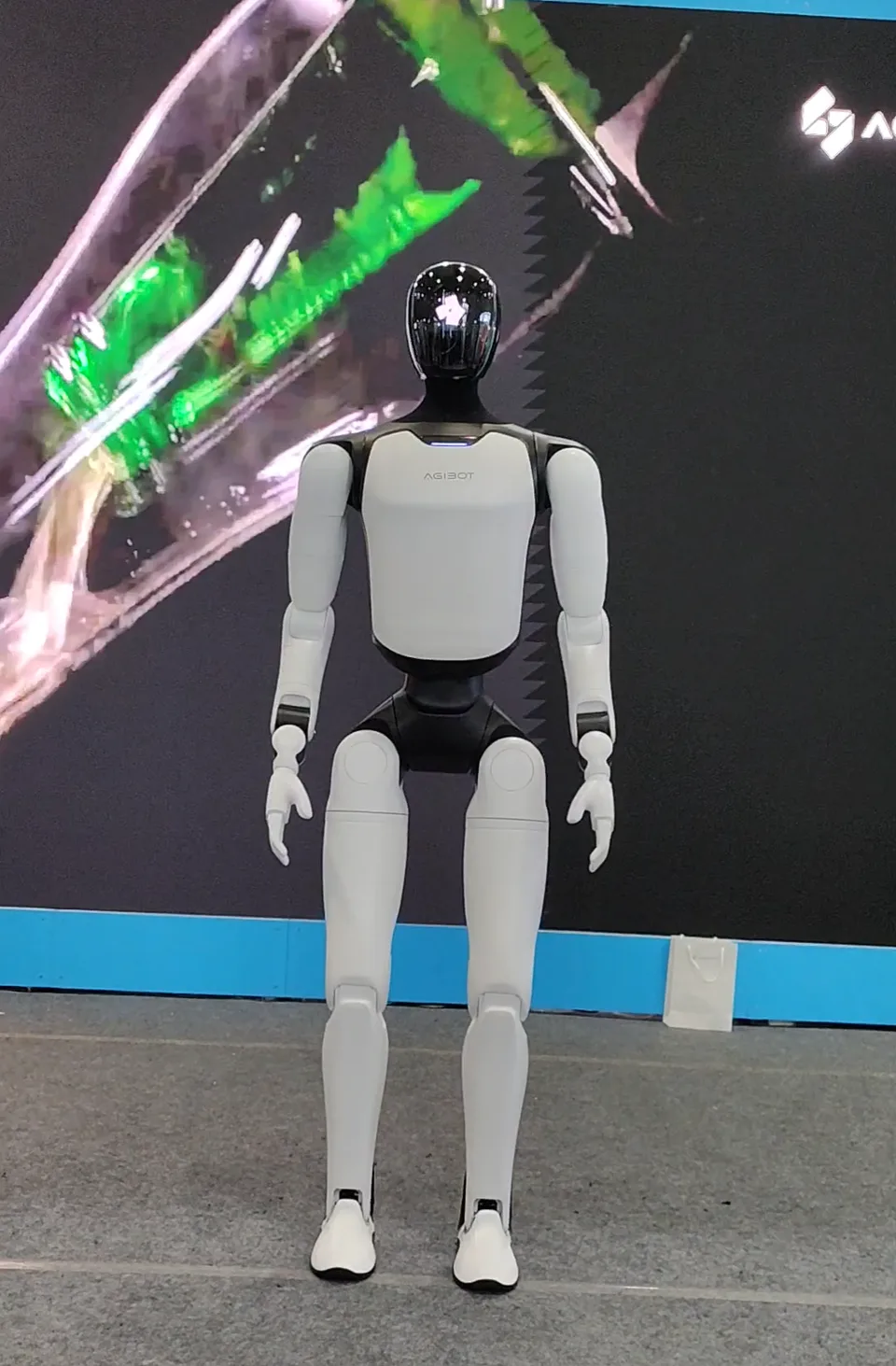
The Expedition A3 excels as a lightweight performance platform whose 0.218 kW/kg density and dual-battery architecture deliver repeatable dynamic motion that competitors still simulate. Yet its 3 kg/arm payload and 31-DoF architecture expose the gap between viral stage routines and versatile service work. UWB swarm capability is genuinely useful for coordinated exhibitions, but real deployments remain confined to short-duration brand activations rather than continuous operations. At $45k the unit undercuts many rivals on cost, yet buyers should treat it as a specialized demonstrator rather than a general-purpose humanoid until payload and sensing mature. Agibot has engineered an impressive silicon-based acrobat; whether it graduates to reliable field robotics remains an open question.
What this assessment is based on
Published manufacturer specifications, deployment reports, and operator accounts. ZeroGantry does not claim hands-on testing of this unit unless stated. Scores are editorial judgments from those public sources — see the methodology for how labels are assigned.
Published 2026-08-12
Pros
- Dual-battery 1152 Wh system delivers up to 10 hours runtime with 10-second hot-swap for 24/7 operation
- UWB centimeter-accurate positioning enables synchronized coordination of up to 100 units in live performances
- 0.218 kW/kg power-to-weight ratio supports verified aerial kicks, somersaults and mid-air maneuvers at 55 kg total mass
- 173 cm / 55 kg magnesium-titanium-TPU build priced at $45,000 targets accessible high-agility entertainment and exhibition use
Cons
- Arm payload capped at 3 kg per arm severely limits practical manipulation or carrying tasks
- Only 31 DoF including waist articulation trails higher-DOF competitors in fine dexterity
- Tool-center-point speed limited to 2 m/s despite marketing claims of higher burst velocities
- Unveiled February 2026 with primary deployments in staged kung-fu demos and European RaaS at €899/day; no public MTBF or sustained industrial uptime data
AGIBOT Expedition A3 specifications
| Degrees of freedom | 40 |
|---|---|
| Weight | 55 kg |
| Battery life | 10 h |
| Payload | 15 kg |
| Max speed | 2.0 m/s |
| Actuators | High-Power-Density Modular Actuators |
| Primary sensor | 3D LiDAR + RGB-D + IMU + UWB |
| Function | Social interaction |
| Released | 2026 |
| Maturity | Advanced |
| Status | Active |
| Indicative price | ~$45,000 |
AGIBOT Expedition A3 service and repair
ZeroGantry tracks robot repair and service providers across the United States by state, brand, and robot type.
- Robot repair directory — providers by state, brand, and robot type
Other robot reviews
- Agibot Expedition A1 review — Agibot
- Agibot A2 Ultra review — Agibot
- Reachy review — Pollen Robotics
- Astribot S1 review — Astribot (Stardust Intelligence)
- 1X NEO review — 1X Technologies
- NAO review — Aldebaran / SoftBank Robotics