Agibot Expedition A1 Review (3★)
Agibot · Humanoid
Editorial
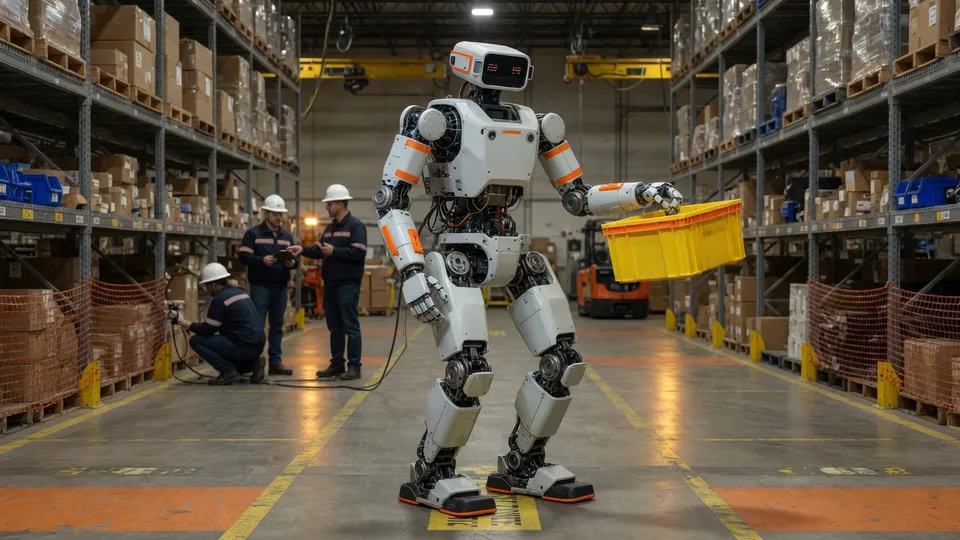
The Expedition A1 established Agibot as a credible Chinese humanoid entrant but remains a proof-of-concept platform rather than a production workhorse. Its 49-DoF architecture and torque specs deliver credible manipulation potential, yet the 4-hour endurance and absence of quantified reliability data cap it below current A2 deployments exceeding 1,700 units. Industrial partners will find the 5 kg arm payload and 1.9 m/s gait adequate for light material handling, but home-assistance ambitions look premature without extended runtime or proven safety certifications. Agibot's rapid iteration to open-source datasets and later models suggests the A1 is best viewed as a technology demonstrator rather than a recommended fleet purchase in 2026.
What this assessment is based on
Published manufacturer specifications, deployment reports, and operator accounts. ZeroGantry does not claim hands-on testing of this unit unless stated. Scores are editorial judgments from those public sources — see the methodology for how labels are assigned.
Published 2026-07-25
Pros
- 49 DoF with 300 N·m peak torque per joint enabling dexterous whole-body control
- 5 kg single-arm payload and 80 kg whole-body load capacity for industrial tasks
- 1.9 m/s (7 km/h) maximum walking speed demonstrated in public tests
- Full-size 175 cm / 55 kg form factor suitable for human-scale environments
Cons
- 4-hour battery runtime limits continuous industrial shifts without swaps
- First-gen 2023 model with no public MTBF or large-scale deployment metrics unlike later A2/A3 variants
- Enterprise pricing restricts access to verified pilot programs only
- Limited verifiable customer deployments; most reported shipments and records (e.g., Guinness walk) apply to A2 series
Agibot Expedition A1 specifications
| Degrees of freedom | 49 |
|---|---|
| Weight | 55 kg |
| Battery life | 4 h |
| Payload | 5 kg per arm |
| Max speed | 1.9 m/s |
| Actuators | High-Torque Modular Joint Actuators |
| Primary sensor | Depth Camera + IMU + Tactile Sensors |
| Function | Assembly & manufacturing |
| Released | 2023 |
| Maturity | Advanced |
| Status | Active |
| Indicative price | Enterprise |
Agibot Expedition A1 service and repair
ZeroGantry tracks robot repair and service providers across the United States by state, brand, and robot type.
- Robot repair directory — providers by state, brand, and robot type
Other robot reviews
- AGIBOT Expedition A3 review — Agibot
- Agibot A2 Ultra review — Agibot
- Astribot S1 review — Astribot (Stardust Intelligence)
- 1X NEO review — 1X Technologies
- NAO review — Aldebaran / SoftBank Robotics
- Pepper review — SoftBank Robotics