Players · AI-derived
Unitree G1 Failure Modes, MTBF Data, and Maintenance Needs
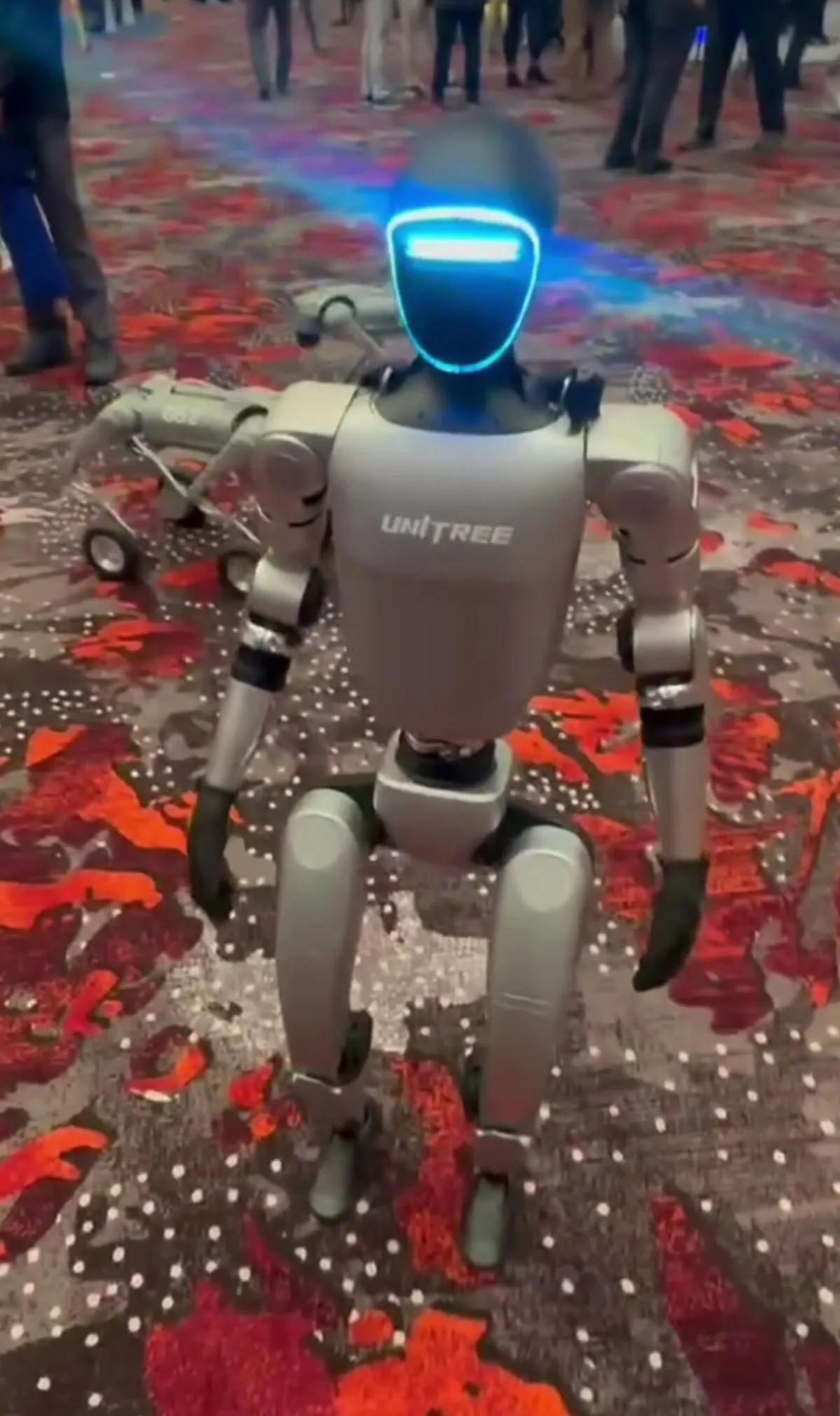
Unitree G1 humanoid robots commonly face joint actuator overheating under load, battery thermal issues during long runs, and IMU sensor drift in unstructured settings. Owners typically perform motor and harness replacements after several hundred operating hours, with strong official parts support available.
ZeroGantry analysis
The G1's actuator thermal limits and 200-300 hour service cadence imply higher per-hour operating costs than headline $13,500 pricing suggests once spares and downtime are factored; labs achieving 130k-step cold demos still require frequent IMU swaps. Ship for research fleets with dedicated maintenance staff; watch for production pilots until MTBF data improves; ignore for high-uptime unstructured tasks without custom cooling upgrades.
Unitree G1 Actuator and Joint Reliability Issues
Operator reports and developer forums identify joint actuators as the primary failure point on the Unitree G1 platform. Prolonged high-torque operation causes overheating, with ankle roll joints reaching 90°C within 5-10 minutes under certain control policies even at idle. Shoulder motors have shown similar thermal runaway during dexterous hand use, leading to loss of response. These problems stem from the compact PMSM motors and local air cooling design documented in Unitree's May 2026 developer guide. Munro Live's June 2026 teardown highlighted thermal efficiency challenges in the rotary actuators, noting that heat dissipation limits continuous performance compared to larger industrial designs.
Community teardowns confirm that harness wear and encoder drift compound actuator problems after extended use. GitHub issues from NVIDIA GR00T testing in June 2026 and university lab reports detail wrist pitch gear failures and the need for recalibration. These modes align with the seed facts on actuator degradation under load. Without active thermal monitoring or derated operation, units risk sudden limp mode or shutdown during dynamic tasks.
Battery Thermal Management and Runtime Limits
Extended operation exposes battery thermal management shortcomings on the G1's 9,000 mAh hot-swap packs. Active walking drains the cells in 90-120 minutes, and heat buildup during repeated charge-discharge cycles accelerates degradation. Developers note that high ambient temperatures or dense motion sequences exacerbate cell imbalance and reduce effective capacity faster than spec sheets suggest. Unitree's own extreme cold demonstration in February 2026 showed 130,000 steps at -47.4°C, yet real-world warm-environment pilots report shorter intervals before voltage sag triggers protective shutdowns.
Battery swaps mitigate some downtime but introduce their own calibration overhead. Labs running multi-hour sessions must maintain spare packs and monitor temperatures closely to avoid cascading failures into the power distribution system. This limitation directly impacts fleet economics for research or light industrial pilots where continuous uptime matters.
Sensor Calibration Drift and Environmental Sensitivity
IMU and depth camera drift emerge as significant issues in unstructured environments. Auckland University of Technology's July 2026 video documented balance failures traced to IMU degradation, requiring replacement and full recalibration to restore stability. Foot force sensors and the LIVOX MID-360 LiDAR also lose accuracy over time when exposed to vibration or dust, leading to gait instability or navigation errors. The May 2026 developer guide lists joint limits and dual-encoder setups but provides limited guidance on long-term sensor health monitoring.
Unstructured settings amplify these drifts compared to controlled lab floors. Slovak university deployment reports from May 2026 noted reliable flat-ground walking initially but highlighted stairs and novel obstacles as high-risk due to vision and calibration limitations. Owners recommend periodic zero-torque recalibration routines and gantry support during firmware switches to prevent falls that could damage sensors further.
MTBF Estimates and Maintenance Intervals
Public MTBF figures for the Unitree G1 remain scarce, with no official published statistics from Unitree as of August 2026. Community data and support documentation point to typical maintenance intervals of several hundred operating hours before motor or harness replacements become necessary. EDU variants facilitate custom repairs through accessible SDK access and spare parts channels, unlike the basic model. Forum discussions and teardown analyses suggest actuator modules as the most common swap item, with harnesses following due to flex fatigue in the 23-43 DOF configurations.
Spare parts availability stands out as a strength, with Unitree maintaining official channels for motors, encoders, and batteries. This contrasts with higher-priced platforms where lead times can stretch months. However, the absence of standardized MTBF reporting makes fleet planning difficult for operators scaling beyond single units. Early 2026 Reddit threads and GitHub issue trackers show recovery modes can mask underlying wear until catastrophic limp or fall events occur.
Practical Maintenance Practices for G1 Owners
Routine checks focus on joint temperatures, encoder feedback, and battery health logs accessible via the developer interface. Replacing actuators involves modular disassembly supported by the robot's standardized design, as noted in teardowns. Calibration procedures after IMU or sensor work require careful zero-torque mode handling to avoid unintended falls. Warranty coverage differs sharply: basic units receive 8 months while EDU models extend to 18 months, influencing total cost of ownership calculations.
Operators in research settings report success with scheduled downtime every 200-300 hours for inspection and part swaps. This approach sustains reliability for locomotion-focused tasks while highlighting the platform's role as an accessible development tool rather than a turnkey industrial worker. Strong parts support reduces some barriers, yet thermal and calibration issues demand proactive monitoring absent from out-of-box firmware.
Sources
Who services this hardware
Topics
Manufacturers
Related articles
- Agility Digit 5 Humanoid Raises Payload to 50 lb for Warehouse Scale — Agility Robotics launched the Digit 5 humanoid on September 15, 2026. The new model lifts 50 pounds repeatedly, adds cooperative safety features for barrier-fre
- Tesla Optimus Hits Hundreds Weekly at Fremont as Hand Assembly Bottleneck — Tesla scaled Optimus V3 output at Fremont from dozens per week in Q2 to several hundred in August 2026 by converting former Model S/X lines. Most units stay in
- Feather Robotics Launches $30K Wheeled Humanoid for Developers — Feather Robotics unveiled its $29,990 omnidirectional wheeled humanoid on September 24, 2026, alongside a $7.6 million pre-seed round led by Gradient.
- Boston Dynamics Atlas Trains at Hyundai Metaplant RMAC Center — Boston Dynamics opened the RMAC training center inside Hyundai Motor Group Metaplant America near Savannah, Georgia, on September 21, 2026. Atlas humanoids are