Players · AI-derived
Humanoid Robot Repair Costs 2026: Actuators, Batteries & Service Plans
Unitree H1 series humanoids face limited public data on repair economics and actuator pricing. Operators report hundreds to low thousands of dollars per actuator replacement plus variable warranty and service plan options that affect fleet uptime calculations.
ZeroGantry analysis
Unitree H1 repair opacity creates a hidden multiplier on the platform's advertised economics; with 8-18 month warranties and actuator swaps potentially reaching low thousands each, fleet operators should budget 10-15% of acquisition cost annually post-warranty or favor G1-scale deployments where volume improves parts logistics. Ship for single-unit research pilots only after securing third-party service SLAs; watch broader actuator supply chain improvements but ignore until MTBF data appears.
Unitree H1 Pro Repair Economics in 2026
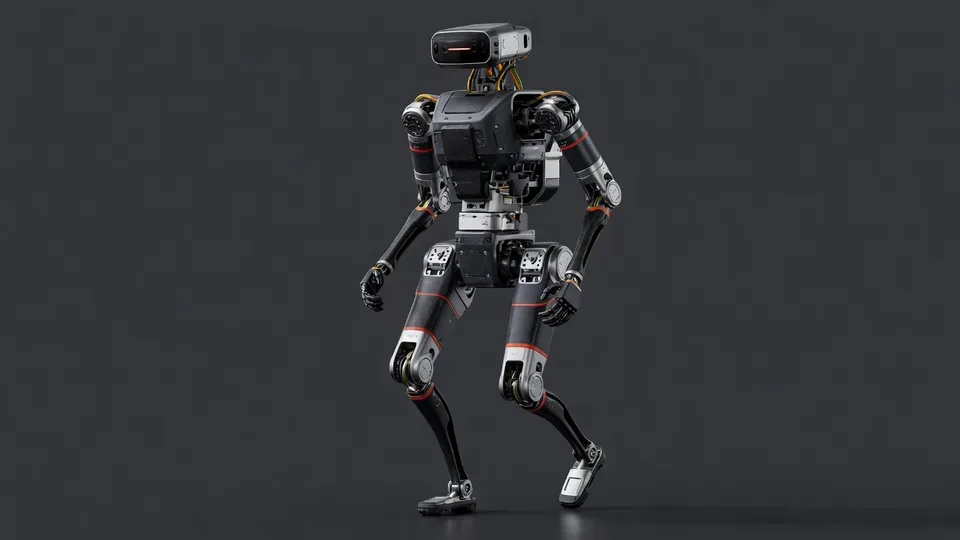
Unitree's H1 humanoid platform, positioned as a full-size research and development machine with list pricing around $90,000 in recent quotes, continues to draw interest for its balance of capability and relative affordability compared to Western competitors. However, operators and fleet managers highlight persistent gaps in transparent pricing for repairs, particularly actuator replacements and ongoing maintenance. Official documentation from Unitree states that warranty coverage begins upon receipt and typically lasts eight months for base models or up to 18 months for EDU configurations. Beyond this period, users bear costs for inspection fees, replacement parts, labor, testing, and shipping, with no standardized public schedule for common failure modes.
Third-party service providers have stepped in to address these needs. Companies such as AYA Robotics and Robotopian offer diagnostics, motor and joint actuator swaps, battery inspections, and sensor calibrations using genuine Unitree components. These services often include short post-repair warranties of 90 days on parts and labor. Domestic Motion provides localized support in regions like the Bay Area, including same-day service options for H1 units. Despite this ecosystem, exact actuator replacement pricing remains opaque in public channels, with operator reports pointing to individual joint motor costs in the hundreds to low thousands of dollars depending on the specific model and configuration.
Actuator Replacement and Component Pricing Trends
The H1's proprietary joint motors represent one of the highest-value subsystems in humanoid platforms, drawing from supply chains that have reduced actuator costs significantly through volume production tied to electric vehicle components. Replacement of a single actuator can involve not only the motor itself but also associated encoders, wiring harnesses, and calibration procedures. Fleet operators note that without published MTBF figures from Unitree, predicting downtime or budgeting for spares proves challenging, especially when scaling beyond single-unit deployments.
Battery systems add another layer to maintenance planning. The H1 uses swappable lithium packs rated around 15 Ah at up to 67.2 V, with replacement cycles estimated every 18-24 months under moderate use. Pricing for genuine spares varies by reseller but typically falls in the low hundreds to low thousands per unit when purchased outside bundled service agreements. Quick-swap designs help minimize operational interruption, yet the absence of standardized regional pricing or availability lists complicates logistics for international buyers.
Warranty and service plan structures further differentiate ownership experiences. Unitree's terms allow for paid maintenance outside warranty, including options for extended coverage through resellers. Annual service plans from third parties often bundle preventive inspections, firmware updates, and priority parts access, though response times and SLAs differ by region. In Europe and North America, import considerations and local technician availability can extend lead times for actuator-level repairs beyond what domestic Chinese operators experience.
Fleet Uptime and Total Cost of Ownership Implications
For organizations evaluating Unitree H1 units in research labs, training centers, or light industrial pilots, repair economics directly influence viability. A single actuator failure can sideline a robot for days or weeks while parts ship and technicians complete diagnostics and reinstallation. This uncertainty contrasts with more mature industrial arms that publish detailed spare-part catalogs and mean-time-between-failure data.
Comparisons to peer platforms underscore the trade-offs. Lower-cost Unitree models like the G1 carry similar warranty lengths and out-of-warranty policies but benefit from higher shipment volumes that may improve parts availability over time. Higher-end systems from competitors often bundle more comprehensive enterprise support, though at substantially elevated acquisition prices. The H1's position in the middle requires buyers to model realistic annual maintenance budgets of several thousand dollars per unit after the initial warranty window.
Regional variations compound these challenges. Resellers in different markets maintain distinct inventory levels and service capabilities, leading to inconsistent experiences for global deployments. Samsung's announced multi-billion-dollar humanoid manufacturing investments highlight broader industry movement toward scaled production, yet they do not directly address after-sales support gaps for existing platforms like the H1 series.
Warranty Service Plans and Regional Availability
Unitree provides a baseline framework for post-warranty support through its official channels, emphasizing case-by-case evaluation for maintenance or part replacement. Purchasers can opt for separate service agreements to extend coverage. Third-party providers fill gaps with faster turnaround options in key markets, often charging deposits for diagnostics that apply toward approved repairs.
Battery swap pricing and actuator availability remain key search drivers year-round, reflecting real-world deployment hurdles. Operators report that proactive spare-part stocking and trained in-house technicians can reduce external service expenses, but this approach demands upfront investment in training and inventory. As Unitree expands its global footprint, clearer public documentation on component pricing and MTBF metrics would help close the current transparency gap.
Broader Context for Humanoid Maintenance Planning
The H1 Pro variant builds on the established H1 architecture with refinements aimed at improved performance in dynamic environments. Maintenance considerations remain consistent across the series, centered on joint actuators, power systems, and sensor arrays. Without standardized fleet econo
Sources
Who services this hardware
Topics
Manufacturers
Related articles
- Tesla Optimus Gen 3 Design Renders Leak in Android App Update — Tesla's Android app version 4.61.0 contains official renders of Optimus Gen 3 showing enclosed joints and matte black shin fairings. The leak offers the first d
- Vesoma Launches Self-Improving Humanoid in Munich — Vesoma emerged from stealth on September 22 with a European humanoid that learns tasks through its own physical interactions rather than human demonstrations. T
- Mercedes-Benz Apollo Humanoid Pilots Advance at Berlin and Kecskemét Plants — Mercedes-Benz continues its Apptronik Apollo humanoid pilots at the Digital Factory Campus in Berlin-Marienfelde and the Kecskemét plant in Hungary. The robots
- UBTECH UWORLD U1 First Deliveries Begin in China — UBTECH has started shipping the first UWORLD U1 consumer humanoid robots to Chinese buyers after 13,000 pre-orders. The move tests whether full-size emotional c