Players · AI-derived
Agility Robotics Opens 60,000 Sq Ft Fremont Facility for Digit AI Training
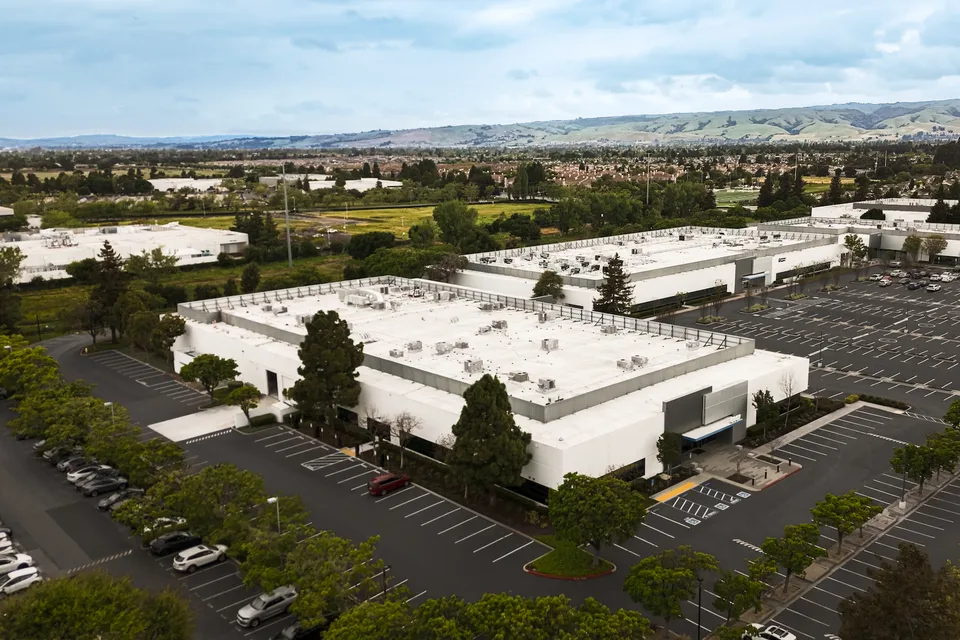
Agility Robotics opened a 60,000-square-foot facility in Fremont, California, on July 16, 2026, to train and advance its Digit humanoid robot. The site supports expanded deployments at customers including Toyota, GXO, and Schaeffler while the company prepares for its public listing.
ZeroGantry analysis
Agility's Fremont facility adds roughly 200 AI and ops roles at a time when its $300 million Digit v5 backlog already exceeds many peers' announced deployments. Proximity to Tesla's Optimus line creates a live comparison point for investors once the Churchill Capital merger closes. Ship: the location accelerates iteration cycles on safety-certified tasks; watch order milestone conversions post-IPO for signs of sustained commercial traction.
Agility Robotics Establishes Physical AI Hub in Fremont
Agility Robotics opened its new 60,000-square-foot facility in Fremont, California, on July 16, 2026. The site functions as a dedicated Physical AI development center for the company's Digit humanoid robot. Engineers will focus on training AI models, testing new capabilities, and refining software that allows Digit to handle more complex tasks in real customer environments. This move places Agility directly in Silicon Valley's talent pool, complementing its existing RoboFab manufacturing operations in Salem, Oregon.
The facility will add nearly 200 roles in AI/ML software engineering and field operations. These hires aim to accelerate the pace of capability improvements for Digit v5. Agility already holds active deployments with Schaeffler, GXO, Toyota Motor Manufacturing Canada, and Mercado Libre. The company reports more than $300 million in multi-year orders for Digit v5, contingent on meeting contractual milestones, alongside a pipeline exceeding 30 potential customers.
Location choice carries clear strategic weight. The new building sits just up the highway from Tesla's Fremont factory, where Optimus humanoid production is slated to begin later in 2026. Agility CEO Peggy Johnson highlighted the access to AI talent and the ability to iterate faster on enterprise-grade safety and productivity features. Fremont Mayor Raj Salwan welcomed the addition of high-quality jobs and continued investment in local advanced manufacturing.
Scaling Digit Deployments Amid IPO Timeline
Agility's expansion aligns with preparations for its public listing through a merger with Churchill Capital Corp XI. The deal, announced in June 2026, values the company at approximately $2.5 billion pre-money with expected gross proceeds exceeding $620 million. Upon completion, Agility would become the first U.S. publicly listed pure-play humanoid robotics company under the ticker AGLT.
The $300 million order backlog for Digit v5 reflects growing enterprise interest in humanoid platforms that can operate safely alongside workers. Unlike earlier prototypes, Digit v5 targets cooperative safety standards that allow shared workspaces without extensive guarding. Field operations staff at the Fremont site will gather real-time performance data from existing deployments to feed back into AI training loops.
Manufacturing remains anchored in Salem, Oregon, while software and capability development shift to the Bay Area. This split allows Agility to maintain production scale in one location while tapping into the dense concentration of machine learning expertise in another. The approach mirrors strategies used by other robotics firms seeking both hardware reliability and rapid software iteration.
Competitive Positioning Against Tesla Optimus and Peers
Agility's Fremont move intensifies direct geographic and technical competition with Tesla's Optimus program. Tesla plans to begin Optimus production at the same Fremont complex where it builds vehicles. Agility's emphasis on proven commercial deployments and multi-year contracts contrasts with Tesla's focus on high-volume manufacturing ambitions announced for later this year.
Other humanoid developers including Figure AI and Boston Dynamics continue their own scaling efforts. Figure has secured partnerships with BMW and OpenAI for AI advancement, while Boston Dynamics maintains research ties with Hyundai. Agility differentiates through existing revenue-generating deployments rather than demonstration videos alone.
The $300 million order figure, though milestone-dependent, provides concrete visibility into near-term demand. This backlog supports hiring plans at the new facility and positions Agility to deliver incremental AI updates that improve task breadth without requiring full hardware redesigns.
Implications for Humanoid Fleet Economics
Enterprise customers evaluating humanoid robots prioritize metrics such as uptime, task completion rates, and total cost of ownership. Agility's Fremont hub will generate data to refine these metrics across warehouse and manufacturing use cases. Early deployments at GXO and Toyota already supply operational telemetry that informs model training.
The facility's focus on Physical AI training directly addresses limitations in current humanoid dexterity and adaptability. By colocating development with access to Silicon Valley talent, Agility aims to shorten the cycle from software improvement to field deployment. This could prove decisive as multiple vendors race to achieve reliable multi-shift operation in customer sites.
Agility's public listing timeline adds another layer of scrutiny. Investors will monitor execution on the $300 million order book and the rate at which new AI capabilities translate into additional revenue. The Fremont investment signals commitment to maintaining technical leadership in safety-certified humanoid operation.
Sources
- https://www.agilityrobotics.com/content/agility-opens-new-fremont-facility-to-accelerate-physical-ai-development
- https://techcrunch.com/2026/07/17/agility-robotics-plants-its-flag-in-teslas-backyard/
- https://www.forbes.com/sites/johnkoetsier/2026/06/24/first-humanoid-robot-maker-goes-public-in-us-25-billion-deal-new-robot-300-million-in-pre-orders/
Who services this hardware
Topics
Manufacturers
Related articles
- Tuya Doova and OlloBot OlloNi SS1 Debut Elder Care Robots at IFA 2026 — Tuya Smart launched the wheeled Doova companion robot at IFA 2026 for seniors living alone, featuring fall response, LLM conversation, and smart-home control. O
- 1X NEO Beta Trial Program Starts Real-Home Household Testing — 1X Technologies has launched a limited NEO Beta Household Trial Programme. Select households worldwide will test the humanoid robot in their homes for three mon
- ICE Forecasts $1-2M Boston Dynamics Spot Robot Buy for Public Safety — U.S. Immigration and Customs Enforcement plans a sole-source purchase of Boston Dynamics Spot quadrupeds worth $1-2 million. The robots would handle remote insp
- Amazon Proteus Fleet Expansion Hits New North American Sites — Amazon has expanded its Proteus autonomous mobile robot fleet to additional fulfillment centers across North America. The robots now handle heavy and bulky item