Players · AI-derived
Mercedes-Benz Apollo Humanoid Pilots Advance at Berlin and Kecskemét Plants
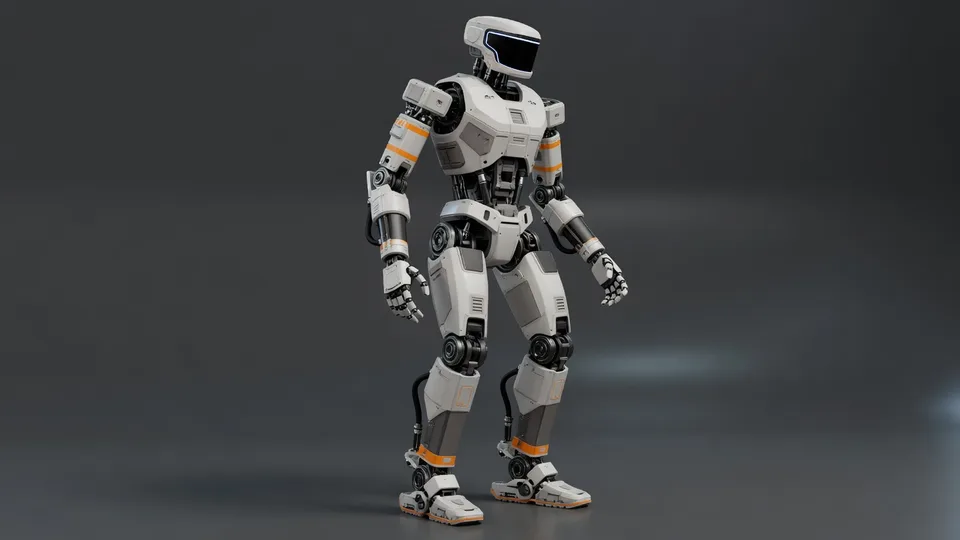
Mercedes-Benz continues its Apptronik Apollo humanoid pilots at the Digital Factory Campus in Berlin-Marienfelde and the Kecskemét plant in Hungary. The robots perform intralogistics, kitting, and inspection tasks under teleoperation and AR training, integrated with the MO360 system since the 2024 pilot launch and 2025 equity investment.
ZeroGantry analysis
Mercedes pilots deliver the strongest multi-site European data moat for Apptronik, running continuously since March 2024 across Berlin and Kecskemét with equity skin in the game. At handful-of-units scale and teleop-heavy operations, payback versus KUKA or Universal Robots arms remains unproven; 2027 Apollo 3 pricing and Jabil production volumes will decide fleet economics. Ship for reference-case buyers tracking MO360 integration; watch closely for autonomy metrics before broader automotive adoption.
Ongoing Apollo Deployments at Mercedes-Benz European Sites
Mercedes-Benz maintains active pilots of Apptronik Apollo humanoids at two key facilities as of September 2026. The Digital Factory Campus in Berlin-Marienfelde serves as the primary development hub, while the Kecskemét plant in Hungary hosts parallel trials. These efforts began with a commercial pilot agreement in March 2024 focused on intralogistics and quality tasks. By March 2025, Mercedes made a low double-digit million-euro equity investment in Apptronik, expanding the Berlin scope while sustaining operations at both locations.
The robots handle parts delivery to assembly lines, kitting of components, lineside logistics support, and component quality inspection. Operators use teleoperation combined with augmented reality interfaces to demonstrate tasks, generating datasets that train the robot toward greater autonomy. This approach integrates directly with Mercedes' MO360 digital production platform, allowing real-time data flow from the factory floor into broader manufacturing analytics. Production chief Joerg Burzer highlighted labor shortages and repetitive tasks as primary drivers, noting plans to extend applications to other sites once performance thresholds are met.
Public records through mid-2026 confirm the pilots remain in data-collection mode rather than unsupervised production. A handful of units operate across the two plants, with Mercedes employees transferring knowledge via remote control. Apptronik describes these deployments as scaled-pilot environments that feed its AI development pipeline, including partnerships with Google DeepMind. No customer-published metrics on uptime, cycle times, or intervention rates have emerged, keeping the program in a validation rather than full commercial phase.
Apptronik Apollo Platform Evolution and Funding Backing
Apptronik has raised a total of $935 million, achieving a valuation near $5.5 billion by early 2026. Key backers include Mercedes-Benz, Google, and ARK Invest. The company unveiled Apollo 2 in June 2026 as an upgraded prototype platform optimized for data collection, featuring improved batteries, motors, and sensors over the original 2023 model. Apollo 3, positioned as the first true commercial product, targets release in 2027 with enhanced out-of-the-box capabilities.
Original Apollo specifications include a payload of up to 25 kg, roughly 4-hour runtime on hot-swappable batteries, and 71 degrees of freedom for full-body dexterity. The platform supports bipedal walking or wheeled-base configurations for industrial flexibility. Apptronik partners with Jabil for manufacturing scale-up, announced in February 2025, aiming for automotive-grade production volumes. These elements position Apollo as a direct competitor in the European automotive humanoid space alongside trials by BMW with Figure AI systems.
The funding and partnership structure provide Apptronik with resources to iterate rapidly. Mercedes' investment not only supplies capital but also delivers high-value real-world data from production environments. This feedback loop accelerates policy learning for tasks like tote movement and inspection, though full autonomy remains the stated next milestone rather than current capability.
Integration with MO360 and Training Methodology
MO360 serves as the digital backbone connecting Apollo operations to Mercedes' global production network. Robots collect environmental and task data that feeds into digital twins and analytics dashboards used across plants. This closed-loop system supports iterative improvement without requiring physical facility redesigns, leveraging the humanoid form factor to fit existing human-scale workstations.
Training relies heavily on teleoperation with MANUS data gloves for precise hand tracking and PSYONIC Ability Hands on the robots. Augmented reality overlays help operators demonstrate sequences in context, synchronizing motion data with robot execution. Over time, accumulated datasets enable supervised autonomy before progressing to independent operation. Mercedes has emphasized that the goal is assistance in labor-short areas rather than a lights-out factory.
This methodology aligns with broader industry shifts toward embodied AI, where physical interaction data trains foundation models. Apptronik's Robot Park facility in Austin, opened June 2026, mirrors the data-collection approach at customer sites including Mercedes and GXO Logistics. The multi-site network generates diverse training examples that benefit all Apollo units through fleet learning.
Competitive Context Among Automotive Humanoid Pilots
Mercedes' sustained Apollo program stands as one of the longest-running European automotive humanoid references, running parallel to BMW's Figure deployments and other OEM experiments. While BMW gained early headlines with Figure 03 trials, Mercedes' multi-plant approach with equity involvement and MO360 integration offers distinct operational insights. Apptronik's Jabil manufacturing tie-up adds a production pathway absent from many pure-play robot developers.
Payload, dexterity, and runtime figures for Apollo compare favorably with peers in logistics-adjacent tasks. The 22-DOF hands provide competitive manipulation capability for kitting and inspection. However, the absence of public ROI data or intervention-rate benchmarks leaves open questions about economic viability versus established cobots or fixed automation at current pilot scale.
European buyers searching for reference cases increasingly reference the Mercedes-Apptronik collaboration alongside logistics deployments at GXO. The program's focus on repetitive intralogistics positions it as a practical testbed for scaling humanoid fleets in high-mix automotive environments.
Outlook for 2027 Commercial Scale
Apptronik targets 2027 for broader commercial fleet deployments, building on 2026 pilot data from Mercedes and other partners. Success hinges on achieving reliable
Sources
- https://blog.robozaps.com/b/apptronik-apollo-review
- https://www.reuters.com/business/autos-transportation/mercedes-benz-takes-stake-robotics-maker-apptronik-tests-robots-factories-2025-03-18/
- https://startupfortune.com/apptroniks-apollo-robot-has-left-the-lab-and-is-now-working-factory-shifts-at-mercedes-benz/
- https://ifactoryapp.com/industries/automotive-manufacturing/apollo-mercedes-apptronik-humanoid-automotive
Who services this hardware
Topics
Manufacturers
Related articles
- UBTECH UWORLD U1 First Deliveries Begin in China — UBTECH has started shipping the first UWORLD U1 consumer humanoid robots to Chinese buyers after 13,000 pre-orders. The move tests whether full-size emotional c
- Tuya Doova and OlloBot OlloNi SS1 Debut Elder Care Robots at IFA 2026 — Tuya Smart launched the wheeled Doova companion robot at IFA 2026 for seniors living alone, featuring fall response, LLM conversation, and smart-home control. O
- 1X NEO Beta Trial Program Starts Real-Home Household Testing — 1X Technologies has launched a limited NEO Beta Household Trial Programme. Select households worldwide will test the humanoid robot in their homes for three mon
- ICE Forecasts $1-2M Boston Dynamics Spot Robot Buy for Public Safety — U.S. Immigration and Customs Enforcement plans a sole-source purchase of Boston Dynamics Spot quadrupeds worth $1-2 million. The robots would handle remote insp