Muscle · AI-derived
iFixRobot and SuperDroid Robot Repair Services for Humanoids
Specialized US providers iFixRobot and SuperDroid Robots now deliver national humanoid maintenance, actuator repairs, and 200-day warranties as consumer and industrial robot fleets scale. Explore torque-dense joint servicing, encoder diagnostics, and compliance tuning for reliable gait performance.
Rising Demand for Humanoid Actuator and Sensor Maintenance
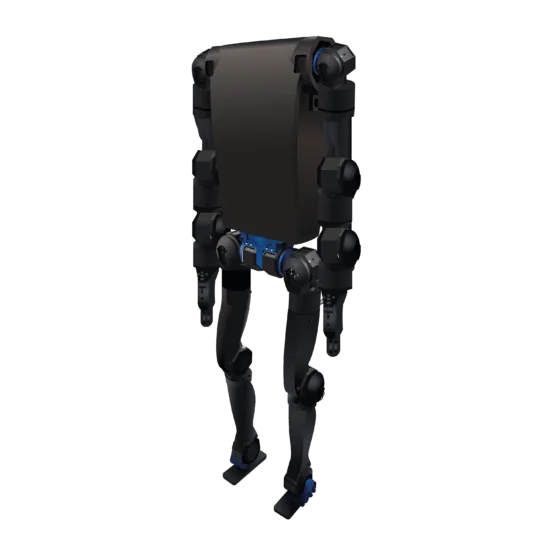
As humanoid robot shipments accelerate in 2026, specialized repair infrastructure has become essential for sustaining high-torque-density actuators, precision encoders, and compliant joint mechanisms that define reliable locomotion. iFixRobot and SuperDroid Robots have positioned dedicated service offerings to address out-of-warranty failures in motors, harmonic drives, and sensor arrays that directly impact gait stability and thermal performance. These third-party centers fill a critical gap left by original manufacturers focused on new production rather than field longevity.
Humanoid platforms rely on compact, high-ratio harmonic drives paired with brushless motors to achieve the torque density required for dynamic walking and object manipulation. When these components degrade through cyclic loading or overheating, gait deviations emerge rapidly. Repair services must therefore possess bench-level capabilities for disassembling sealed joint modules, recalibrating absolute encoders, and verifying thermal interfaces without compromising compliance elements such as series elastic actuators.
iFixRobot National Service Model and Warranty Coverage
iFixRobot operates as a nationwide robot service center offering diagnosis and repair for a broad range of consumer and industrial platforms, including emerging humanoid models. Their program includes a distinctive 200-day warranty covering both parts and labor on completed work, providing fleet operators with measurable risk reduction compared to ad-hoc local technicians. This coverage extends to critical muscle components such as motor windings, drive belts, and encoder read heads that frequently fail under repeated high-load gait cycles.
Technicians at iFixRobot evaluate thermal limits by measuring motor housing temperatures and bearing friction during loaded test runs that simulate bipedal locomotion. Encoder alignment checks ensure positional accuracy remains within manufacturer tolerances, preserving the closed-loop control essential for stable zero-moment-point walking. Compliance tuning involves inspecting and replacing elastomeric elements or torque sensors that absorb impact forces during foot placement, preventing propagation of vibrations into the upper body.
SuperDroid Robots Diagnosis and Shipping Process
SuperDroid Robots structures its out-of-warranty service around tiered diagnostic fees that include round-trip shipping and full bench evaluation for compact, mid-size, and large tactical platforms. Although originally oriented toward tracked inspection robots, the company also produces humanoid variants with bipedal mobility bases, making their process directly relevant to emerging teleoperated humanoids. Customers pay upfront for freight and diagnosis, after which a detailed quote covers parts and labor for actuator or sensor remediation.
The workflow emphasizes root-cause isolation before any invasive work on harmonic drives or motor controllers. For humanoid units, this includes verifying gait-related parameters such as joint velocity limits, current draw under payload, and encoder feedback integrity across all degrees of freedom. Mid-size and large platforms receive on-site pickup, reducing handling risks for sensitive compliance mechanisms. Turnaround typically spans five to ten business days once the unit reaches the bench, though complex multi-joint repairs on older platforms can extend further when legacy parts sourcing becomes necessary.
Technical Challenges in Humanoid Joint Repair
Repairing humanoid muscle systems demands specialized tooling for harmonic drive strain-wave gearing, where even minor debris or misalignment produces unacceptable backlash that destabilizes gait controllers. Technicians must preserve the preload on flex splines while replacing motor rotors or stators, all while documenting thermal interface materials that manage heat from high-torque bursts during stair climbing or uneven terrain negotiation.
Encoder servicing requires cleanroom-level protocols to avoid contamination of optical or magnetic scales. Absolute encoders provide the reference positions needed for inverse kinematics calculations that maintain balance; drift or damage here forces complete recalibration sequences that test the full range of motion under varying loads. Compliance elements, whether passive springs or active torque sensors, receive particular attention because they directly influence impact absorption and energy efficiency during heel-strike and toe-off phases of the gait cycle.
Integration with Fleet Operations and Future Outlook
These dedicated services enable owners of both research and commercial humanoids to maintain torque density and thermal margins without returning units to distant OEM facilities. By offering transparent quoting after diagnosis, iFixRobot and SuperDroid reduce downtime that otherwise halts data collection or operational deployments. As bipedal platforms proliferate in logistics, inspection, and domestic environments, standardized repair protocols for actuators and sensors will become as critical as the original design specifications themselves.
Continued expansion of these repair networks will likely incorporate predictive diagnostics that monitor encoder health and motor current signatures in real time, flagging impending compliance or thermal issues before gait performance degrades. Operators can then schedule proactive interventions that preserve the high power-to-weight ratios demanded by dynamic locomotion tasks.
Sources
Who services this hardware
Topics
Related articles
- Boston Dynamics Atlas GR3 Hand: 13-DOF Specs for Tool Use — Boston Dynamics unveiled the GR3 hand for its electric Atlas humanoid on October 1, 2026. The four-fingered design delivers 13 degrees of freedom with direct ac
- Unitree G1+ Adds 2-DOF Neck and 110% Torque Boost at $15K — Unitree launched the G1+ humanoid on September 14, 2026, with a movable neck, stronger and cooler motors, and new sensors. The base model lists at about $15,000
- UBTECH FAW-Volkswagen Humanoid Logistics Trials Advance 2026 — UBTECH Robotics and FAW-Volkswagen signed a strategic agreement on October 8, 2026, to develop and test humanoid robots for factory logistics. The work builds o
- Robotics Week in Review: Oct 2–Oct 9, 2026 — Humanoid pilots expanded in factories while AI software leaps and maintenance realities surfaced. Leadership changes and regulatory scrutiny rounded out a week