Whisper Network · AI-derived
BMW Figure AI Humanoid Deployment Advances at Spartanburg in 2026
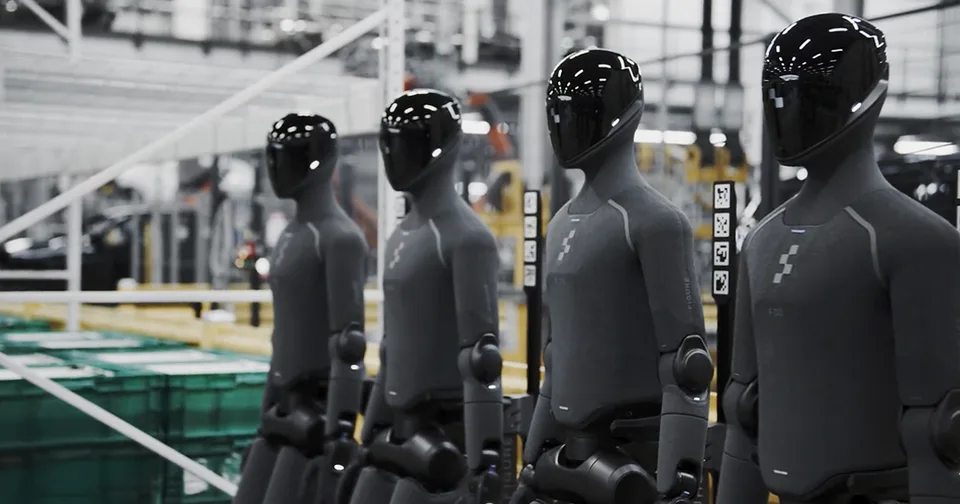
BMW continues its Figure AI humanoid robot pilot at the Spartanburg, South Carolina plant. Figure 02 completed an 11-month logistics run moving over 90,000 parts before Figure 03 took over sequencing tasks in assembly halls.
ZeroGantry analysis
Spartanburg’s 1,250-hour, 90,000-part run on Figure 02 sets a concrete benchmark: roughly 8,000 components per month at 10-hour shifts with zero reported quality escapes or safety incidents. Figure 03’s move into sequencing in Hall 52 suggests BMW is iterating on task complexity within the same facility rather than scaling fleet size immediately. Watch for whether the 11-month generational refresh cycle repeats or stretches as Helix 02 matures; ignore vendor claims of “general purpose” until multi-site transfer data appears.
BMW's Ongoing Figure AI Partnership at Spartanburg
BMW Group Plant Spartanburg in South Carolina has hosted one of the longest-running real-world tests of humanoid robots in automotive manufacturing. The site, which produces the X5, X6, X7, XM, Z4, and M8 models, first integrated Figure 02 units into body shop operations in late 2024. Those robots handled sheet metal insertion on live production lines for 11 months, accumulating more than 1,250 operating hours and moving over 90,000 components while contributing to over 30,000 X3 vehicles. No workers were displaced; the machines targeted ergonomically difficult roles that involve repetitive heavy lifting.
The deployment ran on standard 10-hour shifts Monday through Friday. Robots navigated active assembly areas, loaded parts into welding stations, and executed an estimated 1.2 million steps or roughly 200 miles of travel within the facility. BMW engineers monitored performance through the plant’s existing iFACTORY digital infrastructure, which already incorporates AI-driven process simulation and virtualization tools.
Transition to Figure 03 Logistics Sequencing
In June 2026, Figure AI delivered the next-generation Figure 03 to Hall 52, an assembly and logistics hall at the same Spartanburg site. The new robot performs complex sequencing workflows that require pulling loaded carts, sorting unordered components, and ensuring parts arrive at workstations in precise order. BMW’s June 25 press release confirmed the move from body shop tasks to logistics, noting that development of Figure 03 occurred in parallel between Figure AI headquarters and the Spartanburg plant.
Figure 03 operates under the Helix 02 AI system, which enables whole-body control for navigation and manipulation. Early demonstrations showed the robot stepping from a charging station, approaching stacks of green plastic bins, and maneuvering trolleys across the floor. The New York Times visited the facility in August 2026 and documented these movements, highlighting the robot’s screen-style face and its ability to respond to dynamic factory conditions without fixed programming for every route.
Metrics and Operational Realities
The Figure 02 pilot produced concrete numbers that automotive planners now reference when evaluating humanoid viability. Over 1,250 runtime hours translated into roughly 125 full shifts. The 90,000-plus parts handled equate to an average of more than 8,000 components per month during peak operation. BMW has stated that these outcomes occurred without production interruptions or workforce reductions, reinforcing the company’s position that humanoids address labor shortages in physically demanding roles rather than replace people.
Spartanburg remains BMW’s largest global manufacturing facility by volume. The plant’s scale—producing multiple SUV and sports car lines—makes it an ideal testbed for logistics automation. BMW has indicated interest in expanding similar pilots to European sites, though no specific timelines or additional plants have been named publicly. The company has also tested humanoid platforms from other vendors, suggesting a multi-supplier evaluation strategy.
Technical Context of the Deployments
Figure AI’s approach relies on end-to-end learned policies rather than traditional scripted motion planning. The robots use onboard vision and force sensing to adapt to variations in part placement and floor obstacles. BMW’s integration leverages the plant’s existing digital twin environment, allowing engineers to simulate new tasks before physical deployment. This parallel development model—robots learning on the factory floor while engineers refine models at Figure AI—shortened the time from delivery to productive shifts.
Limitations observed during the Figure 02 run included the need for human supervision during initial task calibration and occasional manual intervention when parts arrived in unexpected orientations. Figure 03 addresses some of these gaps through improved dexterity and longer battery endurance, yet the system still requires charging cycles that interrupt continuous 24-hour operation.
Industry Implications for 2026 and Beyond
The Spartanburg data set now serves as Figure AI’s primary reference case when discussing commercial deployments with other automakers. BMW’s willingness to publish runtime hours, part counts, and vehicle contributions provides a rare public benchmark. Other manufacturers evaluating humanoids can compare these figures against traditional fixed automation or cobot installations that typically require extensive retooling for each new model year.
BMW continues to view humanoid platforms as part of its long-term production strategy. The shift from body shop welding support to logistics sequencing demonstrates the robots’ expanding task envelope within a single facility. As Figure 03 matures, additional use cases such as kitting, inventory movement, and quality inspection may follow at Spartanburg or sister plants.
Future Roadmap Signals
No public announcement has detailed fleet sizes beyond the initial pilot units, yet the parallel development process between BMW and Figure AI suggests ongoing iteration. The retirement of Figure 02 units after the 11-month run indicates a generational refresh cycle measured in months rather than years. Automotive suppliers watching these deployments will track whether the same robots can transfer between plants or whether each site requires site-specific fine-tuning.
The New York Times coverage in mid-August 2026 amplified visibility of these factory-floor operations, driving renewed searches for automotive humanoid case studies. BMW’s measured approach—documented hours, measured part throughput, and explicit statements that humanoids complement rather than displace workers—offers a template other OEMs may adopt when releasing their own pilot results.
Sources
- https://www.figure.ai/news/f-03-at-bmw
- https://www.press.bmwgroup.com/global/article/detail/T0458778EN/bmw-group-advances-the-use-of-physical-ai-in-production-with-figure-03-project-in-spartanburg?language=en
- https://www.nytimes.com/2026/08/11/business/humanoid-robots-car-factories.html
- https://www.industrialsage.com/bmw-figure-ai-humanoid-robots-spartanburg-2026/
- https://www.figure.ai/news/production-at-bmw
Who services this hardware
Topics
Manufacturers
Related articles
- Robotics Week in Review: Sep 25–Oct 2, 2026 — Humanoid robots advanced toward real warehouse and factory roles while software platforms and record industrial deployments underscored automation's acceleratin
- Google DeepMind Gemini Robotics 2 Scales via Software Partnerships — Google DeepMind released Gemini Robotics 2 on July 30, 2026, delivering vision-language-action models for whole-body humanoid control, dexterity, and multi-robo
- Amazon Dobromierz Deploys 5,000 Robots in Polish Fulfillment Center — Amazon opened its 12th Polish fulfillment center in Dobromierz on September 21, 2026. The 200,000 m² four-story facility uses over 5,000 Amazon Robotics units a
- NVIDIA Expands Open Physical AI Stack with OpenUSD for Humanoids — NVIDIA released updates to its open physical AI stack on September 30, 2026, built around OpenUSD and Omniverse for reusable digital twins in humanoid training