Players · AI-derived
Walden Robotics $300M Seed at $1.1B Powers Toyota Humanoid Deployments
Walden Robotics launched publicly on July 15, 2026 after spinning out of Toyota Research Institute, securing $300M in seed funding at a $1.1B valuation. Backed by Toyota, NVIDIA, and Boeing, its humanoid robots have been doing production work at a North American Toyota plant since February.
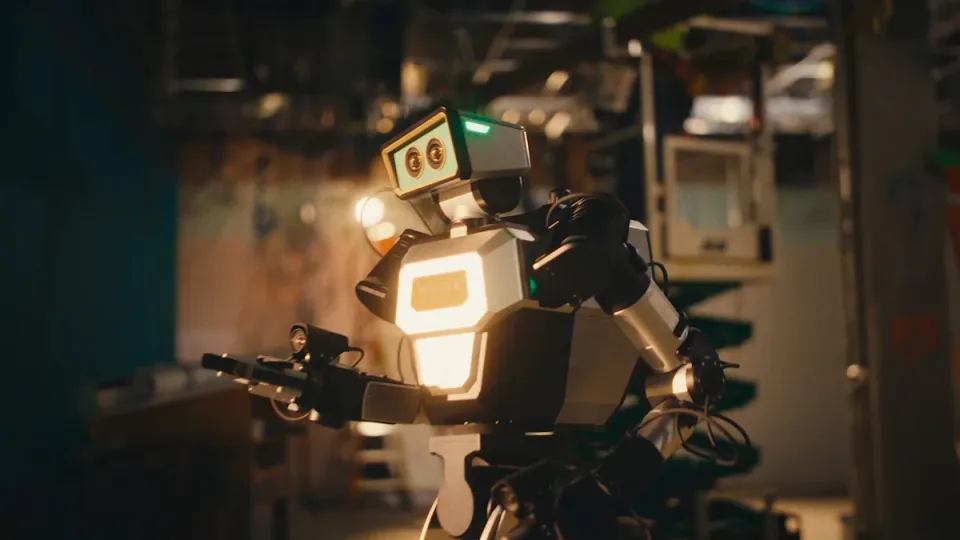
Walden Robotics Breaks Stealth with Record Seed Amid Humanoid Boom
Walden Robotics launched publicly on July 15, 2026 after spinning out of Toyota Research Institute in January, securing approximately $300 million in seed funding at a $1.1 billion post-money valuation. The round was co-led by Toyota entities including Toyota Motor Corp, Toyota Invention Partners, and Toyota Ventures alongside Deviation Capital. Additional participants include NVIDIA, Boeing, Samsung Ventures, Prologis Ventures, CoreWeave Ventures, AE Industrial Partners, Calibrate Ventures, NextView Ventures, and Menlo Ventures. This capital influx positions Walden as one of the best-funded early-stage Physical AI players in a market seeing rapid escalation from competitors such as Tesla Optimus, Boston Dynamics Atlas, and Unitree humanoids.
The timing aligns with broader industry momentum where automotive giants accelerate humanoid integration. Toyota's strategic backing provides both capital and immediate deployment access, contrasting with Tesla's internal Optimus focus or Boston Dynamics' Hyundai-supported Atlas ramp. Walden's entry underscores how spinouts from established research labs can compress timelines from lab to factory floor. Early investor diversity spanning semiconductors, aerospace, and logistics signals confidence in cross-industry applicability beyond single verticals.
Early Production Deployment at Toyota North American Facility
Since February 2026, Walden robots have operated in production at a Toyota manufacturing plant in North America, transitioning from pilot to full tasks in under two months. Specific operations include car-part transportation, machinery cleaning, assembly kitting, machine tending, tool setting, and parts preparation. These deployments mark one of the fastest shifts from stealth to revenue-generating work among 2026 humanoid entrants. The systems run eight-hour shifts alongside human teams, handling dexterous repetitive tasks that previously resisted automation.
This operational reality differentiates Walden from many peers still reliant on demos or controlled environments. Tesla Optimus prototypes have shown promise in internal Tesla factories but lack confirmed multi-month production runs at third-party sites as of mid-2026. Unitree's G1 and H1 models emphasize affordability for research and light industry yet report fewer automotive-scale deployments. Boston Dynamics continues Atlas iterations with Hyundai, focusing on mobility in unstructured settings, but Walden's Toyota integration provides direct lineage to high-volume manufacturing processes. The sub-two-month pilot-to-production cycle highlights the practical edge of Large Behavior Models trained on real factory data.
Technical Foundations in Large Behavior Models and Diffusion Policy
Walden builds on a decade of foundational work including Diffusion Policy and Large Behavior Models that enable rapid task acquisition from human demonstrations. These models allow robots to learn new skills with three to five times less data than prior approaches, according to team statements. CEO Russ Tedrake, formerly SVP of Large Behavior Models at Toyota Research Institute and an MIT professor, emphasizes continuous improvement through real-world practice rather than scripted programming. The full-stack approach encompasses proprietary hardware, software, and AI models optimized for durability in manufacturing and logistics.
Integration with Toyota's production ecosystem supplies dense, domain-specific training data unavailable to pure startups. This data advantage supports generalization across tasks like parts kitting and tool setting while maintaining safety margins around human coworkers. Compared to Unitree's more modular open platforms or Tesla's end-to-end neural video training, Walden prioritizes verifiable factory economics from day one. The emphasis on keeping humans central—delegating burdensome tasks to free skilled workers for higher-value judgment—addresses labor shortage realities in automotive and adjacent sectors.
Investor Strategy and Competitive Positioning in 2026 Robotics Wave
Toyota's leadership in the round reflects deep strategic alignment beyond financial returns, building on prior TRI research partnerships including with Boston Dynamics. Deviation Capital's involvement brings operational expertise from prior robotics and hardware bets. Strategic investors such as NVIDIA and Samsung Ventures add silicon and sensor leverage critical for scaling perception and control stacks. This coalition contrasts with Tesla's self-funded Optimus path or Unitree's China-centric manufacturing scale focus.
The $1.1 billion valuation on a seed round underscores investor appetite for Physical AI platforms with proven early traction. Walden's Cambridge, Massachusetts base and talent drawn from MIT, Stanford, Amazon, and TRI position it to compete for engineering talent amid the broader humanoid talent war. Fleet economics will hinge on unit costs, uptime, and task throughput once deployments expand beyond the initial Toyota site. Early multi-industry interest in automotive, aerospace, semiconductors, electronics, logistics, and life sciences suggests pathways to diversified revenue streams.
Scaling Challenges and Path to Broader Adoption
While the February deployment validates core capabilities, questions remain around long-term reliability metrics such as mean time between failures in continuous operation. Hardware durability under high-cycle factory conditions will determine whether the robots sustain the eight-hour shifts without frequent intervention. Software updates via LBM fine-tuning must balance improvement speed against safety certification requirements in regulated industries. Expansion beyond Toyota will test whether the learning-from-demonstration paradigm transfers efficiently to new customer environments with different workflows.
Competitive pressure from Tesla's anticipated Optimus volume production,
Sources
- https://www.bloomberg.com/news/articles/2026-07-15/toyota-backed-robotics-startup-walden-launches-with-1-1-billion-valuation
- https://sg.finance.yahoo.com/news/walden-robotics-launches-300-million-100000118.html
- https://techstartups.com/2026/07/15/walden-robotics-emerges-from-stealth-with-300m-in-funding-at-1-1b-valuation-deploys-general-purpose-ai-robots-at-toyota-factory/
- https://www.waldenrobotics.com/
Topics
Related articles
- Skild AI Closes $1.4B Series C at Over $14B Valuation — Skild AI raised $1.4 billion in a Series C led by SoftBank, reaching a valuation above $14 billion. The funds support scaling its S1 foundation model for teachi
- UBTECH FAW-Volkswagen Humanoid Logistics Trials Advance 2026 — UBTECH Robotics and FAW-Volkswagen signed a strategic agreement on October 8, 2026, to develop and test humanoid robots for factory logistics. The work builds o
- Rohit Prasad Appointed Boston Dynamics CEO for Atlas Push — Boston Dynamics named Rohit Prasad, former Amazon Alexa and AGI leader, as CEO effective October 7, 2026. He replaces interim chief Amanda McMaster following Ro
- Hello Robot Stretch Wins $3M NIH Grant for Elder Care Dementia Support — Hello Robot received a nearly $3 million NIH grant to advance its Stretch mobile manipulator for older adults with mild cognitive impairment or early Alzheimer’