Editorial · AI-derived
Weave Robotics Isaac 1: $7999 Home Robot Pre-Order Tests Affordable Chores 2026
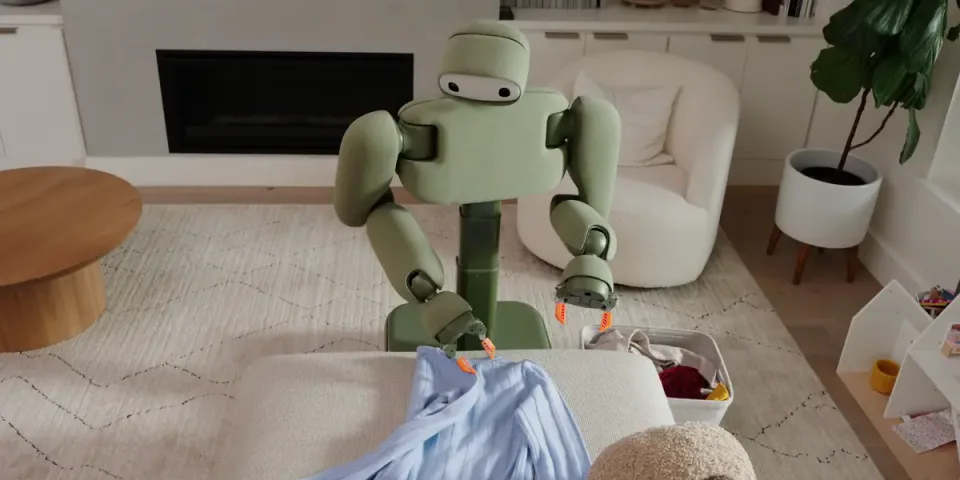
Weave Robotics is taking pre-orders for the Isaac 1, a $7,999 wheeled robot that folds laundry, makes beds, and tidies homes. At less than half the cost of a humanoid like 1X NEO, it tests whether a simpler form factor can win the home market first.
EDITORIAL / OPINION
Weave Robotics has placed a concrete bet on the home robotics market with the July 2026 launch of pre-orders for its Isaac 1. Priced at $7,999 cash or $449 per month via subscription after a $250 deposit, the pastel-hued machine targets everyday chores rather than general-purpose mobility. Initial shipments are slated for California in fall 2026, with nationwide U.S. availability targeted for 2027. At roughly 40 percent the listed price of 1X’s Neo humanoid, the Isaac 1 forces a direct comparison between specialized wheeled platforms and the bipedal machines that dominate headlines.
Price and Subscription Model Signal Pragmatic Market Entry
The upfront cost and monthly option lower the barrier compared with $20,000-plus humanoids, yet they still represent a significant household outlay. Subscription financing spreads payments but locks users into ongoing fees that could exceed the purchase price within two years. Early social traction—more than 13 million views on the launch post—suggests curiosity, yet sustained demand will hinge on whether real utility materializes before broader economic pressures or competing devices arrive. Weave’s Y Combinator backing provides credibility, but consumer robotics history shows that hardware margins and support costs often erode early pricing advantages.
Form Factor and Chore Focus versus Humanoid Ambitions
Described by observers as a “Roomba with arms,” the Isaac 1 uses a mobile base optimized for flat indoor surfaces rather than stairs or uneven terrain. Its collapsible design aids storage, while default autonomous behaviors handle folding laundry, making beds, and general tidying. Remote teleoperation serves as fallback when the system encounters edge cases. This hybrid approach sidesteps the full dexterity and balance challenges of bipeds but also limits the robot to environments where wheels suffice. In contrast, 1X’s Neo and Tesla’s forthcoming Optimus aim for human-like versatility at higher cost and later timelines. The Isaac 1 therefore tests whether narrow, reliable chore execution can build trust faster than versatile but immature humanoids.
Autonomy, Teleoperation, and Data Realities
Default autonomy for core tasks reduces operator burden, yet the explicit teleop safety net reveals current limitations in unstructured home settings. Training data for physical manipulation remains scarce compared with language models, and household layouts vary widely. Weave has not disclosed how in-home interactions will be used for model improvement, raising standard privacy questions for any camera-equipped domestic device. Early adopters in California will supply the first large-scale field data, which could accelerate iteration if the company manages collection transparently.
Labor Market and Geopolitical Context
Household chore automation arrives amid persistent labor shortages in cleaning and caregiving sectors. A sub-$8,000 robot could appeal to dual-income families or aging households more readily than hiring part-time help at prevailing wages. At the same time, the U.S.-focused rollout in 2026–2027 occurs against tightening export controls on advanced robotics components and AI chips. Weave’s supply chain choices—still opaque—will determine whether scaling remains feasible if component costs rise or sourcing shifts. Competitors backed by larger manufacturing ecosystems may enjoy advantages here.
Hype versus Near-Term Reality
Social commentary has ranged from excitement about “never doing chores again” to skepticism about speed and clunkiness. Both reactions are warranted. The Isaac 1 demonstrates that wheeled platforms with modest manipulators can address specific, high-frequency tasks today, yet it does not solve the broader dexterity or navigation problems that full home autonomy requires. Deliveries beginning in fall 2026 will provide the first measurable test of uptime, task completion rates, and customer support demands. If those metrics prove strong, the price point could accelerate adoption curves; if not, the device risks joining earlier generations of overpromised domestic robots.
Competitive Landscape and Timeline Pressure
Tesla’s Optimus production target of late 2026 and 1X’s preorder window create overlapping timelines. Weave’s lower price and earlier availability in one state give it a first-mover window, but scale will depend on manufacturing throughput and software reliability. Should humanoids reach comparable pricing within two to three years, the wheeled form factor may be relegated to niche roles. Conversely, if bipedal systems encounter repeated delays, specialized mobile robots could capture durable market segments. The next 18 months of field data will clarify which trajectory prevails.
Outlook for Consumers and Investors
For households willing to accept a wheeled helper confined to single-story spaces, the Isaac 1 represents the most concrete affordability milestone yet. For investors, it underscores that utility-focused, lower-complexity platforms may generate revenue sooner than generalist humanoids. Success will ultimately be measured not by launch views but by repeat orders, low return rates, and measurable time savings for owners. Weave has opened the order book; the market will now render its verdict on whether $7,999 buys genuine relief from laundry or merely another gadget awaiting software updates.
Weave Robotics Enters Consumer Market with Isaac 1 Launch
Weave Robotics, a Y Combinator-backed startup founded by Apple alumni, announced pre-orders for its Isaac 1 home robot on July 2, 2026. The wheeled platform targets household chores like folding laundry, making beds, and tidying rooms at a price point that directly challenges higher-cost humanoid entrants. With a $250 refundable deposit required to reserve units, the company projects initial California deliveries in fall 2026 and broader U.S. availability throughout 2027. This timeline positions Weave ahead of several bipedal co
Sources
Topics
Related articles
- Robotics Week in Review: Oct 2–Oct 9, 2026 — Humanoid pilots expanded in factories while AI software leaps and maintenance realities surfaced. Leadership changes and regulatory scrutiny rounded out a week
- Figure AI Melts F.02 Fleet: Schwarzenegger's Terminator Sendoff — Figure AI retired its F.02 humanoid fleet by training the robots to jump into a 75-ton electric arc furnace in Imatra, Finland. CEO Brett Adcock followed Arnold
- Robotics Week in Review: Sep 25–Oct 2, 2026 — Humanoid robots advanced toward real warehouse and factory roles while software platforms and record industrial deployments underscored automation's acceleratin
- Physical Intelligence San Francisco Lease Signals 2026 Physical AI Scaling — Physical Intelligence subleased 80,000 square feet at 850 Brannan Street in San Francisco from Airbnb in September 2026. The robotics AI firm is expanding its B