Players
TARSBOT A-Series: Aptiv Deploys 100 Units by End 2026
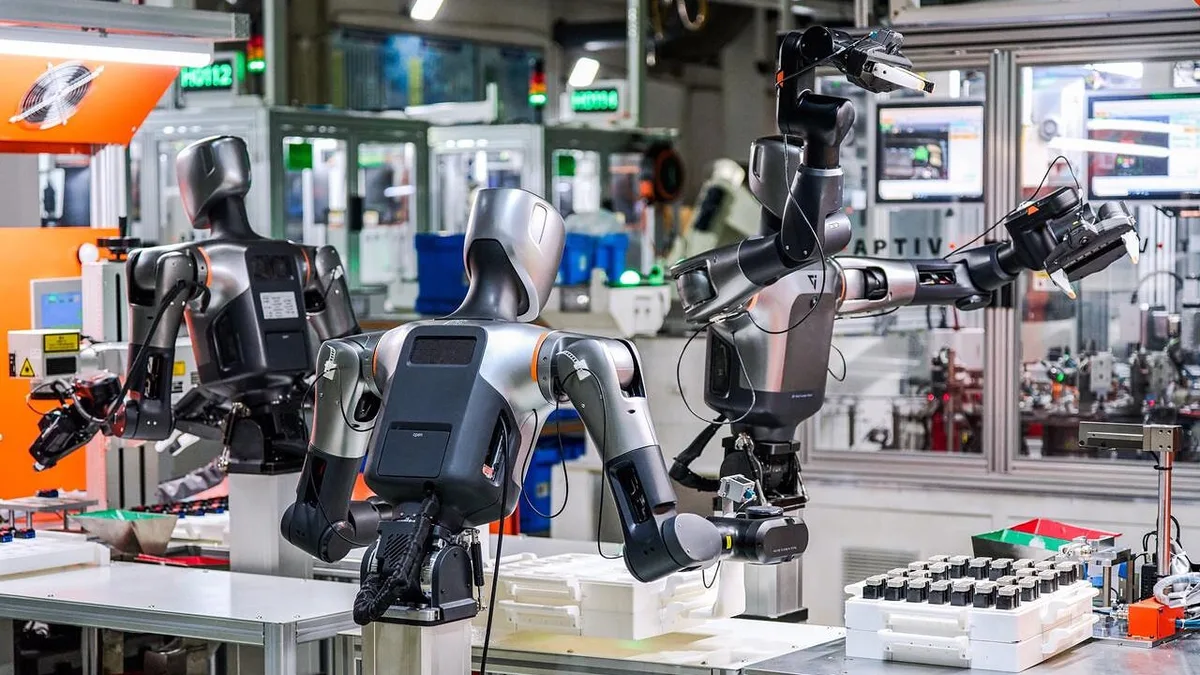
TARSBOT and Aptiv signed a deal at the 9th China International Import Expo to deploy 100 A-Series industrial embodied AI robots across Aptiv factories by December 2026. The first units are already operating on production lines, with a longer-term target of 1,000 robots supported by Shanghai's Jiading District government.
ZeroGantry analysis
The 100-unit target by December 2026, backed by an existing first batch on lines, gives TARSBOT one of the clearest near-term industrial volume signals among current embodied AI programs. Integration of Aptiv computing platforms could improve MTBF through automotive-grade components, directly affecting fleet economics at the planned 1,000-unit scale. Watch for disclosed uptime or cost-per-unit figures once the full 100 robots are running; without them the economics remain speculative despite the government-supported ramp.
TARSBOT A-Series Deployment Targets 100 Units at Aptiv Sites
TARSBOT and Aptiv formalized an expanded partnership during the 9th China International Import Expo in Shanghai. The agreement sets a concrete target of 100 TARSBOT A-Series industrial embodied AI robots operating across Aptiv manufacturing locations by the close of 2026. This rollout spans eight manufacturing process categories and 33 distinct application scenarios, ranging from flexible assembly tasks to coordinated inspection routines and production management workflows. Initial units from the first batch have already begun operating on real production lines inside an Aptiv smart factory, moving the project beyond pilot validation into active industrial use.
The collaboration incorporates Aptiv high-performance computing platforms directly into the TARSBOT robots. These platforms handle core functions including environmental perception, task decision-making, and motion control. Their scalable architecture supports multiple robot configurations while aiming to boost development efficiency and application portability. Aptiv also plans to integrate its intelligent power distribution solutions, drawing on automotive-grade reliability standards to support continuous operation in demanding factory environments. Both companies intend to reach mass production of the integrated platforms during 2026.
Scale Ambitions and Government Backing
Beyond the immediate 100-unit milestone, the partners are working toward a fleet of 1,000 industrial embodied AI robots. This effort receives explicit support from the Jiading District Government of Shanghai and is positioned as China's first scaled deployment of its kind. The project builds on prior joint work at an Aptiv production base where robots underwent process adaptation and application verification. Data collected from round-the-clock operation on the factory floor will feed back into iterative improvements of TARSBOT's AI World Engine, the company's general-purpose foundation model for embodied AI.
Aptiv's November 6 announcement referenced hundreds of robots from TARS and another partner entering its lines gradually, shifting from technical validation toward larger-scale deployment. The November 16 TARSBOT-specific agreement narrows the near-term focus to the 100-unit A-Series target while maintaining the broader 1,000-unit vision. This phased approach allows both firms to gather operational insights before committing to higher volumes.
Fleet Economics and Production Ramp Considerations
Deploying 100 units across 33 scenarios provides a meaningful dataset for evaluating real-world economics. Each robot must demonstrate value in flexible assembly, inspection, and management roles without disrupting existing lines. The integration of Aptiv computing hardware could reduce custom development costs for TARSBOT while improving reliability metrics such as mean time between failures. Automotive suppliers like Aptiv routinely achieve high uptime targets; transferring those practices to humanoid platforms may accelerate the path to positive return on investment once the fleet reaches dozens of units per site.
Production ramp plans call for mass production in 2026, coinciding with the 100-unit deployment deadline. This timeline implies that manufacturing capacity at TARSBOT must scale quickly to support both the Aptiv contract and any additional customers. Government backing in Jiading District may help secure supply chain support and testing facilities, lowering some capital expenditure risks. However, the absence of disclosed per-unit pricing or productivity gains in the initial press materials leaves open questions about exact payback periods for Aptiv's operations.
Technical Integration and Validation Path
The partnership emphasizes joint validation in live industrial settings. Insights from Aptiv's production environments will directly inform refinements to the AI World Engine. This closed-loop development model mirrors practices seen in other automotive-robotics crossovers, where real-world data accelerates model iteration. By embedding Aptiv platforms early, TARSBOT gains access to hardware proven in safety-critical applications, potentially shortening the qualification timeline for additional factory customers.
The 8 process categories and 33 scenarios represent a broad test matrix. Successful coverage of flexible assembly alongside inspection and management tasks would demonstrate versatility beyond single-use cobot arms. Early operational data from the first batch already on lines will be critical for identifying bottlenecks in perception or manipulation before the remaining units arrive.
Positioning Within Broader Industrial Humanoid Efforts
This deployment adds a concrete data point to the 2026 wave of industrial humanoid and embodied AI projects, alongside other factory deployments such as [ROBOTERA humanoids at 11 China Post hubs](/articles/robotera-humanoids-hit-1500-parcels-hour-at-11-china-post-hubs). While some programs still focus on research or smaller pilots, the Aptiv-TARSBOT agreement specifies both a near-term count and a multi-year fleet target. Integration of established automotive computing components may offer an edge in reliability compared with fully custom stacks. Continued monitoring of uptime, maintenance intervals, and total cost of ownership at the 100-unit mark will clarify whether the model supports wider adoption across Chinese and global manufacturing sites.
The collaboration also highlights a dual-supplier and customer dynamic. Aptiv supplies technology to TARSBOT while simultaneously purchasing robot capacity for its own factories. This structure aligns incentives around performance and cost reduction, potentially compressing the typical customer-supplier feedback loop. As more units enter service, the accumulated operational hours should provide clearer signals on long-term viability for similar embodied AI fleets.
Sources
- https://www.prnewswire.com/news-releases/tarsbot-and-aptiv-deepen-strategic-collaboration-on-embodied-ai-302939149.html
- https://www.rockingrobots.com/aptiv-plans-to-deploy-100-tarsbot-robots-in-factory-operations-by-end-of-2026/
- https://ir.aptiv.com/news/news-details/2026/Aptiv-Accelerates-Robotics-Expansion-With-Industry-Partners-2026-d-6_DOGBsW/default.aspx
Topics
Related articles
- Skild AI Closes $1.4B Series C at Over $14B Valuation — Skild AI raised $1.4 billion in a Series C led by SoftBank, reaching a valuation above $14 billion. The funds support scaling its S1 foundation model for teachi
- AGIBOT Leads Humanoid Shipments with 9,700 Units in H1 2026 — AGIBOT shipped about 9,700 humanoid robots in the first half of 2026 to capture over 43% global market share. Counterpoint Research data shows total shipments e
- Humanoid UK Secures $152M Series A at $1.35B Valuation — UK-based Humanoid raised $152 million in Series A funding at a $1.35 billion valuation, becoming Europe's first pure-play humanoid unicorn. The round supports s
- AGIBOT Deploys 30+ Robots at WAIC 2026 Shanghai Venues — AGIBOT is operating more than 30 of its robots at the 2026 World Artificial Intelligence Conference in Shanghai starting mid-July. The deployment provides visit
AI-derived: drafted with AI assistance and checked against cited sources. How we label articles