Whisper Network · AI-derived
Frankie LaPenna T800 Fight Exposes Teleop and Safety Gaps
On September 18 2026 influencer Frankie LaPenna faced EngineAI’s T800 humanoid in a San Francisco cage match staged by REK. The teleoperated robot delivered powerful kicks that knocked him down and injured his hand or wrist, highlighting gaps in autonomy claims and liability frameworks for physical human-robot contact.
ZeroGantry analysis
The T800’s 450 Nm actuators and 1.73 m frame delivered measurable kinetic impact in a live setting, yet reliance on VR teleoperation means entertainment fleets will incur pilot labor and insurance multipliers of 3-5x versus pure autonomy stacks; operators should watch regulatory filings in California and China before committing capital to contact-event hardware. Ship for contained demos only after documented force caps; ignore broad autonomy marketing until independent autonomy benchmarks appear.
The September 18 San Francisco Event REK hosted the bout inside a perspex-walled cage at a private gathering of roughly 100 attendees. Influencer Frankie LaPenna traded punches with the 1.73-meter-tall EngineAI T800 before absorbing multiple kicks that sent him into the wall and across the mat. The fight ended early after LaPenna suffered a reported hand or wrist injury. REK posted clips claiming the human “won” and “defeated this robot,” yet footage shows LaPenna unable to continue. The company framed the match as the first widely reported full-size humanoid versus human cage fight and teased additional footage.
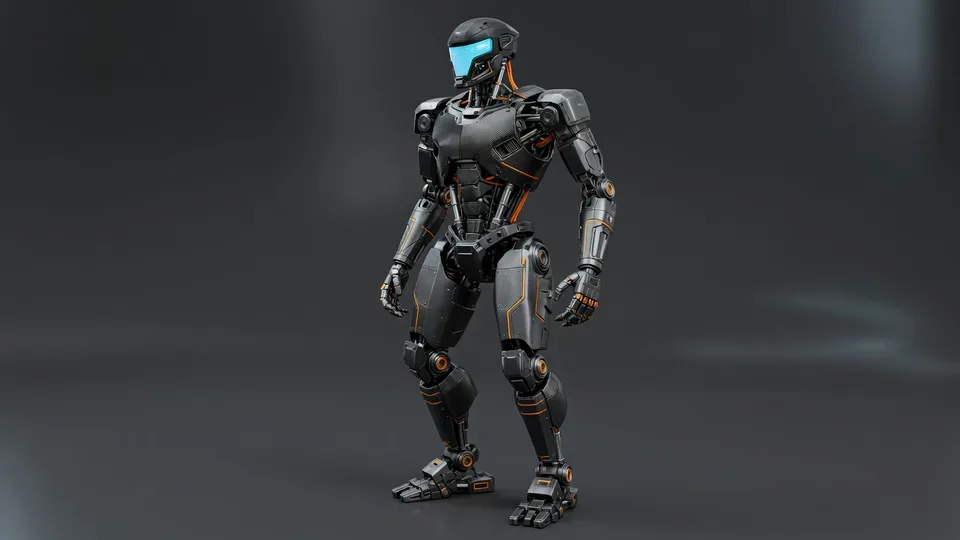
EngineAI T800 Hardware Profile EngineAI’s production T800 stands 1.73 meters tall and weighs 75 kilograms with battery installed. It features 29 degrees of freedom in the body plus 7 per dexterous hand. Peak joint torque reaches 450 newton-meters in several actuators, supported by aviation-grade aluminum and magnesium-alloy construction. The platform runs on a solid-state battery rated for three to five hours and integrates an NVIDIA AGX Orin delivering 275 TOPS alongside an Intel N97 CPU. Sensors include Intel RealSense cameras, IMU units, and force-torque feedback. Maximum walking speed is listed between 1.67 and 3 meters per second depending on configuration. These specifications enable the forceful strikes observed in the cage, yet the robot’s onboard AI remained limited to balance and posture maintenance during the event.
Teleoperation Mechanics and Autonomy Claims A human pilot controlled the T800 from backstage using VR headset and controllers. The robot’s onboard systems handled only low-level stabilization while high-level combat decisions originated from the operator. REK has previously staged robot-versus-robot events with similar gamepad or VR interfaces, and the September 18 match followed the same pattern. Marketing language around “first Human vs Terminator robot fight” created ambiguity for viewers encountering only short clips. Comparable prior demonstrations include EngineAI’s December 2025 padded kick demo and Unitree G1 exhibitions in early 2026, none of which achieved full autonomy in contact scenarios. The gap between teleoperated capability and marketed autonomy remains central to ongoing debates.
Safety Protocols and Liability Shortfalls No standardized safety cages, force-limiting software, or liability insurance frameworks existed for this human-robot physical contact event. LaPenna entered the cage without reported protective gear beyond standard clothing. The T800’s 450 Nm torque actuators delivered strikes capable of knocking a 70-kilogram adult across several meters. Witnesses described audible impacts and visible bruising. REK has conducted 13 prior events across nine cities, primarily robot-versus-robot, yet this marked the first documented human participant in a full-size humanoid bout. Absence of medical oversight protocols or post-event injury reporting raises questions for future entertainment applications.
Supply-Chain and Manufacturing Context EngineAI, founded in Shenzhen in October 2023, began mass production of the T800 in December 2025 at a facility capable of one unit every fifteen minutes. Base pricing starts near 180,000 yuan for industrial configurations, with consumer listings reaching $85,000. Component sourcing includes high-precision cross-roller bearings, permanent-magnet synchronous motors with active cooling, and solid-state battery packs. These choices support the torque and runtime figures but introduce serviceability constraints: specialized actuators and custom battery modules require manufacturer support rather than off-the-shelf replacements. Fleet operators considering entertainment or combat deployments must factor in higher spare-part lead times compared with established industrial arms such as the UR10e.
Second-Order Cost and Operational Implications A single high-torque humanoid capable of generating 450 Nm strikes carries actuator replacement costs estimated in the low thousands of dollars per joint. Teleoperation adds pilot training and VR hardware overhead, roughly $25,000 per operator station in current market estimates. Insurance premiums for contact events remain undefined; early indicators from adjacent drone and exoskeleton markets suggest three- to five-fold increases once real injury data accumulates. REK’s model of licensing pilots and venues could scale entertainment revenue, yet repeated human injury incidents would likely trigger regulatory scrutiny similar to early mixed-martial-arts oversight.
Counter-Arguments and Market Positioning Proponents argue that controlled teleoperated demonstrations accelerate public acceptance and generate data for future autonomy stacks. Critics counter that the September 18 footage primarily showcases human piloting skill rather than robotic intelligence, potentially misleading investors about near-term autonomous combat or labor applications. Competing platforms such as Unitree H1 and Figure 02 emphasize warehouse or research use cases with lower advertised peak torques, reducing immediate safety exposure. EngineAI’s combat-oriented marketing differentiates the T800 but narrows its addressable market to entertainment and security niches in the near term.
Forward Outlook for Humanoid Entertainment REK announced plans for additional footage and hinted at “more coming soon,” signaling continued expansion of its VR-controlled humanoid league. The viral spread of the September 18 clips within 72 hours demonstrates strong public interest in tangible human-robot interaction. However, sustained growth depends on establishing transparent autonomy disclosures, standardized safety enclosures, and liability mechanisms. Without these, similar events risk shifting from promotional assets to regulatory liabilities. Manufacturers and event organizers should prioritize documented force-limiting modes and independent medical review before scaling audience-facing contact demonstra
Sources
- https://www.dexerto.com/entertainment/real-life-t800-drops-influencer-in-viral-human-vs-terminator-fight-3410667/
- https://www.gadgetreview.com/a-human-fought-a-6-foot-tall-humanoid-robot-in-a-san-francisco-cage-he-lost
- https://www.cnbctv18.com/technology/robot-kicks-influencer-frankie-lapenna-in-first-human-vs-terminator-fight-watch-19994765.htm
- https://www.ubergizmo.com/2026/09/that-terminator-fight-looks-real-but-autonomy-is-the-real-question/
- https://humanoidspecs.com/robots/engineai-t800
Who services this hardware
Topics
Related articles
- UBTECH UWORLD U1 First Deliveries Begin in China — UBTECH has started shipping the first UWORLD U1 consumer humanoid robots to Chinese buyers after 13,000 pre-orders. The move tests whether full-size emotional c
- Figure AI Helix 2.5 Delivers 56% Zero-Shot Success Across 30 Homes — Figure AI released Helix 2.5 on September 17, 2026. The Index-pretrained model enabled Figure 03 humanoids to tidy rooms, fold towels, and make beds in 30 unsee
- Robotics Week in Review: Sep 11–Sep 18, 2026 — Humanoid hardware upgrades, factory-scale deployment plans, and new service infrastructure dominated robotics news this week. Companies like Toyota, Unitree, Ag
- Toyota LBM Robots: ELEY's 400,000-Unit Factory Push from 2028 — Toyota announced plans to invest ¥1 trillion annually from 2028 to deploy around 400,000 LBM-powered robots across 60 global factories and supplier sites. The w