Service · AI-derived
Boston Dynamics Atlas Actuator Costs Battery Life TCO 2026
Boston Dynamics' electric Atlas humanoid delivers 4-hour typical battery runtime and autonomous swaps in under 3 minutes. Modular Hyundai Mobis actuators support field replacement, though exact costs, MTBF, and service plans stay undisclosed during 2026 Hyundai and DeepMind deployments.
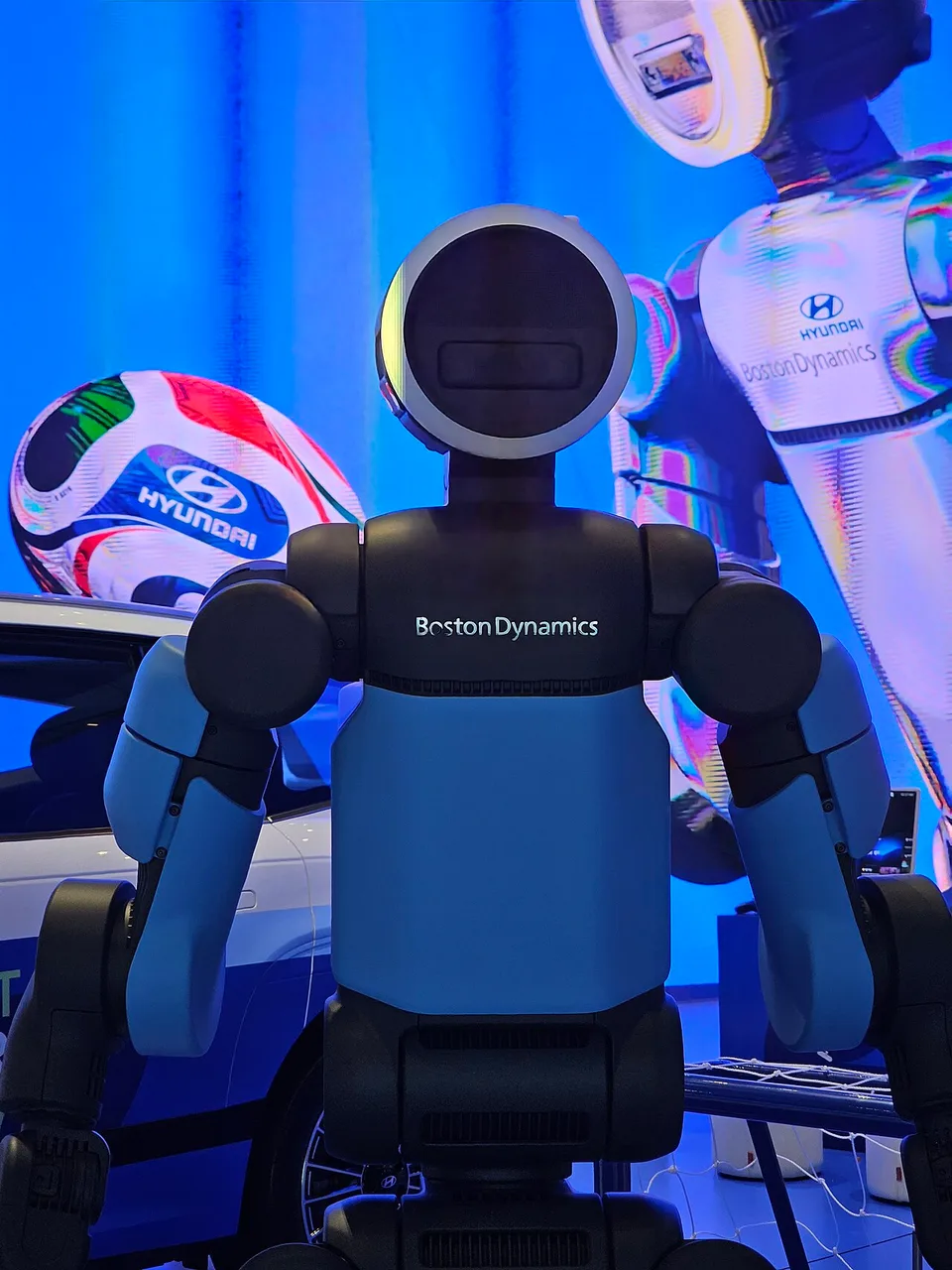
ZeroGantry analysis
Hyundai's internal Metaplant deployments will generate the first credible TCO data on actuator longevity and swap economics; the two-actuator standardization and automotive supply chain point to lower spares complexity than hydraulic predecessors or multi-vendor rivals. Watch for published intervention rates before scaling beyond pilots—early uncertainty on MTBF favors conservative fleet sizing in 2026-2027.
Battery Performance and Autonomous Swap System
The production electric Atlas specifies 4 hours of runtime under typical industrial loads and 2 hours during heavy lifting tasks. This data comes directly from Boston Dynamics specifications released alongside the January 2026 CES unveiling. A conventional recharge requires approximately 90 minutes at 110 V or 220 V optional supply. To address downtime, the robot autonomously navigates to a dedicated station, performs a battery exchange in under 3 minutes, and resumes tasks without human intervention. Fleet operators gain near-continuous operation when multiple charged packs sit ready at stations.
This design directly impacts total cost of ownership calculations. With 20 productive hours possible per day across three shifts, the system reduces idle time compared to fixed charging. Early deployments at Hyundai's Robotics Metaplant Application Center in Savannah, Georgia, test these economics in real automotive workflows. Operators must budget for spare battery inventory and station infrastructure, adding to upfront capital beyond the robot itself.
Hyundai Mobis supplies the core power components under automotive-grade standards. This vertical integration aims to improve consistency and lower long-term energy and replacement expenses versus third-party sourcing. No public data yet quantifies actual energy consumption per task or degradation curves after thousands of cycles.
Actuator Design Modularity and Replacement Economics
Atlas uses custom electric rotary actuators manufactured by Hyundai Mobis, featuring planetary roller screws and high-density neodymium magnets. The platform standardizes on only two actuator types across all 56 degrees of freedom, simplifying inventory and supply chain scaling. Limbs and actuators are explicitly designed as modular, field-replaceable units that technicians or certified customers can swap in minutes.
Boston Dynamics has not released public pricing for individual actuator replacements or full limb assemblies in 2026. Industry estimates for the complete robot hardware range from $130,000 to $150,000 at production volumes, with enterprise packages quoted up to $420,000 including integration. Annual maintenance estimates from Hyundai union analysis sit near $10,200 per unit. Without disclosed mean time between failures or actuator-specific MTBF figures, buyers cannot yet model precise spare-parts consumption.
The shift from the retired hydraulic Atlas eliminates fluid leaks, pump maintenance, and complex hose routing. Automotive-grade components and symmetry in design target higher repeatability and lower failure rates. Field-replaceable modules plus customer self-repair certification paths reduce reliance on factory returns. Early adopters should request detailed spare-parts catalogs and training programs during contract negotiations.
Common Failure Modes and Reliability Outlook
Public information on Atlas-specific failure modes remains limited because the electric platform entered production only in January 2026. General humanoid reliability literature highlights bearings, reducers, encoders, torque sensors, and motor windings as primary wear items. Atlas mitigates some risks through IP67-rated sealing, fenceless safety systems, and thermal management suited for -20°C to 40°C environments.
The emphasis on fewer unique actuator variants and 3D-printed titanium-aluminum structural elements aims to cut complexity compared with the prior hydraulic generation. No data yet exists on intervention rates or spare consumption per thousand hours in sustained factory use. Hyundai's internal deployments at the Metaplant and Google DeepMind collaborations will generate the first operational datasets.
Procurement teams should plan for 5–15% of purchase price in annual maintenance during early years, with potential increases after year seven as gearboxes and seals age. The modular architecture supports predictive maintenance via Orbit fleet software, but buyers need concrete MTBF targets before committing to large fleets.
Service Plans Warranty and Provider Landscape
Boston Dynamics offers enterprise-grade support tied to the Orbit platform for fleet management, task deployment, and performance monitoring. Spec sheets mention customer self-repair certification programs and field-replaceable components, yet detailed warranty terms, response SLAs, and pricing for service contracts have not appeared publicly. Initial 2026 units ship exclusively to Hyundai facilities and DeepMind, limiting external service experience.
Hyundai Mobis handles actuator production and supply, creating a single-point automotive supply chain for critical spares. Boston Dynamics retains responsibility for overall robot integration, software updates, and system-level repairs. European distributors have quoted fully loaded packages between 350,000 and 420,000 euros, typically bundling hardware, integration, initial maintenance, and training.
Operators evaluating total cost of ownership should model a 10-year service life at continuous duty. At a $320,000 enterprise price point, daily ownership cost falls below $90 when amortized over 24/7 operation. Real-world validation awaits data from the first production fleets.
Total Cost of Ownership Implications for 2026 Buyers
Acquisition estimates range $150,000 hardware to $420,000 enterprise-ready. Add integration, safety certification, operator training, spare batteries, charging stations, and software subscriptions. Energy costs remain modest given efficient electric actuation, yet battery array sizing directly affects uptime economics.
The autonomous swap system enables 20-hour daily utilization, potentially replacing 2–3 human shifts at $50,000–$70,000 annual loaded cost each. Break-even appears within 10–20 months at optimistic utilization, provided reliability meets automotive-grade expectations. Absence of published actuator replacement costs and MTBF data creates uncertainty that ear
Watch
Sources
- https://bostondynamics.com/blog/boston-dynamics-unveils-new-atlas-robot-to-revolutionize-industry/
- https://www.techrepublic.com/article/news-boston-dynamics-atlas-robot-battery-swap/
- https://interestingengineering.com/ai-robotics/atlas-learns-to-swap-its-battery
- https://bostondynamics.com/wp-content/uploads/2026/01/atlas-spec-sheet.pdf
- https://humanoidspecs.com/robots/boston-dynamics-atlas
Who services this hardware
Topics
Manufacturers
Related articles
- Fanuc Robot Repair Costs, Maintenance, and Ohio Service Options 2026 — Fanuc industrial robots typically require $2,000–$8,000 in annual preventive maintenance per unit. Ohio operators weigh authorized providers like FANUC America
- Tesla Optimus Maintenance Cost 2026: Actuator Replacement & TCO — Independent 2026 analyses project annual Tesla Optimus maintenance at $1,500-$4,000 for light use and $5,000-$15,000 for factory cycles. The largest expenses st
- OpenAI Humanoid Robot: Sam Altman Confirms In-House Hardware Plans — OpenAI CEO Sam Altman confirmed on September 2, 2026 that the company will build humanoid robots through its internal robotics division. The project begins with
- Figure AI Index Dataset: 16M Videos Scale Helix Training — Figure AI launched its Index app on August 25, 2026, after collecting 16 million real-world human videos from 264,000 downloads in 108 countries.