Reachy Review (3★)
Pollen Robotics · Humanoid
Editorial
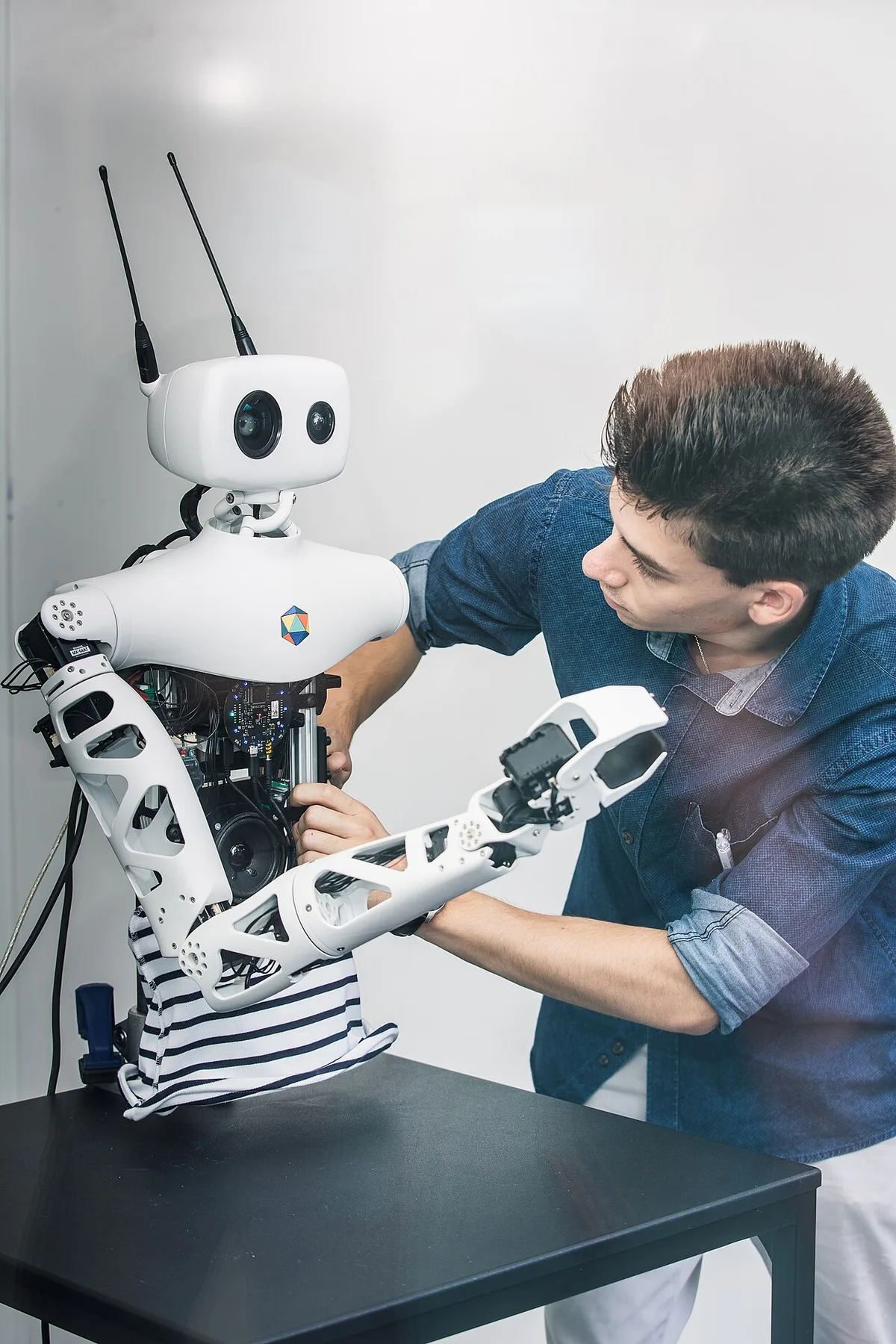
Reachy delivers a genuinely hackable research torso that prioritizes accessibility over raw capability, with its Python-first SDK and ROS2 stack accelerating embodied AI experiments at labs including Cornell, Carnegie Mellon, and CNRS. The 15 DoF design and Orbita joints enable fluid teleoperation and manipulation demos, backed by real deployments exceeding 100 units globally. Yet its stationary form factor, modest 2 kg payload, and 4-hour runtime expose clear constraints against mobile humanoids now entering the market. At roughly $17k it remains a strong choice for makers and educators seeking modifiable hardware rather than turnkey performance. Pollen's open approach and Hugging Face ecosystem ties give it staying power for prototyping, but buyers expecting versatile deployment will hit hardware ceilings quickly.
What this assessment is based on
Published manufacturer specifications, deployment reports, and operator accounts. ZeroGantry does not claim hands-on testing of this unit unless stated. Scores are editorial judgments from those public sources — see the methodology for how labels are assigned.
Published 2026-09-23
Pros
- Fully open-source Python SDK and ROS2 support enabling custom AI integration across 100+ deployments in 20 countries
- 15 DoF modular torso design with patented Orbita actuators for precise bio-inspired arm and neck motion in research tasks
- 4-hour LiFePO4 battery runtime supporting untethered teleoperation and data collection sessions
- 2 kg payload capacity per arm configuration suitable for lightweight manipulation experiments at institutions like Cornell and CMU
Cons
- Stationary torso only with no mobile base option in base configuration, restricting locomotion to fixed setups
- Limited 2 kg payload falls short of modern 3+ kg per arm benchmarks in comparable research platforms
- 4-hour battery duration requires frequent recharging during extended lab sessions or multi-hour experiments
- $17,000 price point positions it as premium for education/research without full-body mobility or higher payload variants
Reachy specifications
| Spec | Value | Status | Source |
|---|---|---|---|
| Degrees of freedom | Not published | — | |
| Indicative price | Not published | — |
Not yet verified against a maker source · Overall: Unverified
Other attributes (ZeroGantry classification, not maker-verified)
| Function | Research & development |
|---|---|
| Released | 2020 |
| Maturity | Production |
| Operational status | Active |
How we verify specs: what the status badges mean
- Confirmed Read on the maker's own page, spec sheet, docs or press release as a stated value.
- Claimed Stated by the maker as a target, preliminary figure, “up to” value or performance claim.
- Estimated Derived by us or taken from a third party. Not maker data.
- Unverified No maker primary source checked yet. Treat as unconfirmed.
- Not published The maker does not publish this value.
Every Confirmed, Claimed or Estimated value links to its source and shows the date it was checked. A robot's overall badge reads Confirmed only when every published value is Confirmed, and Partly verified when they are mixed. Read the full methodology.
Reachy service and repair
ZeroGantry tracks robot repair and service providers across the United States by state, brand, and robot type.
- Robot repair directory — providers by state, brand, and robot type
Other robot reviews
- Apptronik Apollo 2 review — Apptronik
- Atlas (Electric Humanoid) review — Boston Dynamics
- HUBO-2 Plus review — Rainbow Robotics
- XPeng IRON (Gen 2) review — XPeng
- Astribot S1 review — Astribot (Stardust Intelligence)
- 1X NEO review — 1X Technologies