Editorial · AI-derived
Physical Intelligence San Francisco Lease Signals 2026 Physical AI Scaling
Physical Intelligence subleased 80,000 square feet at 850 Brannan Street in San Francisco from Airbnb in September 2026. The robotics AI firm is expanding its Bay Area footprint after raising over $2 billion to develop general-purpose robot control models.
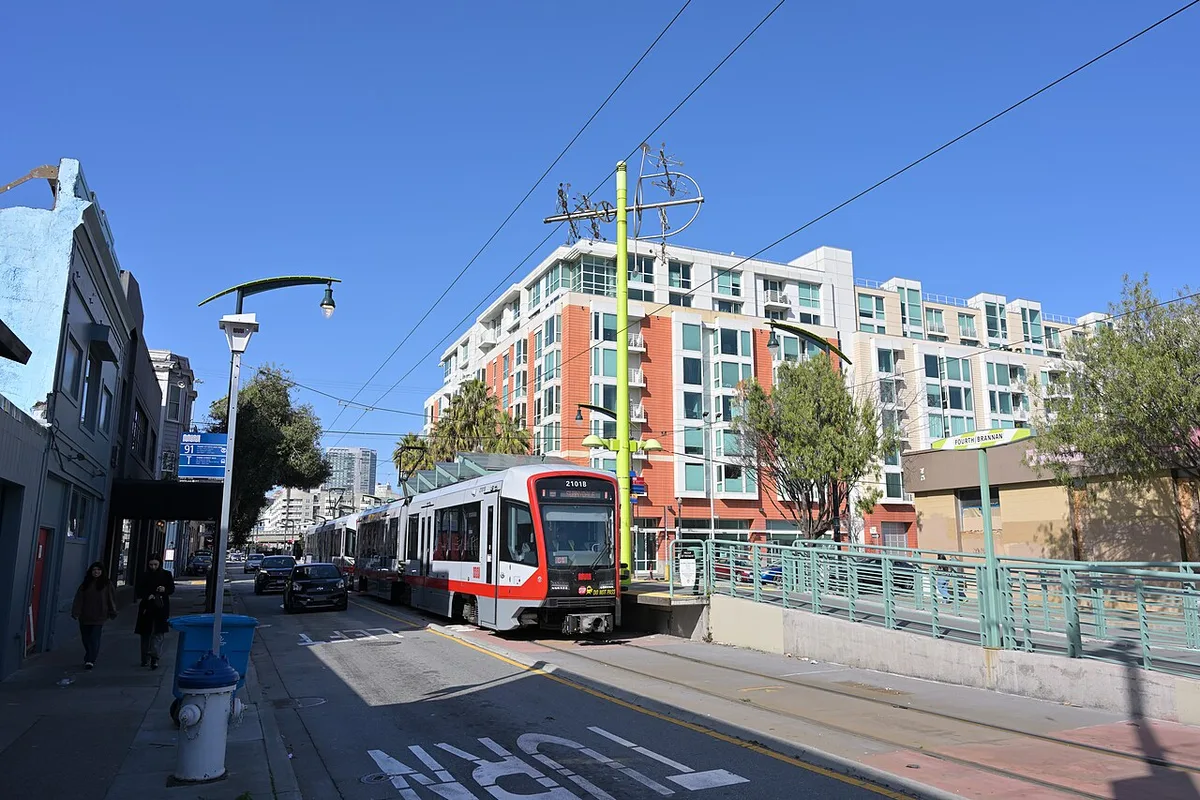
ZeroGantry analysis
Physical Intelligence’s 390,000-plus square feet of Bay Area space now exceeds the combined disclosed footprints of several peers still operating from single buildings. At roughly $5–7 per square foot monthly in sublease markets, the annual real estate burn likely exceeds $20 million before fit-out or utilities—material for a pre-revenue firm yet justified by the need for parallel hardware test cells. Watch for whether the Mountain View and Brannan blocks enable measurable increases in daily robot policy iterations or remain expensive option value.
EDITORIAL / OPINION
Physical Intelligence’s latest office move underscores how quickly well-capitalized physical AI teams are converting research budgets into physical infrastructure. The company agreed to sublease 80,000 square feet at 850 Brannan Street from Airbnb in late September 2026, following a 60,000-square-foot sublease at 808 Brannan Street earlier in March and a 233,500-square-foot lease in Mountain View completed in September. These additions bring the firm’s total disclosed Bay Area footprint well past 390,000 square feet when including its existing 16,000-square-foot headquarters at 396 Treat Avenue in the Mission District.
Lease Footprint Tracks Funding Momentum
The timing aligns with a $1 billion funding round closed in May 2026 that pushed cumulative capital above $2 billion, according to reporting from The Real Deal and the San Francisco Business Times. Earlier rounds included a $600 million Series B in late 2025 that set a $5.6 billion post-money valuation. Investors such as Thrive Capital, Sequoia Capital, OpenAI Startup Fund, and Alphabet’s CapitalG have backed the company’s vision-language-action models, known as the π series. Office square footage serves as a visible proxy for headcount growth and the shift from pure simulation training to hardware-in-the-loop testing.
San Francisco’s office market data adds context. Citywide vacancy fell to 28 percent in the third quarter of 2026 from a 36.9 percent peak in late 2024, per preliminary CBRE figures cited in the same coverage. Showplace Square, once a symbol of pandemic-era contraction, now hosts multiple AI tenants subleasing from former large occupants like Airbnb. Physical Intelligence’s pattern mirrors moves by other physical AI players who treat real estate as a competitive moat rather than a cost center.
From Research Labs to Deployment Infrastructure
The π models focus on learning general robot policies from vision and language inputs, with reported testing in laundry folding tasks through partner Weave and warehouse order packaging through another collaborator. Scaling these policies requires not only GPU clusters but also dedicated spaces for robot fleets, sensor calibration rigs, and safety-compliant testing zones. An 80,000-square-foot floor plate at 850 Brannan provides room for multiple parallel development lines that smaller facilities cannot accommodate.
Critics of the physical AI hype cycle correctly note that no π-powered system has yet reached commercial volume production. The company itself has stated it has no public commercialization timeline. Yet the lease activity suggests management believes the gap between lab demonstration and repeatable factory or logistics performance is closing faster than skeptics expect. Each additional square foot represents incremental capacity for data collection loops that combine human teleoperation, simulation, and real-world iteration.
Cost and Operational Implications
Subleasing from Airbnb carries both advantages and constraints. The master lease at the broader Brannan complex runs through 2037, offering long-term visibility that pure speculative builds cannot match. However, sublease terms often limit customization and carry assignment risks if the master tenant’s own needs shift. Physical Intelligence’s decision to layer multiple Brannan addresses suggests an appetite for contiguous or nearby blocks that minimize internal logistics overhead.
Mountain View’s 233,500-square-foot addition further diversifies the portfolio toward Silicon Valley talent pools and proximity to hardware suppliers. Combined real estate commitments now exceed the scale of many early-stage robotics hardware startups that still operate from university incubators or shared maker spaces. This footprint differential matters for recruiting engineers who expect dedicated lab benches and for partners who want to ship physical robots for on-site evaluation without months of scheduling delays.
Counter-Arguments and Market Reality
Skeptics point out that office expansion alone does not guarantee product-market fit. Historical robotics ventures have leased large facilities only to downsize when funding cycles tightened or technical hurdles proved steeper than projected. Physical Intelligence’s valuation trajectory—$5.6 billion confirmed, with reported talks of $11 billion-plus—reflects investor optimism rather than proven unit economics. The company’s work remains entirely pre-revenue, funded by venture capital.
Still, the broader trend of physical AI firms locking in space while office vacancy declines indicates capital allocation is favoring teams that can demonstrate iterative progress on real hardware. Competitors such as Figure AI and 1X Technologies have pursued their own facility builds or partnerships with manufacturers. Physical Intelligence’s choice to concentrate in San Francisco and Mountain View rather than immediately relocating to lower-cost regions signals confidence that talent density and investor proximity outweigh real estate cost differentials in the near term.
Second-Order Effects on the Ecosystem
Landlords and sublessors benefit directly. Airbnb’s willingness to shed portions of its Brannan holdings while maintaining a presence at 888 Brannan through 2037 illustrates how large tech tenants can monetize surplus space without fully exiting markets. For the city, each new robotics tenant adds high-wage engineering roles and indirect demand for suppliers of actuators, cameras, and compute hardware. The Philippines registration of a Physical Intelligence affiliate to build a “data factory” for robot motion datasets further extends the supply chain implications beyond the Bay Area.
Serviceability considerations also emerge. Large contiguous leases allow installation of specialized infrastructure such as raised floors for cable management, dedicated power feeds for robot charging stations, and controlled environments for precision calibration. Smaller, fragmented s
Sources
Topics
Related articles
- Robotics Week in Review: Sep 25–Oct 2, 2026 — Humanoid robots advanced toward real warehouse and factory roles while software platforms and record industrial deployments underscored automation's acceleratin
- IFR Data: 5 Million Robots Signal Labor Shift, Not Humanoid Revolution — The International Federation of Robotics' World Robotics 2026 report shows global factory robot stock reached 5 million units in 2025, with China installing 59
- Robotics Week in Review: Sep 18–Sep 25, 2026 — This week showcased explosive humanoid deployments in entertainment, services, and homes alongside major AI training leaps. AGIBOT hit 300 robots at Chimelong w
- AGIBOT Chimelong Deployment Hits 300 Robots, Delivers 20,000th A3 Ultra — AGIBOT and Chimelong Group launched the first phase of a large-scale embodied AI deployment at Chimelong Spaceship Park in Zhuhai, China, on September 24, 2026.