Editorial · AI-derived
IFR Data: 5 Million Robots Signal Labor Shift, Not Humanoid Revolution
The International Federation of Robotics' World Robotics 2026 report shows global factory robot stock reached 5 million units in 2025, with China installing 59 percent of new machines. US installations hit 38,500, outpacing net manufacturing job losses and highlighting automation's role amid labor shortages and supply-chain pressures.
ZeroGantry analysis
The IFR numbers expose a widening gap between installed conventional capacity and humanoid ambitions: 603,000 new articulated and SCARA units versus low-single-digit-thousand humanoid sales. US robot installations exceeding net manufacturing job losses in 2025 implies service and integration revenue will grow faster than new platform development for the next 24–36 months. Watch for Chinese domestic brands expanding export footprints once certification barriers are addressed; ignore pure humanoid volume forecasts until payload-consistent, 20-hour-duty-cycle units post verifiable multi-year ROI at customer sites.
EDITORIAL / OPINION
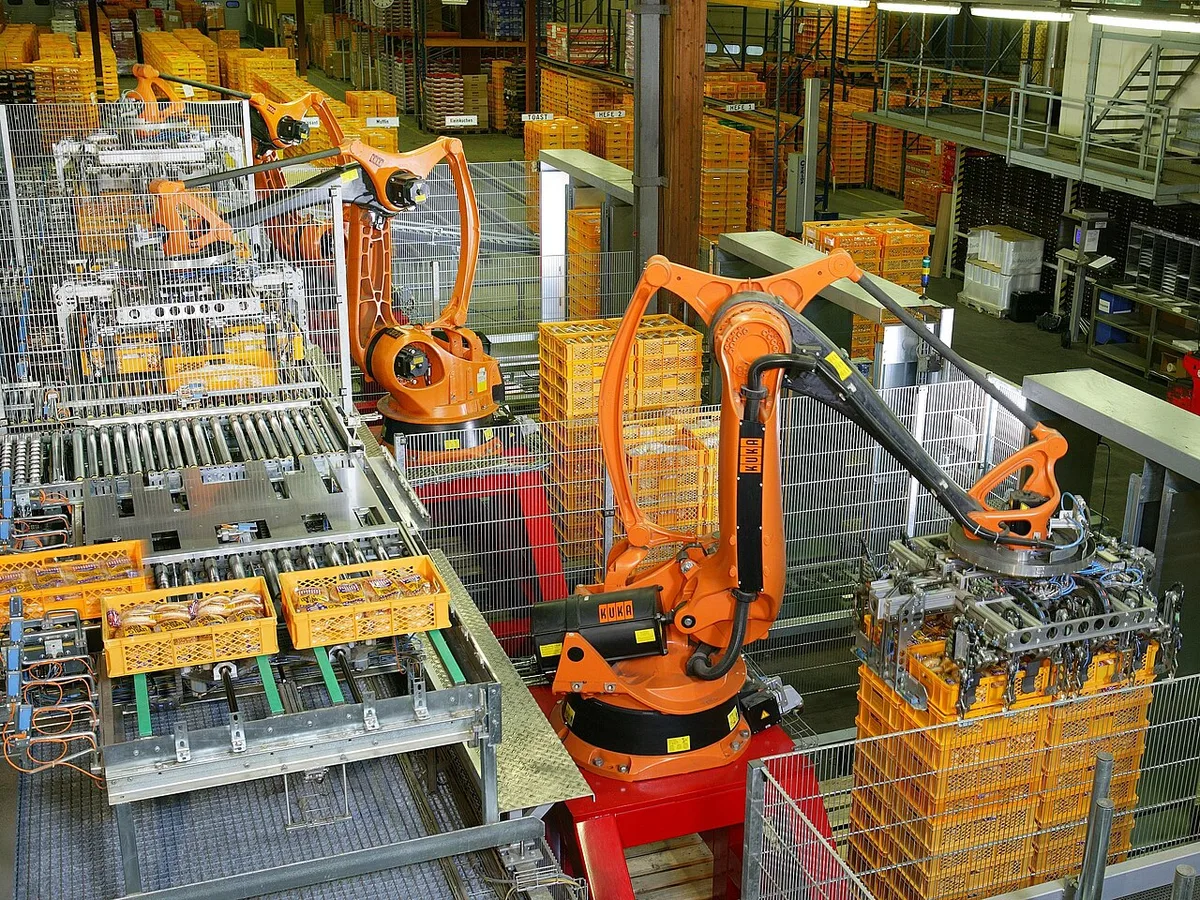
The International Federation of Robotics released its World Robotics 2026 report on September 24, confirming that the worldwide stock of operational industrial robots climbed 9 percent to approximately 5.08 million units. Annual installations reached a record 603,000, up 11 percent from 2024. China alone accounted for 354,000 of those new units—59 percent of the global total—while the United States installed 38,500 robots, a 12 percent rise that pushed it past Japan into second place.
These figures arrive against a backdrop of persistent manufacturing labor shortages and renewed US-China technology friction. The data underscores a straightforward reality: conventional industrial robots continue to scale in high-volume sectors such as electronics, automotive, and metalworking, while humanoid platforms remain a rounding error in the same markets.
China’s Scale and Self-Reliance Strategy
China’s 20 percent year-over-year growth in installations built on a decade-long national robotics strategy now embedded in the 15th Five-Year Plan for 2026–2030. Domestic suppliers captured 55 percent of the Chinese market in 2025, up from prior years, even as foreign vendors grew faster in absolute terms. Electrical and electronics customers took 96,400 units, automotive 78,900, and metal/machinery 78,700. The IFR projects continued 5–10 percent average annual growth through 2029, driven explicitly by demographic labor shortages rather than speculative humanoid demand.
This domestic production edge matters for cost and iteration speed. Chinese firms have localized servo motors, harmonic reducers, and battery supply chains that Western programs still source across borders. The result is lower bill-of-materials costs and faster design cycles for high-volume articulated arms and SCARA robots that already dominate electronics assembly lines. Humanoid developers outside China face the same component realities but without equivalent scale in actuator or reducer manufacturing.
US Installations Outpace Hiring, Reshoring Implications
US robot installations reached their third-strongest year on record. Bloomberg analysis of IFR and Bureau of Labor Statistics data noted that 38,500 new robots exceeded net manufacturing job losses exceeding 90,000 in 2025—the first time installations outstripped hiring in this manner. Automotive remained the largest US customer at 13,500 units, while food and beverage, warehousing, and medical sectors posted gains.
Reshoring incentives and higher US labor costs make automation economics compelling. PwC and other observers have linked import tariff pressures to capital-for-labor substitution. Yet the majority of robots operating in US facilities still arrive from Japanese and European suppliers, creating a persistent import dependence even as domestic integrators proliferate. The IFR outlook flags trade tensions as a near-term drag but identifies labor scarcity and reshoring policy as structural tailwinds for 2026 and beyond.
Humanoid Hype Meets Installed-Base Reality
The same week the IFR report landed, coverage of Boston Dynamics’ new Robotics Metaplant Application Center at Hyundai’s Georgia facility highlighted plans for eventual Atlas deployments targeting parts sequencing and heavy lifting, with component assembly targeted for 2030. Hyundai’s stated goal of 25,000 Atlas units across its plants and a future US production capacity of 30,000 robots per year remains aspirational next to the 603,000 conventional robots installed globally in a single year.
Separate IFR commentary on humanoids placed 2025 industrial and professional sales in the low thousands—orders of magnitude below articulated-arm volumes. Early deployments such as Agility Robotics’ work with GXO or Figure’s BMW pilots demonstrate feasibility in narrow workflows, yet serviceability, payload consistency, and total cost of ownership remain open variables compared with mature six-axis cells. The five-million-unit installed base consists overwhelmingly of proven, cage-or-collaborative arms whose spare-parts ecosystems and integration standards are already global.
Supply-Chain Interdependence and Policy Friction
US restrictions on certain foreign-made advanced robots, enacted earlier in 2026, aim to address cybersecurity and supply-chain vulnerability concerns. At the same time, reports indicate that even leading US humanoid programs retain significant exposure to Asian-sourced components, particularly rare-earth magnets, precision reducers, and power electronics where Chinese capacity exceeds 80–90 percent globally in several categories. This interdependence persists despite policy efforts to diversify.
European installations declined in several major markets, with Germany, Italy, France, and Spain each posting double-digit drops. The contrast with Asian growth highlights differing labor-market pressures and policy support. India and Brazil posted percentage gains, yet absolute volumes remain small relative to the top three markets.
Labor, Productivity, and the Next Five Years
The IFR explicitly ties Chinese demand growth to demographic aging and resulting workforce shortfalls. The same dynamic appears in US manufacturing data. Automation investment amortized over five-to-seven years offers a lever for productivity when hourly labor costs differ sharply across regions. However, the report’s customer-industry breakdowns also show volatility: some general-industry segments that grew rapidly in prior years contracted sharply in 2025, underscoring that robot adoption tracks end-market cycles rather than following a straight exponential curve.
For service and maintenance economics, the existing five-million-unit fleet generates predictable aftermarket revenue through established integrators and OEM channels. New humanoid platforms must demonstrate comparable uptime, diagnostic accessibility, and parts availability before they displace or augment those fleets at scale. Early customer feedb
Sources
- https://ifr.org/downloads/press_docs/EN-2026-SEP-24-IFR_Press_Release_WR-CHINA.pdf
- https://ifr.org/downloads/press_docs/EN-2026-SEP-24-IFR_Press_Release_WR-USA.pdf
- https://thenextweb.com/news/industrial-robots-world-robotics-2026-china-59-eu-falls
- https://www.assemblymag.com/articles/100432-boston-dynamics-begins-robotics-testing-at-hyundai-metaplant
- https://www.techtimes.com/articles/328119/20260928/us-factories-installed-more-robots-they-hired-workers-2025-ifr-data-shows.htm
Topics
Related articles
- Robotics Week in Review: Sep 18–Sep 25, 2026 — This week showcased explosive humanoid deployments in entertainment, services, and homes alongside major AI training leaps. AGIBOT hit 300 robots at Chimelong w
- AGIBOT Chimelong Deployment Hits 300 Robots, Delivers 20,000th A3 Ultra — AGIBOT and Chimelong Group launched the first phase of a large-scale embodied AI deployment at Chimelong Spaceship Park in Zhuhai, China, on September 24, 2026.
- NVIDIA Isaac ROS 5.0 Pushes Agentic Robotics Toward Factory Floors — NVIDIA released Isaac ROS 5.0 on September 22, 2026, adding agentic AI workflows, FoundationPose for faster tracking, and standalone pick-and-place skills. The
- Robotics Week in Review: Sep 11–Sep 18, 2026 — Humanoid hardware upgrades, factory-scale deployment plans, and new service infrastructure dominated robotics news this week. Companies like Toyota, Unitree, Ag