Editorial · AI-derived
Amazon Proteus 2 and Tetromino Project Advance Warehouse Robots 2026
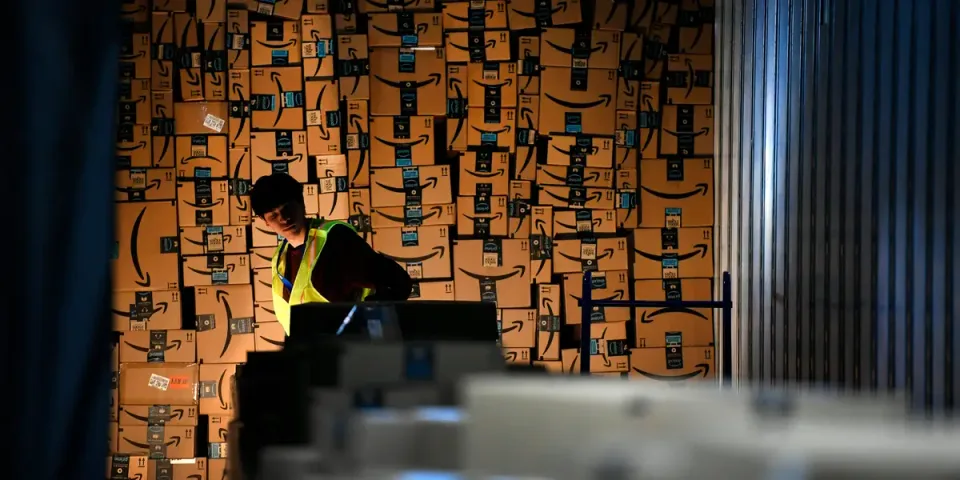
Amazon is expanding its Proteus fleet with a voice-command Proteus 2 while piloting the Tetromino project for automated delivery stations that process packages 2.5 times faster. The moves form part of a push that already includes over one million deployed robots and plans to double robotic arms this year.
ZeroGantry analysis
Amazon's million-plus robot fleet already dwarfs most rivals, and doubling arms in 2026 plus Proteus 2's expanded range could cut per-package labor hours further before Tetromino pilots even begin. The $530 million scale-up target looks aggressive given Amazon's own disclaimer, yet the incremental path from dock-only Proteus units to voice-directed fleet mobility offers clearer near-term ROI than humanoid programs elsewhere. Watch 2027 European sites for throughput numbers; ignore vaporware comparisons until real metrics emerge.
EDITORIAL / OPINION
Amazon's latest robotics moves show a company methodically extending automation into the hardest corners of its network rather than chasing flashy humanoid breakthroughs. The Proteus 2 upgrade and Tetromino delivery-station concept both target real operational bottlenecks with incremental, data-driven steps that leverage Amazon's existing scale.
Proteus 2 Adds Natural Language Control
The second-generation Proteus robot introduces voice commands powered by generative and agentic AI, letting workers issue instructions such as directing the unit to move carts across larger warehouse areas instead of relying on specialized software. First-generation units number roughly 4,000 across 25 sites and handle loads near 400 kilograms in dock zones. The upgrade expands the operating envelope to any location where items need transport, including inbound containers and inter-station movement, with European deployments targeted for the first half of 2027. This evolution reflects Amazon's pattern of deploying systems, gathering real-world performance data, and iterating rather than waiting for perfect general-purpose hardware.
Tetromino Targets the Final Manual Link
Project Tetromino aims to automate delivery stations, the last facilities before packages reach drivers, where sorting, sequencing, and vehicle loading have resisted full mechanization. Internal documents reviewed by Business Insider outline a $103 million pilot in 2028, followed by five additional sites in 2029 at roughly $85 million each and ten more in 2030, for cumulative spending exceeding $530 million by 2029. The design targets 2.5 times the package throughput of current stations, potentially drawing on Boxbot's AI sequencing technology that claims up to tenfold faster vehicle loading. Amazon has clarified that the figures represent an early-stage concept subject to change, consistent with its history of testing multiple initiatives before committing capital at scale.
Scale and Labor Context
Amazon already operates more than one million robots across fulfillment centers, including Sparrow arms, Vulcan tactile systems, and Blue Jay multi-arm setups. July earnings guidance called for more than doubling the robotic arm fleet during 2026, a concrete metric that dwarfs most competitors' announced deployments. Delivery-station pilots announced last year in Europe under a €700 million modernization program already include unloading, sorting, and scanning machines, showing incremental progress on the same pain points Tetromino addresses. Company statements continue to frame robots as tools that improve safety and efficiency while keeping employees central, though prior internal projections have noted automation's potential to flatten hiring curves over the coming decade.
Geopolitics and Supply Chain Realism
The push occurs against tightening labor markets and rising expectations for same-day or next-day delivery, where last-mile facilities remain a persistent cost center. Partnering signals with startups such as Boxbot highlight Amazon's willingness to integrate external AI for specific sequencing tasks rather than building every subsystem in-house. Competitors including FedEx with Dexterity trailer-loading robots and UPS with unloading automation demonstrate parallel industry efforts, yet Amazon's data advantage from its million-plus fleet gives it a distinct training edge for foundation models that generalize across tasks. This pragmatic approach prioritizes measurable throughput gains over speculative humanoid timelines.
Hype Versus Deployment Reality
Public announcements often emphasize conversational interfaces and 2.5x speed claims, yet actual rollout timelines remain measured: Proteus 2 pilots in labs now, broader deployment still months away. Tetromino's multi-year capital plan and Amazon's own caveat that details will evolve underscore how warehouse automation succeeds through sustained iteration, not single announcements. The Tetris-inspired name itself nods to the combinatorial puzzle of package arrangement, a reminder that physical constraints and variability continue to limit fully lights-out operations. Observers tracking Amazon's trajectory should watch 2027 European Proteus 2 sites and any 2028 pilot results for the first concrete performance data rather than internal planning documents alone.
Sources
- https://www.businessinsider.com/amazon-tetromino-project-aims-to-fully-automate-delivery-stations-2026-8
- https://www.theverge.com/ai-artificial-intelligence/942884/amazon-next-generation-warehouse-robot-proteus
- https://www.pymnts.com/amazon/2026/amazon-envisions-next-generation-automated-stations-to-process-packages-2-5-times-faster/
Topics
Related articles
- Figure AI Melts F.02 Fleet: Schwarzenegger's Terminator Sendoff — Figure AI retired its F.02 humanoid fleet by training the robots to jump into a 75-ton electric arc furnace in Imatra, Finland. CEO Brett Adcock followed Arnold
- Robotics Week in Review: Sep 25–Oct 2, 2026 — Humanoid robots advanced toward real warehouse and factory roles while software platforms and record industrial deployments underscored automation's acceleratin
- Physical Intelligence San Francisco Lease Signals 2026 Physical AI Scaling — Physical Intelligence subleased 80,000 square feet at 850 Brannan Street in San Francisco from Airbnb in September 2026. The robotics AI firm is expanding its B
- IFR Data: 5 Million Robots Signal Labor Shift, Not Humanoid Revolution — The International Federation of Robotics' World Robotics 2026 report shows global factory robot stock reached 5 million units in 2025, with China installing 59