LimX Oli Review (4★)
LimX Dynamics · Humanoid
Editorial
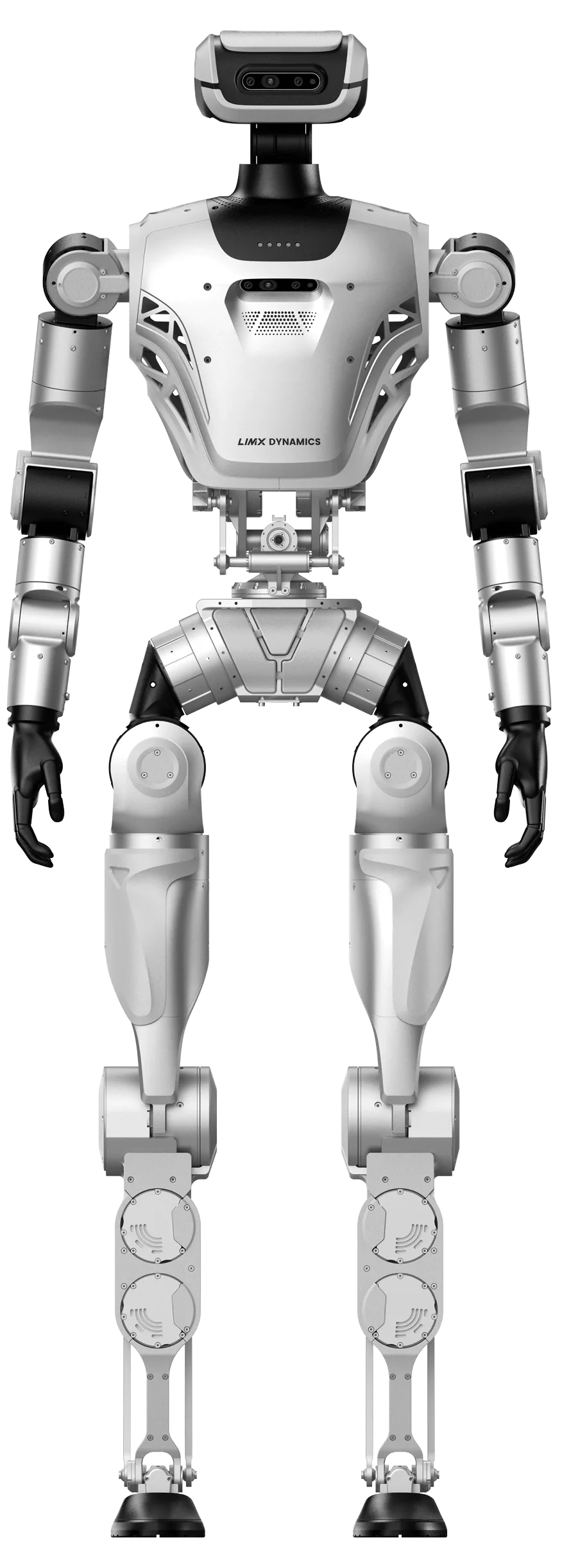
LimX Oli stands out for its production-ready swarm capability and COSA 0.5 agentic OS, which delivered China's first reported fully autonomous long-horizon household chore sequence in July 2026 demos. The 31-DoF mechanical package and open sim tooling lower barriers for embodied AI teams far more effectively than closed platforms. Yet the modest 1.5 m/s top speed, short runtime, and 12 kg payload keep it from challenging leaders like Tesla Optimus or Boston Dynamics Atlas in raw performance. At an estimated $40k–60k it offers compelling value for research fleets and early swarm pilots, but buyers should budget for frequent recharges and expect iterative hardware upgrades. Overall a technically credible contender that prioritizes coordination and developer velocity over brute capability.
What this assessment is based on
Published manufacturer specifications, deployment reports, and operator accounts. ZeroGantry does not claim hands-on testing of this unit unless stated. Scores are editorial judgments from those public sources — see the methodology for how labels are assigned.
Published 2026-07-22
Pros
- 18-unit autonomous swarm demonstrated with COSA agent OS enabling coordinated multi-robot operation without direct human control
- 31 DoF configuration delivering natural human-like postures on a 165 cm full-size platform with scalable end-effectors
- Quick-swap modular battery and design supporting 3.5-hour runtime and rapid field maintenance in production units
- Comprehensive developer ecosystem including Python SDK, MuJoCo/Isaac Sim URDF support, and dual compute (RK3588 + optional Orin) for sim-to-real deployment
Cons
- Battery endurance limited to 1.5–3.5 hours per charge depending on configuration, restricting continuous long-horizon tasks
- Maximum speed capped at 1.5 m/s (5.4 km/h) constraining applications requiring faster locomotion or dynamic responses
- Payload capacity of 12 kg and grip strength rated around 3 kg limiting heavy industrial manipulation compared to higher-torque rivals
- Unit price estimated $40,000–$60,000 places it above low-cost entrants while real-world MTBF and multi-shift deployment data remain sparse beyond demos
LimX Oli specifications
| Degrees of freedom | 31 |
|---|---|
| Weight | 65 kg |
| Battery life | 3.5 h |
| Payload | 12 kg |
| Max speed | 1.5 m/s |
| Actuators | Custom Force-Adaptive Actuators |
| Primary sensor | Depth Camera + IMU + Tactile |
| Function | Assembly & manufacturing |
| Released | 2025 |
| Maturity | Production |
| Status | Active |
| Indicative price | ~$40,000 (est.) |
LimX Oli service and repair
ZeroGantry tracks robot repair and service providers across the United States by state, brand, and robot type.
- Robot repair directory — providers by state, brand, and robot type
Other robot reviews
- Astribot S1 review — Astribot (Stardust Intelligence)
- 1X NEO review — 1X Technologies
- NAO review — Aldebaran / SoftBank Robotics
- Pepper review — SoftBank Robotics
- AGIBOT Expedition A3 review — Agibot
- Toyota T-HR3 review — Toyota