Service · AI-derived
OpenAI Humanoid Robot: Sam Altman Confirms In-House Hardware Plans
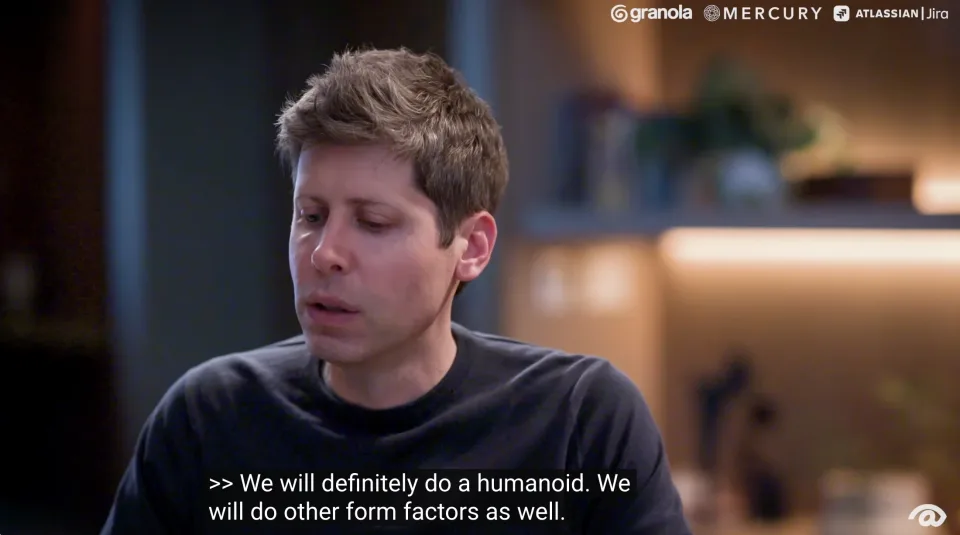
OpenAI CEO Sam Altman confirmed on September 2, 2026 that the company will build humanoid robots through its internal robotics division. The project begins with infrastructure construction support before targeting personal general-purpose machines.
ZeroGantry analysis
OpenAI’s vertical integration of hardware and models could compress long-term service costs by 15-25% versus multi-vendor setups once fleets scale, but initial deployments may lag 18-24 months behind Tesla Optimus or Figure 02 due to actuator development timelines. Watch for early infrastructure pilots; ignore consumer timelines until 2028+. Fleet reliability roles in current postings signal proactive TCO focus uncommon in pure software labs.
OpenAI Enters Humanoid Hardware Race Directly
Sam Altman’s September 2, 2026 confirmation on the Sources podcast marks the first explicit public statement that OpenAI will develop its own humanoid robots. The remark came during discussion of the company’s revived robotics efforts, which originated from world-simulation research led by Aditya Ramesh. OpenAI had previously shut down an earlier robotics group in 2020 before restarting activity around early 2025. The new division now focuses on co-design of hardware and machine-learning models rather than relying solely on external partners.
The near-term priority centers on robots that assist skilled workers in infrastructure and construction environments. Altman emphasized that human-like form factors make sense because the physical world is built for human bodies, including doors, keyboards, and heavy machinery. Data-center automation robots may use non-anthropomorphic designs where human morphology offers no advantage. Long-term goals include personal robots capable of performing a wide range of household tasks.
Hiring and Organizational Build-Out
OpenAI has posted multiple specialized roles in San Francisco for hardware engineers, systems architects, ML specialists, and operations staff. Positions include actuator design engineers responsible for custom electromechanical components, with emphasis on torque density, thermal management, and bandwidth. The company is also recruiting for large-scale data collection operations and simulation realism engineering. Applications route through a dedicated robotics recruiting email.
This internal capability push follows the formal spin-out of the robotics team earlier in 2026. The effort has grown from a small simulation group to a dedicated division actively manufacturing prototypes. OpenAI previously partnered with or invested in external humanoid developers, but recent moves indicate a shift toward vertical integration of both intelligence and physical platforms.
Competitive Context and Former Partnerships
The confirmation places OpenAI in direct competition with established players pursuing similar hardware. Tesla continues advancing its Optimus program with production-line preparations, while Figure AI has emphasized autonomy-first development after parting ways with OpenAI. 1X Technologies, an earlier OpenAI-backed humanoid startup, now faces potential majority acquisition talks from SoftBank. Altman’s statements underscore that OpenAI intends to control both the cognitive models and the mechanical embodiment.
Industry observers note that OpenAI’s timeline remains longer than some competitors already shipping early units or conducting on-site trials. The company’s focus on custom actuators and integrated simulation pipelines suggests a deliberate pace aimed at avoiding constraints of off-the-shelf hardware. This approach could influence future service models once robots reach deployment scale.
Implications for Maintenance and Total Cost of Ownership
Although no specific robots have shipped, OpenAI’s hardware ambitions carry implications for service ecosystems. Companies developing in-house platforms often retain tighter control over spare parts, firmware updates, and repair protocols compared with open ecosystems. Early job postings reference fleet reliability engineering and data quality throughput, hinting at operational considerations that extend beyond initial development.
Infrastructure-focused deployments in construction settings will likely encounter higher wear on actuators and end-effectors than controlled factory environments. Service intervals for such platforms typically range from weekly visual inspections to quarterly deep maintenance on high-cycle components, based on patterns observed in similar industrial humanoids. OpenAI’s emphasis on co-design may allow predictive maintenance models trained directly on its own simulation data, potentially reducing unplanned downtime.
Warranty structures and third-party service availability remain undefined at this stage. Vertical integration could enable bundled service plans similar to those offered by established industrial robot manufacturers, where annual contracts cover parts and labor at fixed percentages of initial robot cost. End users in construction or data centers would benefit from single-vendor accountability but might face longer lead times for specialized components until supply chains mature.
Path Forward and Unresolved Service Questions
OpenAI continues active hiring for roles that support both prototype validation and eventual fleet operations. The division’s growth from simulation research to full hardware responsibility indicates sustained commitment. Future announcements will likely clarify timelines for first deployments and associated support frameworks.
Service providers in the broader robotics market should monitor OpenAI’s actuator specifications and sensor choices once prototypes appear. These details will determine compatibility with existing spare-parts networks and diagnostic tools. Early engagement with OpenAI’s operations team could position third-party maintainers for future contracts once infrastructure robots enter field trials.
The September 2 confirmation closes one chapter of speculation while opening many operational questions around reliability, parts availability, and total cost of ownership for the coming generation of OpenAI-developed platforms.
Watch
Sources
- https://www.humanoidsdaily.com/news/sam-altman-confirms-openai-will-definitely-do-a-humanoid
- https://www.humanoidsdaily.com/news/openai-pivots-directly-into-hardware-launching-internal-robotics-division
- https://the-decoder.com/openai-starts-with-infrastructure-robots-but-aims-for-everyone-having-a-personal-robot-doing-anything-they-need/
Who services this hardware
Topics
Related articles
- Fanuc Robot Repair Costs, Maintenance, and Ohio Service Options 2026 — Fanuc industrial robots typically require $2,000–$8,000 in annual preventive maintenance per unit. Ohio operators weigh authorized providers like FANUC America
- Tesla Optimus Maintenance Cost 2026: Actuator Replacement & TCO — Independent 2026 analyses project annual Tesla Optimus maintenance at $1,500-$4,000 for light use and $5,000-$15,000 for factory cycles. The largest expenses st
- Figure AI Index Dataset: 16M Videos Scale Helix Training — Figure AI launched its Index app on August 25, 2026, after collecting 16 million real-world human videos from 264,000 downloads in 108 countries.
- Unitree G1+ Adds 2-DOF Neck and 110% Torque Boost at $15K — Unitree launched the G1+ humanoid on September 14, 2026, with a movable neck, stronger and cooler motors, and new sensors. The base model lists at about $15,000