Editorial · AI-derived
Gene.01 Humanoid: Generative Bionics Smart Skin Tactile Edge
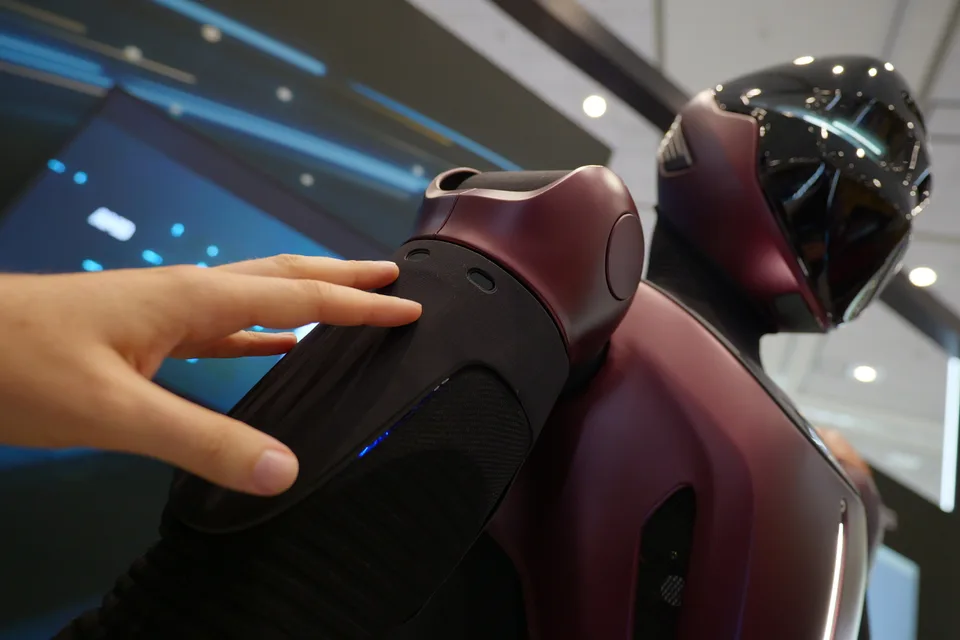
Italian firm Generative Bionics launched the Gene.01 humanoid platform on July 20, 2026, featuring full-body multimodal tactile sensing for safer human collaboration. It debuted in the U.S. at AMD Advancing AI and partners with Fincantieri for shipyard welding tasks.
ZeroGantry analysis
Gene.01's six-month concept-to-functional timeline and open digital twin distribution stand out against longer development cycles at larger players. Tactile skin could reduce collision-related stoppages by 20-30% in dense workspaces based on similar sensor precedents, though real fleet data is pending. European supply-chain focus via Synapticon adds resilience but may limit initial scale versus U.S./China volume plays—watch for 2027 utilization metrics before committing resources.
EDITORIAL / OPINION
Generative Bionics introduced its Gene.01 platform on July 20, 2026, as a fully functional humanoid with distributed tactile skin covering the body. The system detects touch, force, proximity, temperature, and pressure in real time, enabling more intuitive physical interactions than vision-only approaches common in other platforms. Built in six months from a CES concept shown earlier that year, the robot relies on physics-native AI that treats the body, mechanics, and intelligence as an integrated system rather than separate layers.
Tactile Sensing as Operational Differentiator
Full-body sensing gives Gene.01 an awareness advantage in cluttered industrial spaces where contact is inevitable. Force feedback lets operators demonstrate tasks with precise grip strength, addressing gaps that pure video imitation learning leaves unresolved. Proximity and temperature data further reduce unintended collisions during shared workflows. In shipyard welding environments targeted through the Fincantieri partnership, this capability could cut downtime from minor impacts or misalignments that plague less sensor-rich machines.
European developers have long emphasized human-aware ergonomics, drawing from research at institutions like the Istituto Italiano di Tecnologia. Gene.01 applies peer-reviewed methods from a July 2026 Nature Machine Intelligence paper on ergoCub to a production-oriented platform. The result prioritizes technician trust and repairability over peak speed metrics emphasized by U.S. and Chinese programs. As fleets scale, tactile data may prove more valuable for predictive maintenance than additional torque or velocity figures.
Open Platform and European Supply Chain Play
The company open-sourced the Gene.01 digital twin through standard Python, conda, and ROS channels, allowing developers to integrate it without custom setup. This lowers barriers for vertical-specific applications beyond the initial welding variant, labeled GENE.01/W. A partnership with German actuator specialist Synapticon supports EU-compliant final assembly and calibration, aiming for supply-chain resilience amid global component constraints.
Funding of $81 million in seed capital, including participation from AMD Ventures and Italian industrial backers, backs the push toward commercial deployments. The platform model—core hardware with task-specific AI, design, and end-effectors—avoids one-size-fits-all limitations seen in early competitors. Shipyard testing is slated for late 2026, with progressive rollout in naval prefabrication.
Geopolitics and Fleet Realities
Gene.01 positions Europe as a counterweight in humanoid development, stressing compliance, human-centric design, and localized production over raw scale. While U.S. firms chase high-volume manufacturing and Chinese programs focus on cost leadership, tactile intelligence addresses a practical bottleneck: safe coexistence with existing workforces. Labor shortages in shipbuilding and heavy industry make collaboration features commercially relevant sooner than autonomous-only visions.
Technician acceptance hinges on readable intent through posture and movement, not just sensor counts. Generative Bionics incorporates industrial design principles explicitly for this purpose. Whether the six-month build timeline translates to reliable field uptime remains to be proven in harsh environments, but the sensing architecture provides a measurable starting point for iterative improvement.
Outlook for Physical AI Adoption
Tactile platforms like Gene.01 highlight a maturing shift from demonstration videos to measurable interaction metrics. As more humanoids enter factories and yards, the ability to sense and respond to physical contact could determine which systems sustain high utilization rates. European emphasis on open tools and sovereign components may influence standards even if volume leadership stays elsewhere. Observers should track early Fincantieri deployments for concrete data on collision avoidance, task teaching efficiency, and maintenance intervals.
Sources
- https://www.roboticstomorrow.com/news/2026/07/20/generative-bionics-introduces-gene01-a-fully-functional-smart-skin-humanoid-robot-platform-designed-for-safe-human-collaboration/26860
- https://www.cnet.com/videos/new-humanoid-robot-smart-skin-amd-conference-ai-gene01-generative-bionics/
- https://www.duferco.com/generative-bionics-gene01/
- https://www.therobotreport.com/generative-bionics-unveils-humanoid-robot-with-full-body-tactile-sensing/
Topics
Related articles
- Agility Digit 5 Launch Targets Barrier-Free Warehouse Work — Agility Robotics launched Digit 5 on September 15, 2026, its first humanoid designed for safe close-proximity work alongside humans in warehouses and factories
- Robotics Week in Review: Sep 4–Sep 11, 2026 — Humanoid robotics surged forward this week with breakthroughs in control systems, record-breaking athletic performances, and major production scaling signals fr
- NVIDIA SONIC Scales Humanoid Control Beyond Task-Specific Limits — NVIDIA researchers released SONIC, a single controller trained on over 100 million motion frames that lets humanoids handle diverse whole-body movements from VR
- Tiangong Ultra 8.64s Record and AGIBOT Medals at 2026 Beijing Games — Tiangong Ultra from Beijing Humanoid Robot Innovation Center ran the 100m in 8.64 seconds at the World Humanoid Robot Games in Beijing. Shanghai-based AGIBOT le