Players · AI-derived
Tesollo IPO: DG-5F Hands Scale Humanoid Dexterity Supply Chain
South Korea's Tesollo advances its 2027 IPO after Series B funding from POSCO and HL Mando, scaling DG-5F 20-DoF robotic hands to solve humanoid dexterity bottlenecks. Exports to 19 countries now exceed domestic sales, positioning the firm as a critical end-effector supplier amid fleet uptime challenges for Tesla Optimus, Figure, Boston Dynamics, and Unitree deployments.
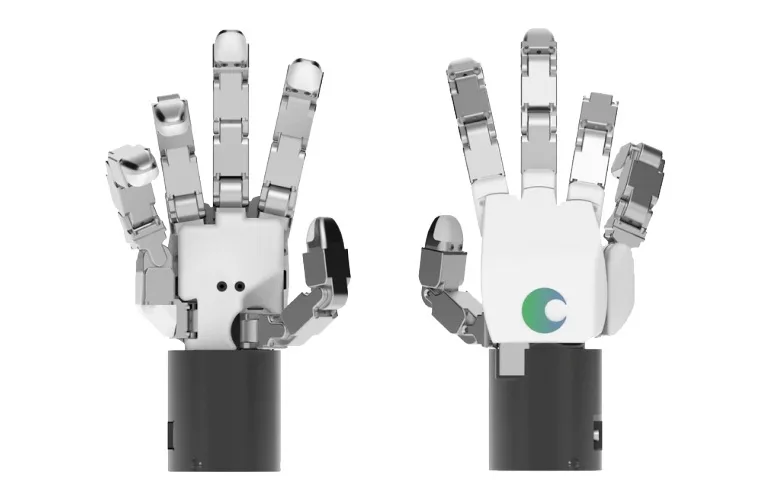
Tesollo's Strategic Funding and IPO Timeline
Tesollo closed its Series B round in mid-2026 with follow-on capital from POSCO Technology Investment, KB Investment, and Enlight Ventures alongside new strategic backers Daesung Hi-Tech and HL Mando. The round underscores investor confidence in the company's ability to address persistent gripper failures that constrain humanoid robot fleets. KB Securities was appointed lead underwriter in March 2026, steering preparations for a technology-exception listing targeted for 2027 or later. This capital infusion directly supports expanded production capacity and global distribution networks essential for meeting surging demand from humanoid integrators.
The funding arrives at a pivotal moment when pilot deployments across multiple platforms reveal that hand reliability directly dictates overall fleet MTBF. Investors recognize that modular, field-repairable designs can improve MTTR metrics and reduce downtime costs that currently erode economics for early adopters. Strategic participation from automotive-tier suppliers like HL Mando signals vertical integration potential into actuator supply chains. Such alliances position Tesollo to ramp output without the capital intensity faced by full-robot developers.
DG-5F Technical Architecture for Dexterity Bottlenecks
The DG-5F-M and DG-5F-S models deliver fully actuated 20-DoF anthropomorphic hands sized to adult male proportions with palm-to-fingertip lengths around 20-21 cm. Direct-drive or proprietary actuators enable backdrivability and mechanical compliance critical for safe human-like interaction. The S variant achieves sub-1 kg mass at 880 g while supporting optional 15-DoF configurations to simplify control policies. High-speed multidrop communication protocols facilitate real-time in-hand manipulation at up to 500 Hz update rates.
These specifications target the precise grasping and fine manipulation tasks where current humanoid platforms experience the highest failure rates. Modular construction allows rapid finger or joint swaps, directly improving mean time between repairs and mean time to repair in deployed fleets. Integration demos at ICRA 2026 showcased Vision-Language-Action policies on humanoid arms alongside teleoperation with haptic gloves, validating cross-platform compatibility. Such features address the dexterity supply chain gap that limits scaling for programs like Tesla Optimus and Figure 02.
Export Growth and Global Production Ramp
Tesollo's products now reach 19 countries with overseas revenue surpassing domestic sales, marking the transition from niche supplier to global player. Distributors span Europe, North America, and Asia, supported by partnerships that accelerate localization of spare parts inventories. This geographic spread reduces single-market risk while exposing the hands to diverse environmental and task conditions that refine reliability data.
Production scaling focuses on high-volume actuator and sensor modules to support anticipated humanoid fleet growth through 2028. Repair-friendly designs emphasize standardized interfaces that enable third-party service networks, lowering total cost of ownership for operators managing hundreds of units. Early export traction in the US, China, and Japan already includes integration with research and commercial humanoid programs. These metrics demonstrate viable path to volume manufacturing without the vertical integration burdens shouldered by Tesla or Boston Dynamics.
Fleet Economics and Uptime Implications for Major Platforms
Hand failures remain the dominant limiter of operational uptime in early humanoid pilots, directly impacting ROI calculations for companies deploying Tesla Optimus, Figure robots, Unitree H1/G1 variants, and Boston Dynamics Atlas successors. Tesollo's emphasis on MTBR and MTTR metrics offers a quantifiable lever for improving fleet availability from current sub-80% levels toward industrial benchmarks above 95%. Modular repair cycles measured in minutes rather than hours translate to meaningful reductions in lost productivity during 24/7 logistics or assembly trials.
Strategic investors from the automotive sector bring expertise in high-reliability component qualification that can accelerate certification for safety-critical applications. This positions Tesollo hands as drop-in solutions that complement rather than compete with full-system developers. Economic modeling suggests that reliable end-effectors could unlock 20-30% higher utilization rates, justifying premium pricing in the short term. As IPO preparations advance, transparent reliability data will become a key differentiator for attracting long-term fleet customers.
Competitive Positioning in the Humanoid End-Effector Market
Unlike integrated players such as Tesla or Boston Dynamics that develop proprietary hands internally, Tesollo operates as a focused specialist able to iterate faster on dexterity-specific innovations. Unitree and Figure benefit from this ecosystem approach by sourcing best-of-breed components rather than diverting engineering resources. The 2025 recognition of DG-5F as a Humanoid Robotics Industry Awards finalist alongside NVIDIA and Agibot highlights technological parity with larger competitors.
South Korea's broader robotics push provides supportive policy and talent environments that accelerate Tesollo's timeline to public markets. Export momentum through 2026 validates demand signals that full-robot companies have struggled to meet internally. Continued emphasis on compliance, backdrivability, and communication bandwidth ensures the hands remain relevant as control algorithms advance. This specialization model may prove more capital-efficient than vertical integration for addressing the dexterity bottleneck across the industry.
Who services this hardware
Topics
Related articles
- Rohit Prasad Appointed Boston Dynamics CEO for Atlas Push — Boston Dynamics named Rohit Prasad, former Amazon Alexa and AGI leader, as CEO effective October 7, 2026. He replaces interim chief Amanda McMaster following Ro
- Hello Robot Stretch Wins $3M NIH Grant for Elder Care Dementia Support — Hello Robot received a nearly $3 million NIH grant to advance its Stretch mobile manipulator for older adults with mild cognitive impairment or early Alzheimer’
- BMW Leipzig Humanoid Robot Pilot Advances with Hexagon AEON — BMW Group has launched a pilot deploying Hexagon Robotics' AEON humanoid at its Leipzig plant for high-voltage battery assembly and component manufacturing. The
- Amazon Dobromierz Deploys 5,000 Robots in Polish Fulfillment Center — Amazon opened its 12th Polish fulfillment center in Dobromierz on September 21, 2026. The 200,000 m² four-story facility uses over 5,000 Amazon Robotics units a