Editorial · AI-derived
Japan Airlines Humanoid Robots at Haneda: Labor Fix or Hype?
Japan Airlines deploys Unitree G1 humanoids at Haneda Airport for baggage and ground ops starting May 2026. Our editorial examines the 2-3 year pilot amid Japan's labor crunch, hype versus operational reality, and geopolitical robotics shifts.
EDITORIAL / OPINION
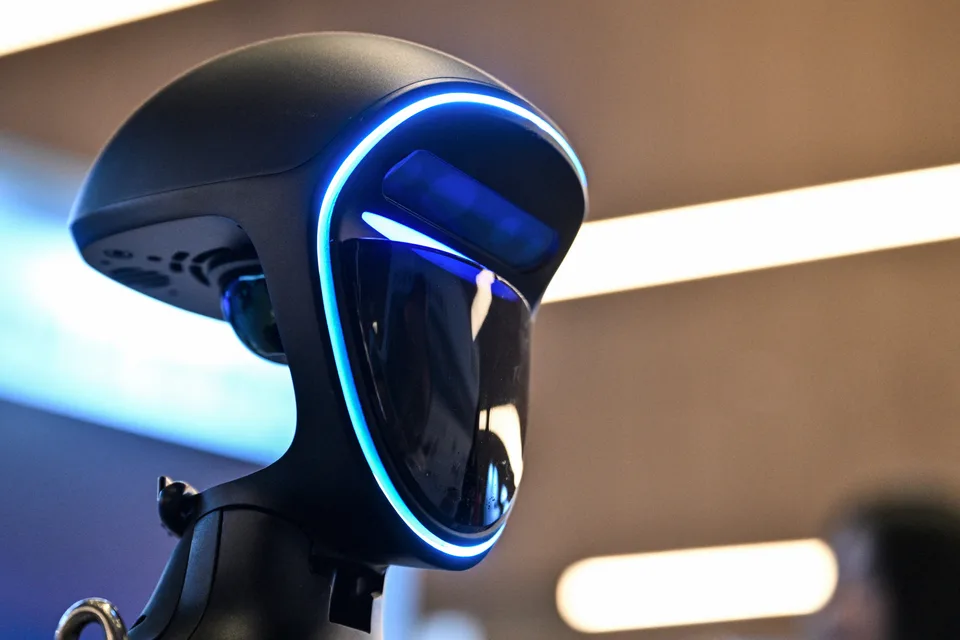
Japan Airlines has joined the humanoid robotics wave with a pragmatic pilot at Tokyo's Haneda Airport. Beginning in May 2026, the carrier partnered with GMO AI & Robotics to test Unitree G1 models—compact 130 cm Chinese-built bipeds—for baggage container handling, cargo movement, and cabin cleaning. The two-to-three-year trial targets chronic labor shortages fueled by Japan's aging demographics and a tourism surge exceeding 60 million annual passengers at Haneda.
Fact Check: What Is Actually Happening
The deployment is incremental. Robots operate alongside human crews on the tarmac, sliding payloads onto conveyors and performing repetitive lifts that strain aging workers. Battery life limits each unit to roughly two-to-three hours per charge, necessitating frequent swaps or returns to charging stations. Initial phases focus on visualization, safety mapping, and simulated operations rather than full autonomy. Commercialization remains a three-year target at best. JAL employs around 4,000 ground handlers; the robots are positioned as workload reducers, not replacements.
Hype Versus Operational Reality
Enthusiasts tout this as proof humanoids are airport-ready. Reality check: these early G1 units remain narrow in capability. They excel at scripted, low-variability tasks in controlled zones but falter on edge cases—uneven surfaces, unexpected obstacles, or coordinated multi-robot workflows. Two-to-three-hour runtime translates to high operational overhead in 24/7 airport environments. Scaling requires robust fleet management software, spare batteries, and human oversight for safety-critical decisions. The pilot wisely avoids promising overnight transformation.
Labor Economics in Japan
Japan's workforce contraction is structural. Record inbound tourism collides with fewer young workers willing to handle heavy baggage in all weather. Humanoids offer a potential hedge: tireless repetition without overtime or injury claims. Yet integration costs—units, chargers, training, maintenance—must compete with wage inflation and recruitment incentives. Early data from the trial will reveal whether uptime justifies the premium over hiring or mechanized alternatives like autonomous carts.
Geopolitics of Sourcing
The choice of Unitree G1 hardware from China underscores shifting supply chains. Japanese carriers leverage cost-effective Chinese platforms while domestic firms focus on software integration via GMO. This mirrors broader patterns: Western and Japanese integrators pair with Chinese actuator and chassis specialists. Expect scrutiny over data security, export controls, and dependency risks as humanoid fleets grow in critical infrastructure.
Technical Critique
The G1's form factor suits aircraft cargo holds better than bulkier competitors—no major facility retrofits required. However, actuator torque, sensor fusion for dynamic balance, and payload capacity remain constraints in high-volume logistics. Real-world metrics on mean time between failures and cycle times will determine viability beyond the pilot.
Japan Airlines' measured approach sets a useful precedent. Airports worldwide facing similar demographic and demand pressures will watch closely. Success hinges less on robot charisma and more on boring metrics: reliability, total cost of ownership, and seamless human-robot handoffs.
Sources
- https://www.cnbc.com/2026/05/01/japan-airlines-humanoid-robots-haneda-labor-shortage.html
- https://www.theguardian.com/world/2026/apr/28/humanoid-robots-baggage-handlers-japan-airports
- https://www.scmp.com/tech/article/3352626/baggage-bots-chinese-humanoid-robots-roll-japans-airports-amid-labour-shortage
- https://press.jal.co.jp/en/release/202604/009502.html
Topics
Related articles
- Figure AI Melts F.02 Fleet: Schwarzenegger's Terminator Sendoff — Figure AI retired its F.02 humanoid fleet by training the robots to jump into a 75-ton electric arc furnace in Imatra, Finland. CEO Brett Adcock followed Arnold
- Robotics Week in Review: Sep 25–Oct 2, 2026 — Humanoid robots advanced toward real warehouse and factory roles while software platforms and record industrial deployments underscored automation's acceleratin
- Physical Intelligence San Francisco Lease Signals 2026 Physical AI Scaling — Physical Intelligence subleased 80,000 square feet at 850 Brannan Street in San Francisco from Airbnb in September 2026. The robotics AI firm is expanding its B
- IFR Data: 5 Million Robots Signal Labor Shift, Not Humanoid Revolution — The International Federation of Robotics' World Robotics 2026 report shows global factory robot stock reached 5 million units in 2025, with China installing 59