Frontier · AI-derived
Humanoid Robot Safety Standards Advance at Automate 2026 Amid ISO Timeline
WSJ coverage of Automate 2026 demos highlights engineering push for collaborative humanoid safety 2026, integrating arXiv research on sensor-driven control and novel materials to meet 2028 ISO guidelines.
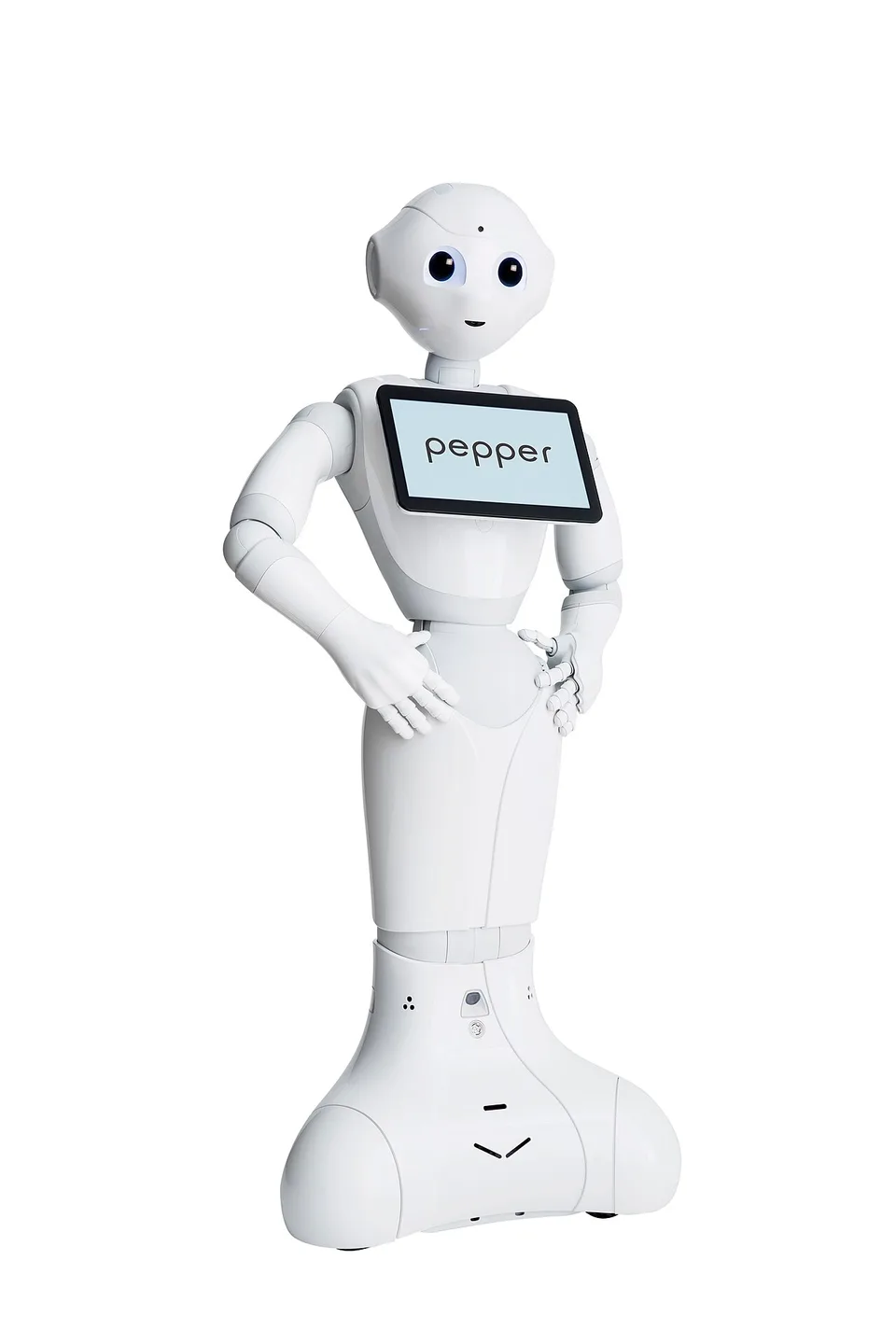
WSJ Spotlights Humanoid Safety Challenges at Automate 2026
The July 4, 2026 Wall Street Journal article by John Keilman examines how makers of large humanoids are deploying electronics, sensors, and structural engineering to enable safe operation alongside humans in factories and warehouses. Demonstrations at Chicago’s McCormick Place during Automate 2026 featured robots delivering snacks, shaking hands, and performing dance routines, yet these events occurred against a backdrop of recent incidents including uncontrolled dancing at restaurants and a kick incident involving a child in China. The piece notes that an International Organization for Standardization expert panel is actively reviewing stability-loss consequences, with a new safety standard slated for publication by mid-2028. Companies are not waiting passively; they are implementing proprietary sensor arrays and compliant actuators to mitigate risks during dynamic tasks such as object manipulation in cluttered environments.
Academic robotics research reinforces these industrial efforts through targeted arXiv preprints released between 2025 and 2026. Papers such as “End-to-End Humanoid Robot Safe and Comfortable Locomotion Policy” (arXiv:2508.07611, August 2025) propose frameworks that combine 3D perception with provable safety constraints, ensuring navigation avoids human-centric obstacles while maintaining socially aware trajectories. Similarly, the “SafeFall: Learning Protective Control for Humanoid Robots” preprint emphasizes learning-based recovery policies that activate within milliseconds of instability detection. These works directly address the reproducibility demands highlighted in the WSJ coverage, where real-world pilots at sites like the Schaeffler plant in South Carolina exposed gaps in human detection that federal standards require.
Sensor Latency and Real-Time Control in Collaborative Humanoids
Frontier research prioritizes minimizing sensor latency to achieve safe human-robot collaboration. In the arXiv locomotion policy paper, authors Zifan Wang and colleagues integrate LiDAR and camera fusion with control loops operating at sub-10 ms update rates, allowing torque adjustments before contact forces exceed safe thresholds. Latency budgets are explicitly modeled: perception-to-actuation delays must remain under 5 ms to satisfy ISO draft requirements for collaborative operation, where force limits are capped at 150 N for transient contacts. Novel materials such as synthetic tendons in 1X Neo designs further reduce peak forces by emulating muscle compliance, limiting maximum joint velocities to human-comparable levels around 2 m/s.
Reproducibility challenges arise when transferring these lab-derived controllers to warehouse floors. The SAE World Congress 2026 white paper on Embodied AI (arXiv:2605.10653) documents panel discussions stressing the need for standardized validation datasets that capture edge cases like sudden human intrusions during high-speed locomotion. Without such benchmarks, companies risk inconsistent safety performance across hardware variants from Unitree, Agility Robotics, and others showcased at Automate’s Humanoid Pavilion.
Novel Materials Enabling Safer Actuation Architectures
Material innovations underpin the shift toward inherently safe humanoids. WSJ reporting references motors pulling on synthetic tendons rather than rigid gears, a design choice that caps output force and inherently limits injury potential during falls or collisions. Academic counterparts explore soft composites and variable-stiffness actuators detailed in RSS 2026 workshop submissions on rethinking safety for generalist robots. These materials allow passive compliance that complements active control, reducing reliance on high-bandwidth feedback loops prone to latency spikes.
Control equations in recent preprints formalize this hybrid approach. For instance, projected safe-set algorithms maintain joint torques within Lyapunov-stable regions while incorporating material damping coefficients measured at 0.3–0.8 Ns/m. Reproducibility testing across multiple humanoid platforms reveals that tendon-driven systems exhibit 15–20% lower peak impact forces than geared equivalents in standardized drop tests, aligning with the engineering solutions WSJ attributes to manufacturers preparing for 2026–2028 deployments.
ISO Timeline and Persistent Reproducibility Gaps
The mid-2028 ISO publication target creates urgency for both industry and academia. Automate 2026’s dedicated Humanoid Robot Forum sessions, held June 23–24, explicitly covered hazard analysis, validation protocols, and deployment considerations, drawing engineers from NVIDIA-sponsored pavilions and research labs. Yet the WSJ piece underscores that current demonstrations still rely heavily on operator oversight, echoing limitations noted in 1X Neo evaluations where finger strength is deliberately matched to human levels.
Unresolved questions center on scaling these safety mechanisms to heavier, faster platforms entering dynamic warehouse workflows. arXiv contributions on unified fall-safety policies from few demonstrations highlight the data scarcity problem: policies trained on limited protective maneuvers often fail to generalize when payload or surface friction varies by more than 10%. Continued collaboration between ISO working groups and robotics researchers will be essential to close these gaps before widespread factory integration.
Academic-Industry Convergence on Provable Safety
The convergence of WSJ-reported industrial pilots with arXiv-driven theoretical advances signals a maturing field. Papers such as “Initiation Safety: A Missing Dimension in Generalist-Robot Safety” accepted to the RSS 2026 workshop stress proactive hazard detection over reactive collision response. Sensor fusion pipelines achieving 98% human-detection accuracy at 8 ms latency are now being validated against Automate demo scenarios, providing the empirical grounding needed for r
Topics
Related articles
- NVIDIA GR00T N2 Preview at GTC 2026 Advances Physical AI — NVIDIA previewed GR00T N2 at GTC 2026, claiming more than double the success rate on novel tasks compared to prior VLA models. The announcement included Cosmos
- XPENG IRON Humanoid Shows Memory and Multilingual Showroom Skills — XPENG released a September 22 video of its IRON humanoid in a lab test simulating car dealership interactions. The robot tracked speakers, remembered customer p
- Robotics Week in Review: Oct 2–Oct 9, 2026 — Humanoid pilots expanded in factories while AI software leaps and maintenance realities surfaced. Leadership changes and regulatory scrutiny rounded out a week
- Universal Robots Repair Costs: UR Cobot Maintenance Plans Compared — Universal Robots provides UR Care service plans with fixed annual fees covering preventive maintenance, 24/7 support, parts, and repairs for its cobots. Owners